Guide
Duck, Mushroom and Vegetarian Bao Buns
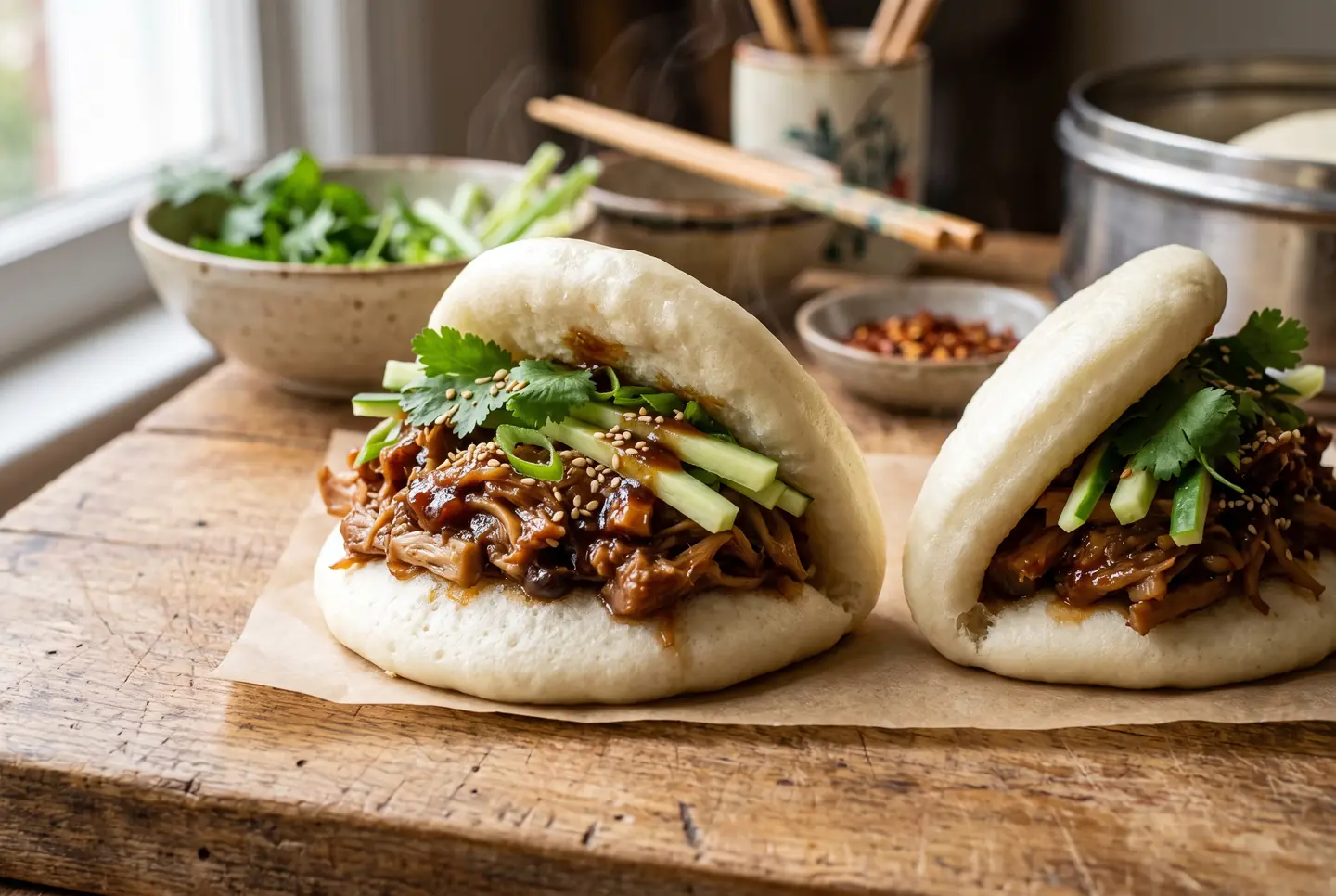
The open gua bao is a blank canvas, and pork belly is only the most famous thing you can fold into it. Crispy duck, fried chicken, seared mushrooms, pulled jackfruit and glazed tofu all sit beautifully in a folded bun, and a good vegetarian bao does not feel like a compromise. The one thing that separates a great meat-free bao from a soggy one is not the filling you choose, it is water: vegetable fillings release liquid, and a wet filling ruins the bun.
This is the fillings section of the complete bao buns guide taken past pork, and it works for the open gua bao fold rather than the pleated char siu baozi. The short answer: pick a filling with real savory depth, cook it down hard so it is not wet, let it cool, and assemble the bun just before you eat it.
Beyond pork belly: duck, chicken and the open bun
Because the gua bao is filled at the table and not sealed, it takes almost any protein you can glaze and fold. Crispy duck with hoisin and cucumber, borrowed straight from the Peking duck pancake, is a natural fit. Fried chicken with a spicy mayo has become a modern gua bao standard in bao shops. The bun itself is neutral and slightly sweet, so it flatters a rich, sticky, savory filling more than a delicate one.
That same openness is what makes the bun such good ground for vegetarian and vegan fillings. You are not trying to fake meat; you are filling a soft, sweet bun with something savory and glazed, and there are plenty of plants that do that job on their own.
The fillings with real umami
The strongest meat-free bao fillings share one quality: they bring the same savory, umami depth that pork does, rather than tasting like a lighter substitute. Three carry a bun especially well.
| Filling | How to treat it | Why it works |
|---|---|---|
| King oyster or shiitake mushrooms | Tear or slice thick, sear hard until edges crisp and brown | Meaty texture and deep umami once caramelized |
| Jackfruit (young, in brine) | Drain, pull apart, simmer in sauce until soft | Shreds like pulled pork and soaks up glaze |
| Firm tofu or tempeh | Press dry, crisp, glaze in a sweet-savory sauce | Familiar char siu flavor with none of the meat |
Mushrooms are the standout. Torn king oyster or shiitake, seared in a hot pan until the edges crisp and caramelize, develop enough meaty chew and savory depth to headline a bao by themselves, then finished in a hoisin-based glaze (The Foodie Takes Flight). Jackfruit, drained and simmered in sauce, shreds and pulls like slow-cooked pork (Lazy Cat Kitchen). Tofu or tempeh, crisped and glazed in the same sweet-savory sauce you would use on char siu, gives you a bun with the familiar flavor.
The one rule: keep the filling dry
Here is the lever nobody mentions until their bun falls apart. Vegetables and mushrooms hold a lot of water, and they release it as they cook. A wet filling steams the bread from the inside, softens the bun and makes the whole thing collapse into a soggy fold. Every reliable vegetable bao recipe deals with this the same way: drive the water off before the filling ever touches dough.
Three habits do it:
- Cook mushrooms hard. Sauté them in a hot pan until they release their water and it evaporates, and the edges start to brown (Two Plaid Aprons). A crowded, low pan steams them and keeps them wet; a hot, roomy pan drives the water off and browns them.
- Press tofu dry. Firm tofu is full of moisture. Wrap it and squeeze or press out as much as you can before you crisp it, so it is not carrying water into the bun (Two Plaid Aprons).
- Glaze, do not drown. Thicken the sauce so it clings rather than pools. A cornstarch slurry cooked into the sauce until it is glossy coats the filling without leaving liquid behind, the same trick the char siu filling uses (Omnivore's Cookbook).
Then let the filling cool before it goes near the dough. A hot filling both softens the bun and lets off more steam; a cooled, dry, glazed filling keeps the bao intact.
Assemble late, and use a barrier
Because a gua bao is an open bun, you have two more tools that a sealed baozi does not. Assemble the bun just before you eat it rather than letting filled buns sit, so the bread has no time to go soft. And if a filling is unavoidably juicy, a leaf of lettuce or a fold of crunchy pickle laid inside the bun first acts as a barrier between the wet filling and the bread. Fresh, crunchy garnishes like cucumber, pickled carrot or spring onion also cut the richness and keep the bun from feeling heavy.
Where vegetarian bao goes wrong
| Problem | Likely cause | Fix |
|---|---|---|
| Soggy, collapsing bun | Filling too wet | Cook mushrooms and greens down hard; cool before filling |
| Watery tofu filling | Tofu not pressed | Wrap and squeeze the tofu dry before crisping |
| Flat, bland filling | No browning or glaze | Sear for color, finish in a sweet-savory sauce |
| Filling runs out | Sauce too thin | Thicken with a cornstarch slurry until glossy |
| Bread gone soft before serving | Buns filled too early | Assemble just before eating; a lettuce leaf as a barrier |
The pattern is the same in every row: the failures are about moisture and timing, not about the plant. Get the filling dry, glazed and cool, and fill the bun late, and a mushroom or jackfruit bao stands up to any pork belly one.
Frequently asked questions
What is the best vegetarian filling for bao buns? Seared king oyster or shiitake mushrooms are the standout, because they bring meaty texture and deep umami once caramelized. Pulled jackfruit and crisp glazed tofu or tempeh also work very well.
Why do my vegetarian bao buns go soggy? The filling is too wet. Mushrooms, greens and tofu all hold water and release it as they cook. Cook the filling down hard so the liquid evaporates, thicken any sauce so it clings, and let the filling cool before you fill the bun.
How do you keep tofu from making bao watery? Press it dry first. Wrap firm tofu and squeeze out as much moisture as you can before you crisp it, so it is not carrying water into the bread.
Can I make vegan bao buns? Yes. The plain steamed bun is easy to make dairy-free, and jackfruit, mushroom or glazed tofu fillings give you a fully vegan bao. Use a plant milk in the dough if a recipe calls for milk.
Do I steam vegetarian bao differently from pork bao? The plain buns steam the same way, gently for a smooth open gua bao. The difference is all in the filling: it must be cooked dry and cooled, and for an open bun it is usually added after steaming, not before.
What goes with mushroom bao? Fresh, crunchy garnishes balance the rich glaze: cucumber, pickled carrot, spring onion or a leaf of lettuce, which also acts as a barrier that keeps the filling from soaking the bread.
Where I checked
Keep reading
 Guide
Guide
Bagel Dough: Why It Is So Firm, and How to Knead It
Bagel dough feels stiff and dry on purpose. Here is why it runs at 50 to 60% water and high protein flour, how to knead it, and the windowpane to aim for.
6 min read Guide
Guide
Bagel Recipe: New York Style, Step by Step
A weight-based New York bagel recipe, step by step: the firm 58% dough, an overnight cold retard, how long to boil, and the oven heat that sets a glossy crust.
6 min read Complete guide
Bagels: The Complete Guide
Make a real bagel at home: the firm 58% dough, why bagels are boiled before baking, New York vs Montreal, sourdough and gluten free, and how to fix flat ones.
18 min read