Guide
Gluten Free Bao: The Blend, the Binder and the Ratios
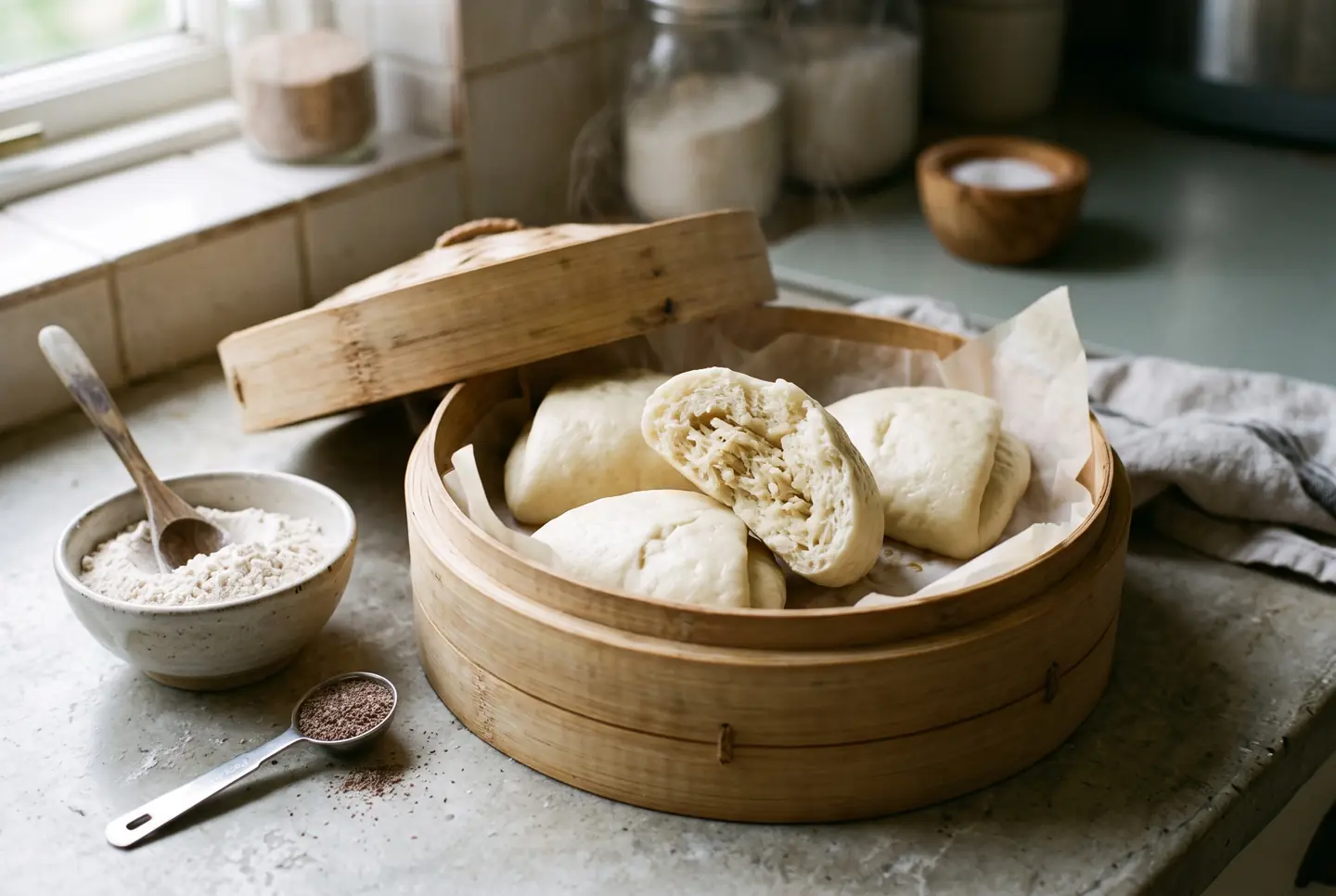
Gluten free bao is the hardest bun in the whole guide to pull off, and it is more useful to say that up front than to pretend otherwise. The soft, stretchy, cloud-like texture of a normal bao comes from a gentle gluten network, and that network is exactly the thing a gluten free flour cannot build on its own. The short answer: it is done with a gluten free flour blend plus a binder that mimics gluten's stretch, and the binder matters more than the flour.
This is the gluten free branch of the complete bao buns guide, taken past the wheat version. If you want the full method for the classic bun, start there; this page is about the one change that reorganizes everything else, which is losing the gluten. Expect a bun that is a touch denser and less springy than a wheat bao, and treat it as its own good thing rather than a like-for-like copy. It can be genuinely excellent. It will not be identical.
The blend: which flours actually work
No single gluten free flour makes a good bao. The texture comes from combining a light, neutral flour that gives the pale, soft crumb with a starch that brings stretch and chew. In practice that means a base of white rice flour with tapioca starch, and often a little cornstarch or glutinous (sweet) rice flour for extra bounce.
| Component | Job in the bun | Rough share of the blend |
|---|---|---|
| White rice flour | Neutral base, pale crumb | About two thirds |
| Tapioca starch | Stretch, chew, that slight pull | About a third |
| Glutinous rice flour (optional) | Extra chew and bounce | A small swap for some tapioca |
| Cornstarch (optional) | Tenderness, lighter crumb | A small addition |
A ready-made all-purpose gluten free flour blend can work too, as long as it is a light one and not a heavy wholegrain mix, and as long as you still add a binder if the blend does not already contain one. Rice-and-tapioca is the reliable backbone (George Eats, Gluten-Free Palate).
The binder is the whole game: psyllium versus xanthan
Here is the lever that separates a cloud from a hockey puck. Because there is no gluten, something else has to give the dough elasticity and let it hold shape and trap gas. That job falls to a binder, and the two common ones behave differently.
- Psyllium husk powder forms a gel that gives gluten free doughs real elasticity and the ability to hold water, which is why it turns up in most serious gluten free bread work. For bao it is the stronger choice: it lets the dough go soft and fluffy while staying shapeable. Use the powder, not the flakes, because the powder binds harder and changes the look of the crumb less (George Eats).
- Xanthan gum mimics the stickiness and elasticity of gluten and holds the dough together. Many blends already contain it. It works, but on its own it gives a slightly less pliable dough than psyllium does.
Plenty of good recipes use both, a small amount of psyllium for the gel and a little xanthan for the stretch. What you should not do is skip the binder and hope: without it the dough will not hold gas and the bun steams into something dense and crumbly.
A working build, in weights
Two grounded starting points, so you can see the shape of a real recipe rather than guess:
| Blend | Flours | Binder |
|---|---|---|
| Psyllium route | 160 g white rice flour + 60 g tapioca starch (swap 30 g for glutinous rice flour if you want more chew) | 7.5 g psyllium husk powder |
| Belt-and-braces route | 150 g rice flour + 100 g tapioca starch + 50 g cornstarch | 2 tbsp psyllium husk + 1 tsp xanthan gum |
Both then take the usual bao supporting cast: a little sugar, baking powder, instant yeast and salt, plus liquid to bring it together. Steam the shaped buns for about 10 to 15 minutes, until they look slightly translucent but stay soft (George Eats). Treat the numbers above as a map, not a decree: gluten free flours vary a lot brand to brand, and you tune the liquid to the dough in front of you.
Why the batter looks wrong, and why you must not add flour
The single most common panic with gluten free bao is that the dough starts life looking like a thin, runny batter rather than a smooth ball. That is normal and it is the psyllium at work. The husk needs time to hydrate: as the dough proofs, the psyllium powder absorbs the excess liquid and the batter firms into something you can actually shape (George Eats).
If you add flour to "fix" the wetness before the proof, you overshoot, and the finished bun turns dense and dry. Give it the rest instead, usually around an hour, and let the binder do its job. This is the opposite instinct from wheat dough, where a wet dough often does mean too much water. With psyllium, wet at the start is the plan.
Cross-contamination: the part that matters if you are coeliac
If gluten free here means medically necessary and not just a preference, the recipe is only half the job. The other half is the shelf. Buy a gluten free flour blend and a baking powder that carry a certified gluten free label, because plain cornstarch, oats and even some spice mixes can be milled or packed on shared lines and pick up wheat. Steam over clean water, in a clean steamer, and keep the gluten free buns away from any wheat baking happening the same day. A bun made from a perfect blend is still not gluten free if the flour was cross-contaminated before it reached your bowl.
Where gluten free bao goes wrong
| Problem | Likely cause | Fix |
|---|---|---|
| Dense, heavy bun | No binder, or too little | Add psyllium husk powder; it is not optional here |
| Crumbly, falls apart | Not enough binder or under-proofed | Use the full binder amount; give the dough its full rest |
| Dry, tight crumb | Flour added to a "too wet" batter | Do not add flour; let the psyllium hydrate during the proof |
| Gummy or gluey center | Steamed too little, or too much starch | Steam the full 10 to 15 minutes; keep tapioca to about a third |
| Still contains gluten | Cross-contaminated flour or baking powder | Buy certified gluten free ingredients; clean the steamer |
The pattern is consistent: the failures come from the binder and the proof, not from the flour being gluten free. Respect the binder, trust the wet batter, give it time, and a gluten free bao stands up as its own soft, honest bun.
Frequently asked questions
Can you make bao buns gluten free? Yes, though it is the most demanding bun in the guide. Use a light gluten free flour blend, usually white rice flour with tapioca starch, plus a binder such as psyllium husk powder to replace gluten's stretch. Expect a slightly denser, less springy bun that is still very good.
Is xanthan gum or psyllium better for gluten free bao? Psyllium husk powder is the stronger choice for bao, because it forms a gel that gives the dough real elasticity and lets it stay soft and shapeable. Xanthan gum works and is often already in blends, but on its own the dough is a little less pliable. Many recipes use both.
Why is my gluten free bao dough so runny? That is normal with psyllium. The husk needs time to absorb the liquid, so the dough starts thin and firms up as it proofs. Do not add flour to thicken it, or the finished bun will be dense and dry. Give it the full rest instead.
Which flour makes the best gluten free bao? A blend, not a single flour. White rice flour gives the pale, neutral crumb and tapioca starch brings the stretch and chew. A little glutinous rice flour or cornstarch can add bounce. A light all-purpose gluten free blend also works if you still add a binder.
Will gluten free bao taste the same as normal bao? Close, but treat it as its own thing rather than an exact copy. It will be a touch denser and less springy, because no gluten free flour rebuilds a gluten network exactly. Balanced well, it is genuinely good; it is just honestly a little different.
How do I make gluten free bao safe for coeliacs? Beyond the recipe, control the shelf. Use a certified gluten free flour blend and baking powder, since starches and additives can be cross-contaminated on shared lines, and steam in a clean steamer away from any wheat baking. The ingredients and the surfaces both have to be clean.
Where I checked
Keep reading
 Guide
Guide
Bagel Dough: Why It Is So Firm, and How to Knead It
Bagel dough feels stiff and dry on purpose. Here is why it runs at 50 to 60% water and high protein flour, how to knead it, and the windowpane to aim for.
6 min read Guide
Guide
Bagel Recipe: New York Style, Step by Step
A weight-based New York bagel recipe, step by step: the firm 58% dough, an overnight cold retard, how long to boil, and the oven heat that sets a glossy crust.
6 min read Complete guide
Bagels: The Complete Guide
Make a real bagel at home: the firm 58% dough, why bagels are boiled before baking, New York vs Montreal, sourdough and gluten free, and how to fix flat ones.
18 min read