Guide
Best Flour for Sourdough Bread: Protein and Blends
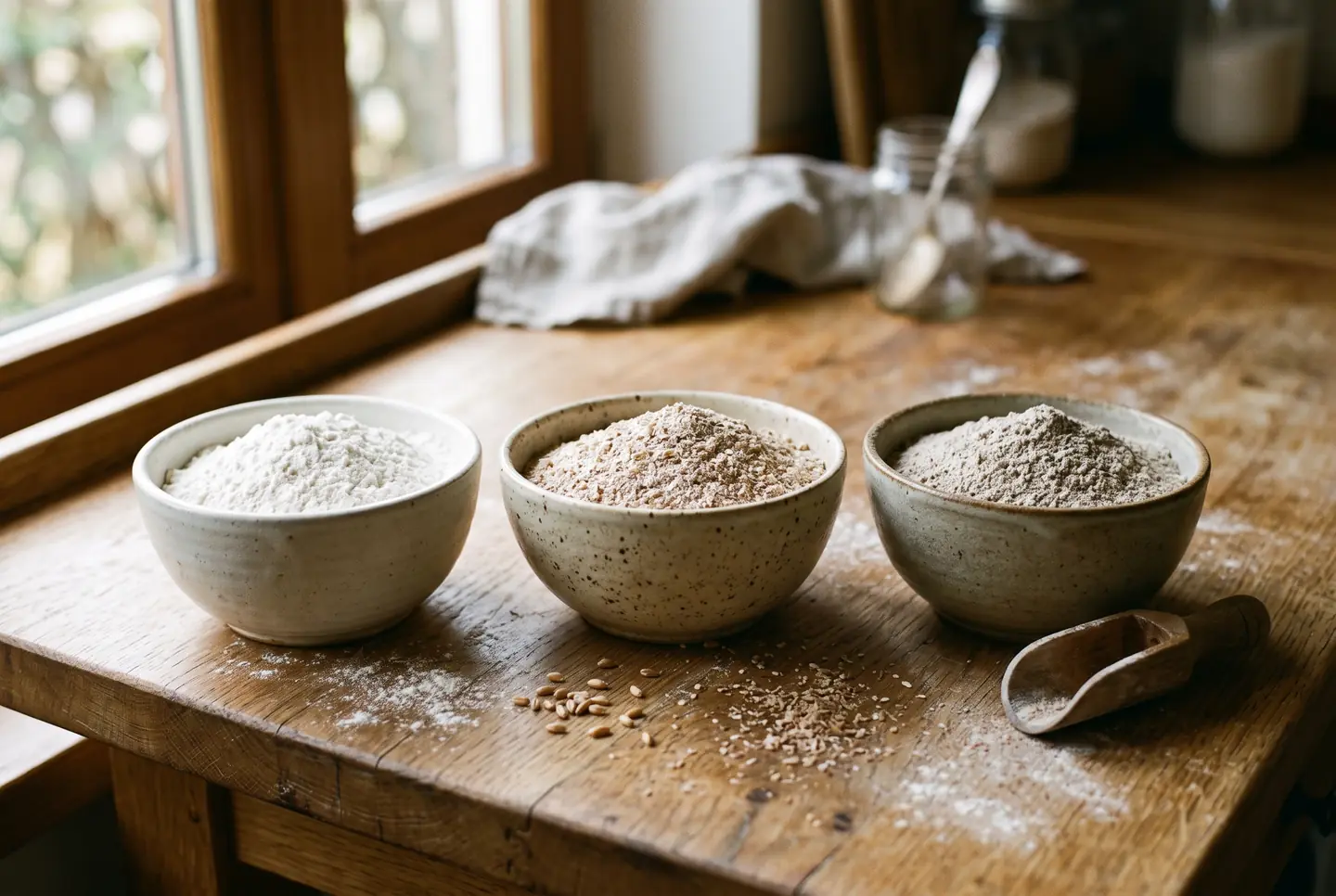
The short answer is a good bread flour, around 12 to 13 percent protein, as the backbone, with a small share of whole wheat or rye blended in for flavour and a faster rise. Protein is the reason: it builds the gluten network that traps the gas the wild yeast makes, so the loaf climbs tall instead of spreading flat. A soft all-purpose flour can work at lower hydration, but it goes slack and tears when you push the water up. If you want the deeper picture of what protein and strength mean, our bread flour reference explains the numbers; this page is about which flour to pick for a sourdough loaf and how the choice changes your recipe. It fits inside the complete sourdough bread guide.
Protein is the dial that matters
Not all wheat flour is the same, and for sourdough the difference you feel first is protein. More protein means more potential gluten, which means a stronger dough that holds its shape and its gas.
| Flour type | Typical protein | For sourdough |
|---|---|---|
| All-purpose | 10 to 11.5% | Works at lower hydration, weaker structure |
| Bread flour | 12 to 13% | The reliable backbone for most loaves |
| High-protein / strong | 13 to 14%+ | Handles high hydration, holds a very open crumb |
For an everyday loaf, a bread flour in the 12 to 13 percent range is the safe home. It is strong enough to hold an open crumb without being so thirsty that a beginner dough turns unmanageable. King Arthur's comparison of bread flour and all-purpose is a good primer on why that gap in protein changes the loaf.
What to blend in, and how much
The second half of the answer is the wholegrain you fold into that base flour. A small proportion of whole wheat or rye, often 10 to 20 percent of the total flour, does a lot of work: it feeds the fermentation with more minerals and enzymes, deepens the flavour and speeds the rise, which is why so many beginner formulas add a little to an otherwise white loaf.
| Blend | Share of flour | What it does |
|---|---|---|
| White bread flour only | 100% | Mild, tall, the cleanest crumb, slowest ferment |
| + whole wheat | 10 to 20% | Nuttier flavour, faster rise, needs a touch more water |
| + rye | 5 to 15% | Deep flavour, very active ferment, tacky dough |
| Mostly wholegrain | 50%+ | Dense, hearty, a genuinely different loaf to handle |
The trade with any wholegrain is water. Whole wheat and rye drink more than white flour and ferment faster, so a loaf heavy in them needs a wetter dough and a closer eye on the bulk. If you swap a white loaf for a 20 percent whole wheat one at the same hydration, the dough will feel stiff, so add a little water to compensate.
Matching flour to the water
Because flour choice and hydration are linked, it helps to think of them together. A stronger flour can carry more water; a weaker one cannot. This is why the same recipe at 75 percent hydration feels friendly with a 13 percent bread flour and sticky and structureless with a soft all-purpose.
| Flour strength | Comfortable hydration | Notes |
|---|---|---|
| All-purpose (10 to 11.5%) | 65 to 70% | Keep it drier or it tears |
| Bread flour (12 to 13%) | 70 to 78% | The forgiving middle |
| Strong / high-protein (13%+) | 78%+ | Needed for a very open crumb |
Pick the flour first, then set the water to match it, not the other way around. The base sourdough recipe uses a 12 to 13 percent bread flour at 72 percent hydration for exactly this reason: it is the most forgiving pairing to learn on.
Frequently asked questions
Can I make sourdough with all-purpose flour? Yes, but keep the hydration lower, around 65 to 70 percent, and expect a slightly denser, less open crumb. The dough has less strength to hold gas, so it is less forgiving of over-fermentation.
Do I need bread flour or can I use strong / high-protein flour? Both work. A standard bread flour at 12 to 13 percent is the easiest to handle; a stronger flour above 13 percent lets you push hydration higher for a more open crumb, but the dough is less beginner-friendly.
How much whole wheat or rye should I add? Start at 10 to 20 percent of the total flour. It adds flavour and speeds the rise without turning the loaf dense, and you can climb from there once you know how the wetter, faster dough behaves.
Does the flour change how much water I use? Yes. Stronger flours and wholegrain flours both drink more water, so raise the hydration a little when you use them and lower it for a soft all-purpose flour.
Where I checked
Keep reading
 Guide
Guide
Bagel Dough: Why It Is So Firm, and How to Knead It
Bagel dough feels stiff and dry on purpose. Here is why it runs at 50 to 60% water and high protein flour, how to knead it, and the windowpane to aim for.
6 min read Guide
Guide
Bagel Recipe: New York Style, Step by Step
A weight-based New York bagel recipe, step by step: the firm 58% dough, an overnight cold retard, how long to boil, and the oven heat that sets a glossy crust.
6 min read Complete guide
Bagels: The Complete Guide
Make a real bagel at home: the firm 58% dough, why bagels are boiled before baking, New York vs Montreal, sourdough and gluten free, and how to fix flat ones.
18 min read