Guide
Sourdough Pizza Dough: Swap the Yeast, Keep the Recipe
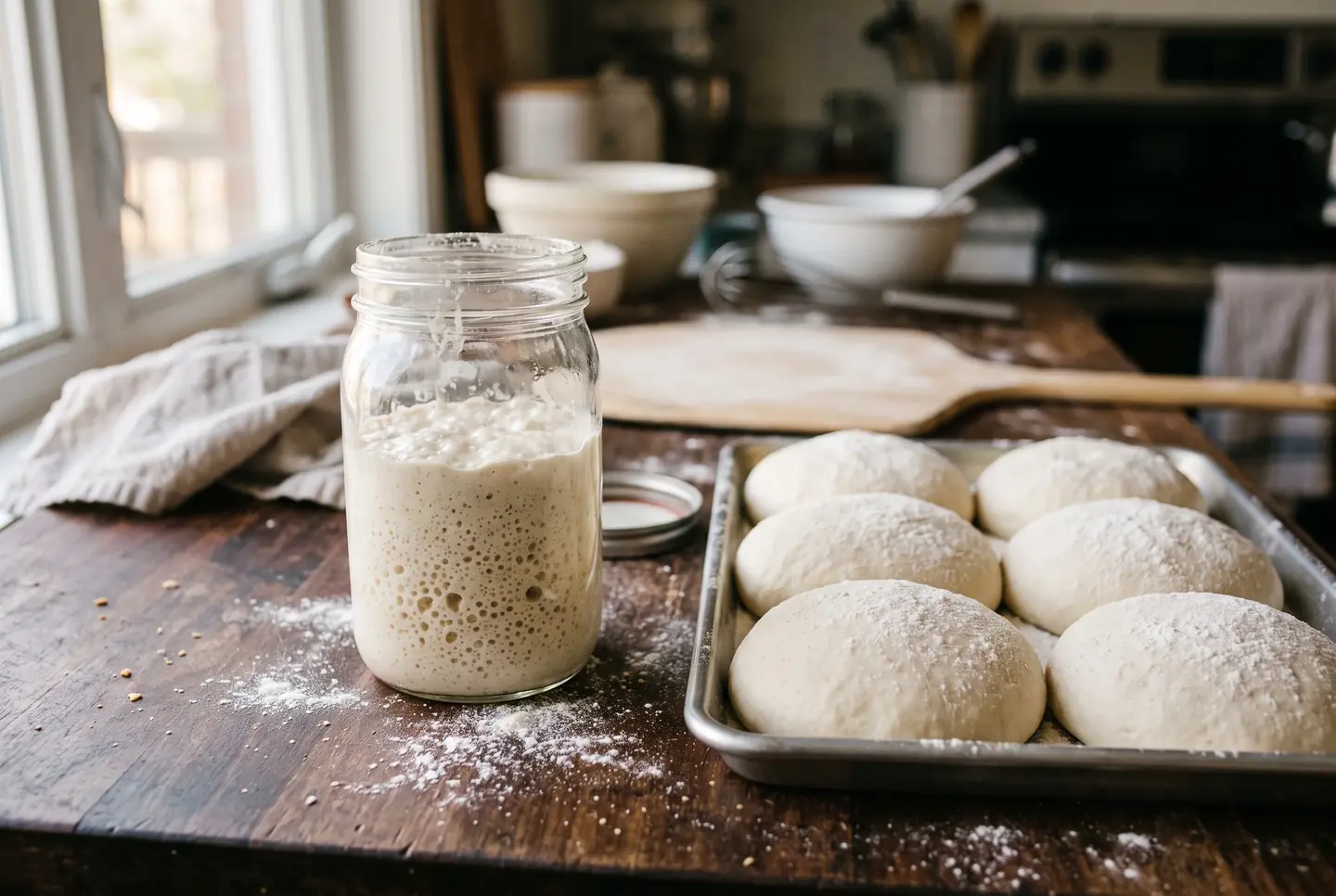
Sourdough pizza dough is not a different recipe from your usual pizza dough. It is the same flour, water, and salt, with one change: instead of a packet of yeast, you leaven it with ripe sourdough starter, usually 10 to 20% of the flour weight (The Perfect Loaf). Everything else, the hydration, the salt, the balling, the stretch, stays the same. What changes is time. A starter works slower than commercial yeast, so a sourdough pizza is planned a day or two ahead, and most of that time is the dough sitting quietly in the fridge.
If you already make a straight, yeasted dough from the complete pizza dough guide, you are most of the way there. This page is the conversion: how much starter to use, whether to use it straight or build a small levain, what the schedule looks like, and what you actually gain in flavor and texture for the extra day of patience.
How much starter, and it has to be ripe
The working range is 10 to 20% ripe starter against the total flour (The Perfect Loaf). Less starter and a longer, colder ferment gives more sour tang; more starter and a warmer, shorter one keeps it mild. For a first sourdough pizza, land around 15%: enough leavening to lift the crust without a two-day wait, mild enough that the flavor reads as bready and complex rather than sharp.
"Ripe" is not optional. The starter has to be at its peak, risen, domed, full of bubbles, and just about to fall, the same window you would use for bread. A sluggish, hungry, or freshly fed starter will not raise a pizza dough on any sensible timeline. Feed it a few hours ahead, watch it climb, and mix your dough when it is at the top of its rise.
Straight starter or a dedicated levain
You have two ways to get that ripe leaven into the dough, and both are valid (The Perfect Loaf).
The simplest is to use your active starter directly: feed it, wait for the peak, and weigh out what the recipe needs. This is the fewest steps and fine for most home pizza.
The other is to build a separate levain, a small off-shoot fed specifically for this dough, often with a chosen flour and a set ratio, timed to be ripe exactly when you want to mix. A common build is one part starter to two or three parts each flour and water, left three to four hours in a warm spot until bubbly and active (King Arthur). A levain lets you leave your mother starter alone, control the flavor, and schedule the ripeness, which matters when you are making dough for a specific dinner.
| Use starter directly | Build a levain | |
|---|---|---|
| Effort | Least, just feed and wait | An extra feeding and container |
| Timing control | Tied to your starter's rhythm | You set when it ripens |
| Flavor control | Whatever your starter tastes like | Tunable by flour and ratio |
| Best for | Weeknight, few pizzas | Planned bake, many pizzas, flavor tuning |
Hydration and salt: same as any pizza dough
Sourdough does not change the ratios that make a good pizza dough. Keep hydration where your oven wants it: leaner, around 60 to 62%, for a home oven that tops out near 250 to 290 °C, and higher, 65% and up, only if you have a very hot oven or a lot of handling practice, because wetter dough is harder to open. Salt stays at the usual 2 to 3% of the flour. Remember that the starter itself carries flour and water: a 20% starter is already adding roughly 10% flour and 10% water to your totals at 100% starter hydration, so count it when you are being precise about the final numbers.
| Ingredient | Baker's percentage |
|---|---|
| Flour | 100% |
| Water | 60 to 65% |
| Ripe starter | 10 to 20% |
| Salt | 2 to 3% |
The schedule: a little warm, then a long cold rest
The rhythm is what separates a sourdough pizza from a same-day yeasted one. After mixing, the dough gets a bulk rise, and because the starter is slow this can run several hours at room temperature, watched by feel and rise rather than a fixed clock. Then it goes cold. A stretch in the fridge, anywhere up to 72 hours, does two jobs at once: it fits the dough around your schedule, and the slow cold fermentation is exactly where the flavor deepens (The Perfect Loaf).
That cold rest is not a delay you tolerate, it is the point. It is the same retard a good yeasted pizza dough benefits from, only here it does even more of the flavor work because the sourdough culture is active throughout. Ball the dough before or after the cold rest, bring the balls to room temperature before shaping, and open them exactly as you would any pizza dough.
Timing: sourdough versus a yeasted dough
The two doughs bake into the same shape but run on very different clocks. This is the single biggest adjustment when you switch.
| Commercial yeast | Sourdough starter | |
|---|---|---|
| Leavening speed | Fast, hours | Slow, plan a day or two ahead |
| Bulk rise | 1 to 2 hours warm | Several hours warm, then cold |
| Cold proof | Optional, improves flavor | Central, up to 72 hours |
| Flavor | Clean, mild | Deeper, tangy, complex |
| Schedule demand | Same day possible | Requires planning |
What you actually gain
The payoff is flavor and character. The long, cold sourdough ferment builds a crust with more depth than a fast yeasted one, a gentle tang, and a chewy, well-structured, blistered edge when it hits a hot oven or stone. Many bakers also find a well-fermented sourdough crust sits lighter after eating; treat that as a common observation, not a medical claim, and let your own experience be the judge. What is certain is the taste: given the time it needs, sourdough turns the same flour, water, and salt into a noticeably better crust.
Where people go wrong
The two failures are almost always the same. The first is an under-ripe starter: mixed in hungry or past its peak, it will not raise the dough, and no amount of extra waiting fully rescues it. Feed it and use it at the top of its rise. The second is impatience, treating a sourdough dough like a yeasted one and baking it before it has fermented. Sourdough runs on its own clock; the schedule is the recipe. Give it the day, and the cold rest, and it delivers.
Frequently asked questions
How much sourdough starter do I use in pizza dough? Around 10 to 20% of the flour weight, ripe and active. Start near 15% for a first try. Less starter with a longer, colder ferment gives more tang; more starter with a warmer, shorter one keeps the flavor mild.
Can I use my starter straight, or do I need to build a levain? Either works. Ripe, bubbly starter used directly is simplest and fine for most home pizza. A separate levain, fed and timed on its own, gives you more control over when it ripens and how it tastes, which helps when you are baking for a set time.
What hydration should sourdough pizza dough be? The same as any pizza dough for your oven: roughly 60 to 62% for a home oven, higher only if the oven is very hot or you are comfortable handling wet dough. Sourdough does not require a different hydration; it changes the timing, not the ratios.
How long does sourdough pizza dough take? Plan a day or two. After mixing there is a several-hour warm bulk rise, then a cold rest in the fridge of up to 72 hours where most of the flavor develops. It is not a same-day dough the way a yeasted one can be.
Is sourdough pizza easier to digest than regular pizza? Many people find a long-fermented sourdough crust feels lighter, and long fermentation does change the dough, but this is a common observation rather than a proven medical benefit. Enjoy it for the flavor and texture first.
Why didn't my sourdough pizza dough rise? Almost always the starter was not ripe, either hungry and under-fed or well past its peak. Feed it a few hours ahead, use it when it is domed and bubbling at the top of its rise, and give the dough the long ferment it needs.
Swap the yeast for a ripe starter, hold the rest of your recipe steady, and hand the dough the time it asks for. Feed the jar today, mix tomorrow, let the fridge do the slow work, and the pizza that comes out tastes like it took planning, because it did.
Where I checked
Keep reading
 Guide
Guide
Bagel Dough: Why It Is So Firm, and How to Knead It
Bagel dough feels stiff and dry on purpose. Here is why it runs at 50 to 60% water and high protein flour, how to knead it, and the windowpane to aim for.
6 min read Guide
Guide
Bagel Recipe: New York Style, Step by Step
A weight-based New York bagel recipe, step by step: the firm 58% dough, an overnight cold retard, how long to boil, and the oven heat that sets a glossy crust.
6 min read Complete guide
Bagels: The Complete Guide
Make a real bagel at home: the firm 58% dough, why bagels are boiled before baking, New York vs Montreal, sourdough and gluten free, and how to fix flat ones.
18 min read