Guide
Cold Ferment Pizza Dough: Why the Fridge Makes It Better
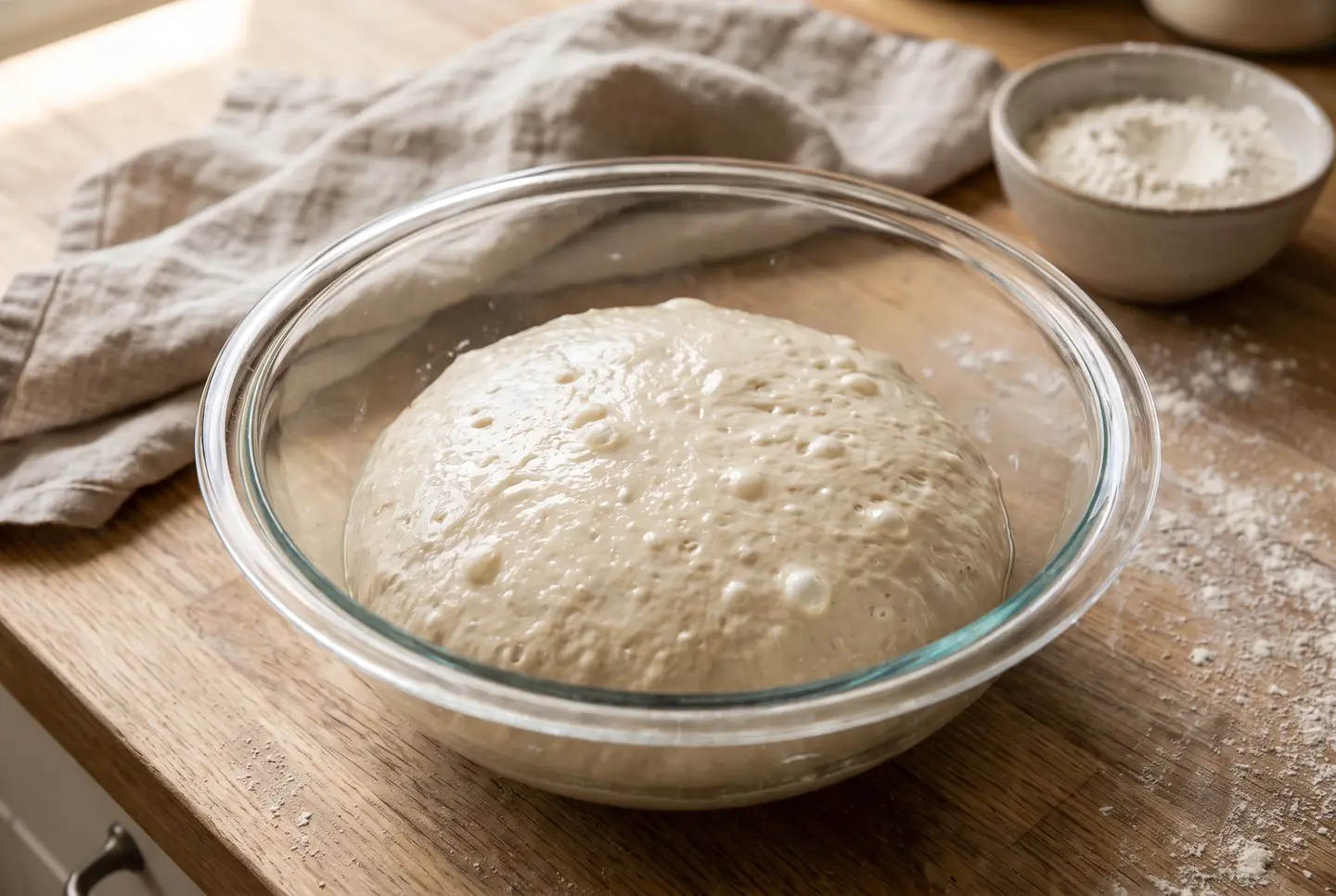
A cold ferment is simply letting the dough rise slowly in the refrigerator, usually one to three days, instead of on the counter in a couple of hours. It does two things a fast rise cannot: it builds far more flavor, and it makes the dough easier to open and lighter to eat. The trade is patience and a shelf of fridge space, not effort, because almost all of the work is waiting.
If you have ever wondered why pizzeria dough tastes deeper than the batch you made in an afternoon, this is usually the reason. It is one method inside the complete pizza dough guide; here we stay on the cold rise, so you can plan it, dose the yeast for it, and bake it right.
What the cold does
Chilling the dough slows the yeast almost to a crawl, but the enzymes in the flour keep working. Over a day or two they break starches into simpler sugars and proteins into aromatic compounds, and the small amount of yeast still ticking produces acids and other byproducts slowly enough to develop complex flavor rather than a plain, bready puff. The result is a crust with a faint tang and a wheatier, deeper taste, plus a more relaxed gluten network that opens into a round without snapping back.
Many people also find a long, slow dough sits easier in the stomach, and the leading theory is that the extended fermentation gives enzymes more time to pre-digest parts of the flour. Treat that as a common observation rather than a medical claim; the flavor and handling gains are the reliable reasons to do it.
The one change that matters: less yeast
The single biggest mistake with cold ferment is using same-day amounts of yeast. Given many hours, even a small dose keeps working and will over-ferment the dough, leaving it slack, blistered and sour by the time you bake. A cold, slow dough wants a fraction of the yeast a fast one uses.
| Method | Instant yeast (on flour) | Total time | Where it rises |
|---|---|---|---|
| Same day | 0.4 to 0.6% | 3 to 5 hours | Counter |
| Overnight cold | 0.2 to 0.3% | 18 to 24 hours | Fridge |
| 48 to 72 hour cold | 0.1 to 0.2% | 2 to 3 days | Fridge |
These follow the standard home ranges: a same-day dough runs around 0.5 percent instant yeast, while a long cold ferment drops to roughly 0.1 to 0.2 percent (Serious Eats; King Arthur). The Neapolitan standard itself uses only 0.1 to 0.2 percent yeast with long maturation (AVPN). The longer the dough will sit, the less yeast it needs.
A simple cold ferment schedule
The rhythm is: mix, a short rest at room temperature, then into the fridge, then a warm-up before baking.
- Mix and rest. Combine everything, knead or fold until smooth, and let the dough sit covered at room temperature for 1 to 2 hours so the yeast wakes up and the gluten relaxes.
- Ball and chill. Divide into individual balls, put each in its own lightly oiled sealed container, and refrigerate. Balling now means you are not fighting a cold, tight dough later.
- Wait. Leave it 24 to 72 hours. Flavor keeps building across those days, so if you can hold out for the second night, you will taste it.
- Warm up. Take the balls out 1 to 2 hours before baking so they come toward room temperature. A dough opened straight from the fridge is tight and tears; a rested one stretches willingly.
Balling before the fridge rather than after is the small move that saves the most grief. A single large mass of cold dough is stiff and stubborn to divide and round; individual balls warm up evenly and are ready to open.
Can you bake straight from the fridge?
You can, but it is the harder road. Cold dough resists stretching and springs back, so you end up forcing it, tearing it, or ending with a thick, tight base. The warm-up in step four exists precisely to avoid this. If you are truly short on time, let the ball sit at least 30 to 45 minutes; even a partial warm-up helps. The one context where cold-from-the-fridge is deliberate is a very hot pizza oven, where the brief chill can buy a touch more oven spring, but in a home oven the rested, room-temperature ball is the reliable choice.
How long is too long?
Most home doughs are at their best between 24 and 72 hours. Past three days a lean dough starts to break down: the gluten weakens, the surface goes grey and blistered, and the flavor tips from pleasantly tangy to sharply sour. Stronger, higher-protein flour holds up longer than a weak one. If you see a dough that has gone slack and wet with large surface bubbles and smells strongly of alcohol or vinegar, it has gone past its window; bake it as a flatbread and cut the yeast or the time on the next round.
Frequently asked questions
How long should pizza dough cold ferment? Twenty-four to 72 hours suits most home doughs. Flavor keeps improving across those days, and a stronger flour can go toward the longer end. Past three days a lean dough starts to break down.
How much yeast for a cold ferment? Far less than a same-day dough. Use roughly 0.1 to 0.2 percent instant yeast on the flour weight for a 24 to 72 hour rise, versus about 0.5 percent for same day. Too much yeast over-ferments it.
Should I ball the dough before or after the fridge? Before. Divide and ball, then chill each in its own container. A single cold mass is stiff to divide later, while individual balls warm up evenly and open cleanly.
Can I bake pizza dough cold from the fridge? It is possible but harder, because cold dough resists stretching. Let the balls warm 1 to 2 hours first for an easy, even open. A quick 30 to 45 minute rest is the bare minimum.
Why is my cold-fermented dough sour and slack? It over-fermented: too much yeast, too long, or both. Reduce the yeast, shorten the time, or use a stronger flour next time, and take it out of the fridge before it passes its window.
Once you get used to it, a cold ferment barely feels like extra work: you trade twenty minutes of afternoon mixing for a dough that waits for you and rewards you with a crust that tastes like it came from a real pizzeria. Mix on Friday, bake on Sunday, and let time do the cooking.
Where I checked
Keep reading
 Guide
Guide
Bagel Dough: Why It Is So Firm, and How to Knead It
Bagel dough feels stiff and dry on purpose. Here is why it runs at 50 to 60% water and high protein flour, how to knead it, and the windowpane to aim for.
6 min read Guide
Guide
Bagel Recipe: New York Style, Step by Step
A weight-based New York bagel recipe, step by step: the firm 58% dough, an overnight cold retard, how long to boil, and the oven heat that sets a glossy crust.
6 min read Complete guide
Bagels: The Complete Guide
Make a real bagel at home: the firm 58% dough, why bagels are boiled before baking, New York vs Montreal, sourdough and gluten free, and how to fix flat ones.
18 min read