Guide
Gluten-Free Focaccia That Stays Soft, Not Dry
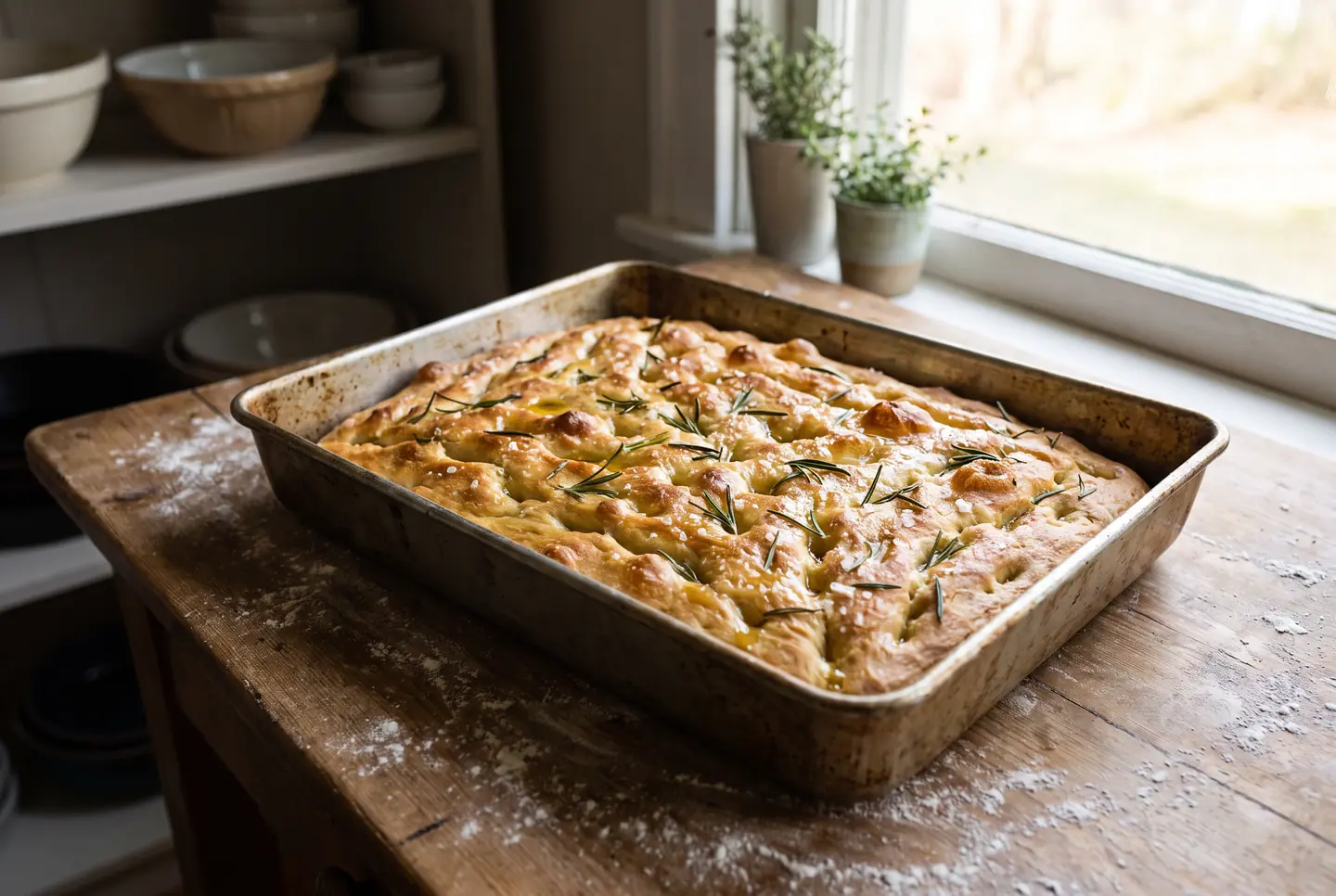
Gluten-free focaccia is one of the more forgiving gluten-free breads to make, as long as you accept that the dough is not a dough at all: it behaves like a thick batter you spread into the pan rather than a springy mass you knead and shape. Get that idea straight and the rest follows, because focaccia is already a wet, oily, pour-and-dimple bread, which is exactly the territory gluten-free flours are comfortable in.
The pitfalls are specific and worth naming up front. Without gluten there is no elastic network to trap the gas, so the bread needs a binder, usually psyllium husk, to hold the bubbles; the batter runs high in hydration; and it dries out fast if you overbake it. Handle those three and you get a focaccia that stays tender. This page sets the flour blend, the binder and the bake; for the base method it borrows from, start with the complete focaccia guide and the standard focaccia recipe.
Why gluten-free focaccia needs a binder
In a wheat focaccia, gluten forms a stretchy web that catches the carbon dioxide from fermentation and holds the open, airy crumb. Gluten-free flours cannot do that on their own, so a batter made from them alone bakes into something dense and crumbly, closer to a biscuit than a bread.
The fix is a binder that gels and mimics part of that job. Psyllium husk is the workhorse: mixed with water it forms a gel that traps gas and gives the crumb some stretch and structure. The King Arthur gluten-free focaccia and The Loopy Whisk both lean on psyllium for exactly this reason. Xanthan gum, often already in a gluten-free flour blend, helps too, but psyllium is what gives gluten-free focaccia its bread-like chew.
The blend and the hydration
Use a good gluten-free bread flour blend rather than a single flour; a mix is what gives a balanced crumb, colour and flavour. The other key is water: gluten-free focaccia runs wet, often wetter than you would expect, because the batter needs to be loose enough to spread and the starches drink up a lot of liquid.
| Element | Role |
|---|---|
| Gluten-free bread flour blend | Structure and flavour, balanced across several flours |
| Psyllium husk | Gels to trap gas, adds stretch and chew |
| High hydration | Loose batter that spreads; keeps the crumb moist |
| Olive oil | Flavour, softness, the glossy top |
| Yeast | Lift; give it time to work the loose batter |
Because it is a batter, you do not knead it. You mix, let the psyllium gel and the yeast work, then spread it into an oiled pan, dimple it once it has risen, and finish with oil.
Baking without drying it out
The single most common gluten-free focaccia failure is a dry, hard result, and it comes from overbaking. Gluten-free breads hold less moisture and cross the line from set to dry quickly, so bake until the top is golden and the bread is just cooked through, and no longer. A hot oven gives a good crust; pulling it at the right moment keeps the inside soft.
Approaches vary by recipe: some, like Gluten Free on a Shoestring, bake in a hot oven for a shorter time, while others par-bake. The principle underneath them all is the same: stop while it is still tender. If your gluten-free focaccia keeps coming out dry, take it out earlier before you change anything else.
A generous amount of olive oil, in the batter and over the dimpled top, also fights dryness and gives the crust its focaccia character. This is not the bread to skimp on oil.
Frequently asked questions
Can you make focaccia gluten-free? Yes, and it is one of the easier gluten-free breads, because focaccia is already a wet, oily, spreadable bread. You use a gluten-free flour blend and a binder like psyllium instead of relying on gluten.
Why does gluten-free focaccia need psyllium? Gluten-free flours have no elastic network to trap gas, so the crumb comes out dense. Psyllium husk gels with water and does part of that job, trapping bubbles and adding stretch and chew.
Is gluten-free focaccia dough a batter? Effectively yes. It is looser and wetter than wheat focaccia dough, so you spread it into the pan rather than knead and shape it.
Why is my gluten-free focaccia dry and hard? Almost always overbaking. Gluten-free breads dry out fast once set, so pull it as soon as the top is golden and it is just cooked through, and use plenty of olive oil.
What flour is best for gluten-free focaccia? A gluten-free bread flour blend rather than a single flour, so the crumb, colour and flavour are balanced. Many blends already include xanthan gum, but psyllium is still what gives the best structure.
Where I checked
Keep reading
 Guide
Guide
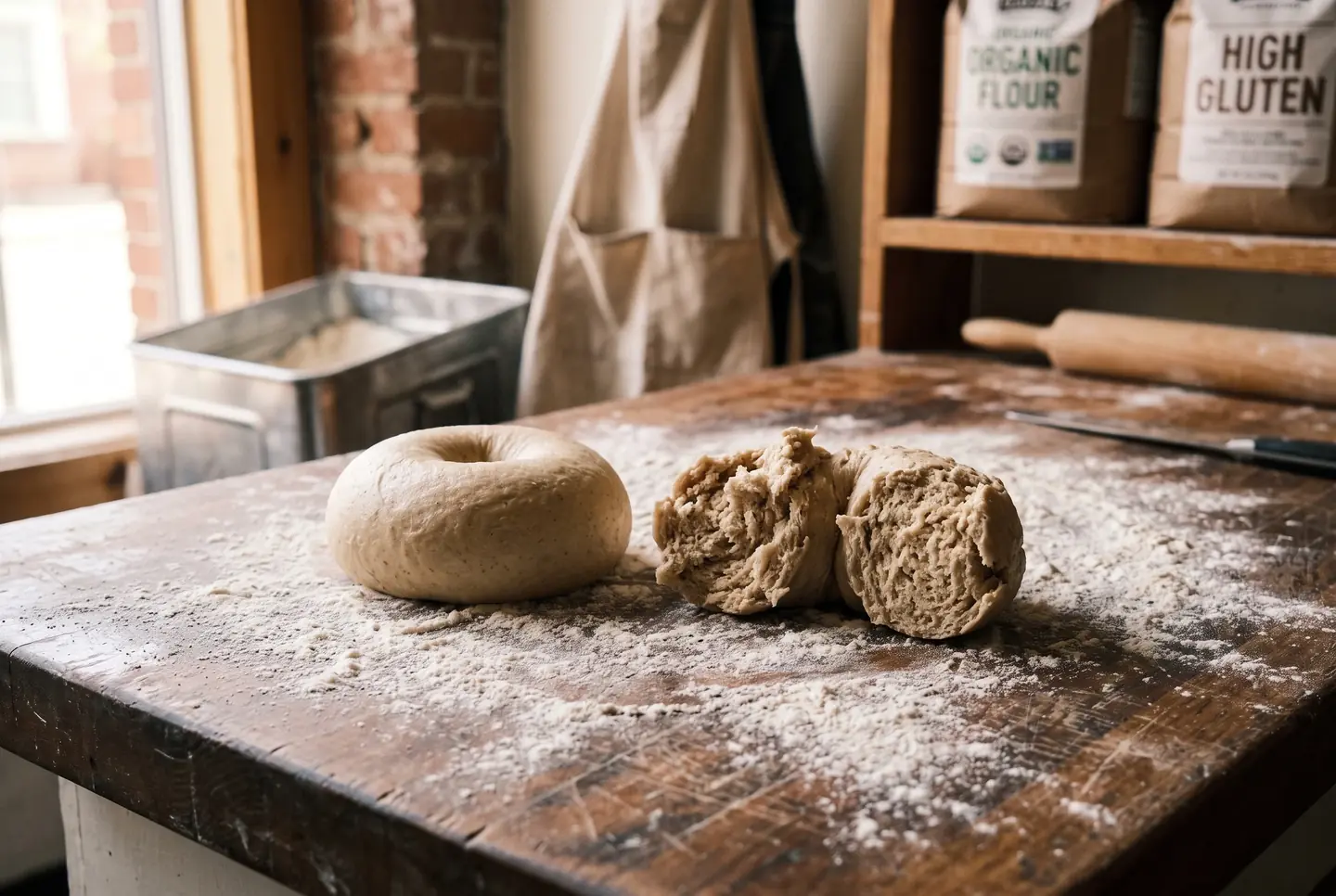
Bagel Dough: Why It Is So Firm, and How to Knead It
Bagel dough feels stiff and dry on purpose. Here is why it runs at 50 to 60% water and high protein flour, how to knead it, and the windowpane to aim for.
6 min read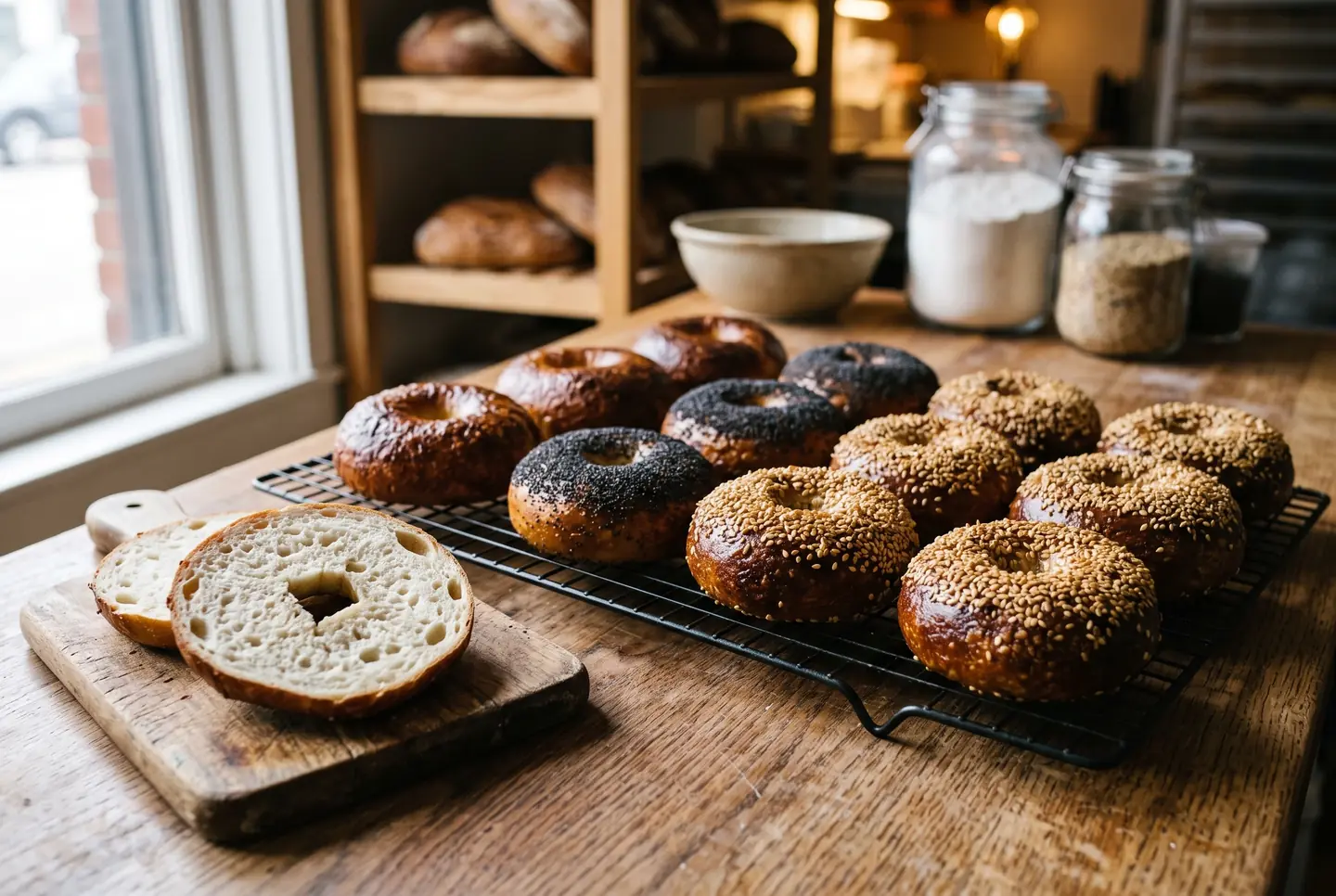 Guide
Guide
Bagel Recipe: New York Style, Step by Step
A weight-based New York bagel recipe, step by step: the firm 58% dough, an overnight cold retard, how long to boil, and the oven heat that sets a glossy crust.
6 min read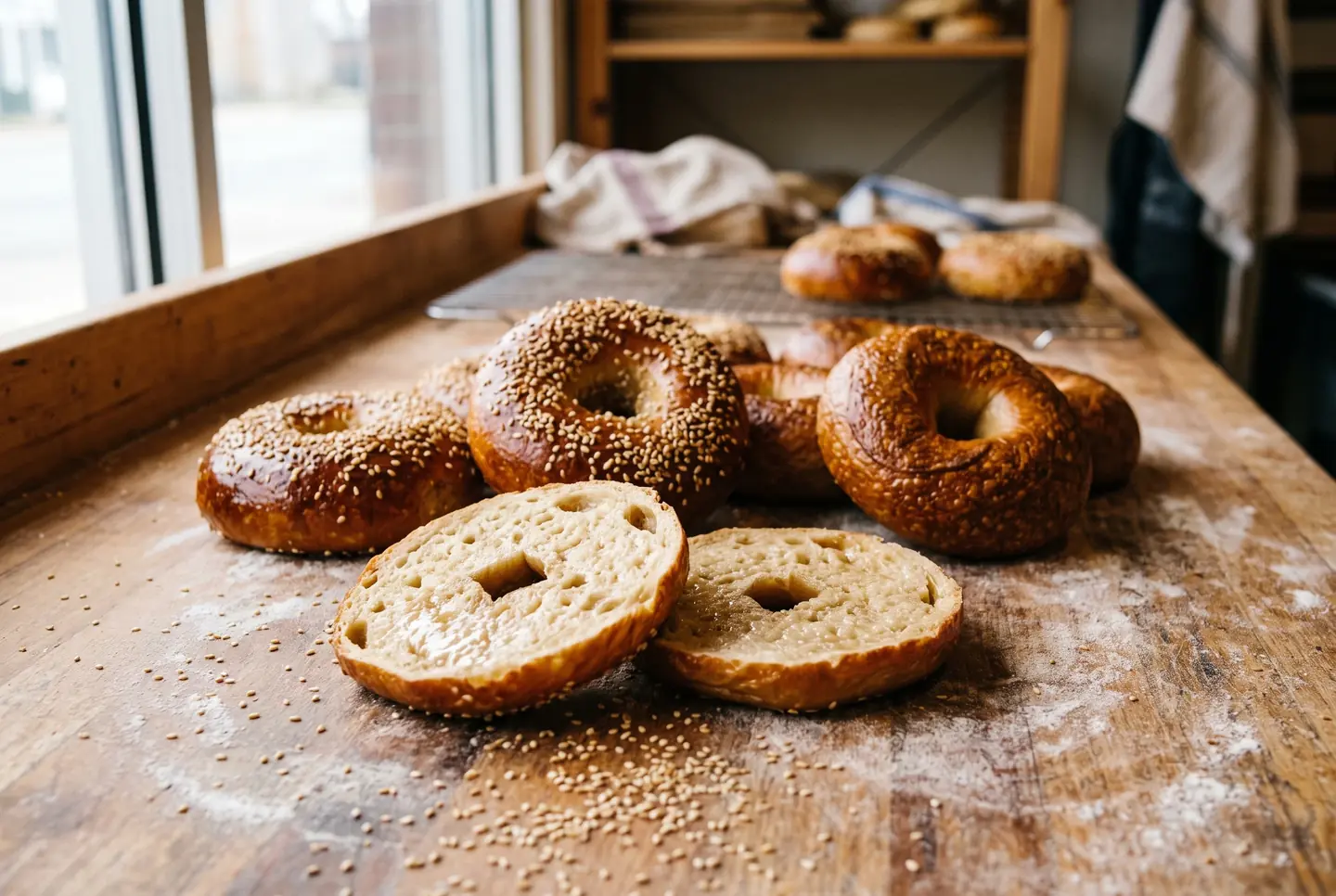 Complete guide
Bagels: The Complete Guide
Make a real bagel at home: the firm 58% dough, why bagels are boiled before baking, New York vs Montreal, sourdough and gluten free, and how to fix flat ones.
18 min read