Guide
How to Bake Detroit Pizza: Heat and a Crisp Base
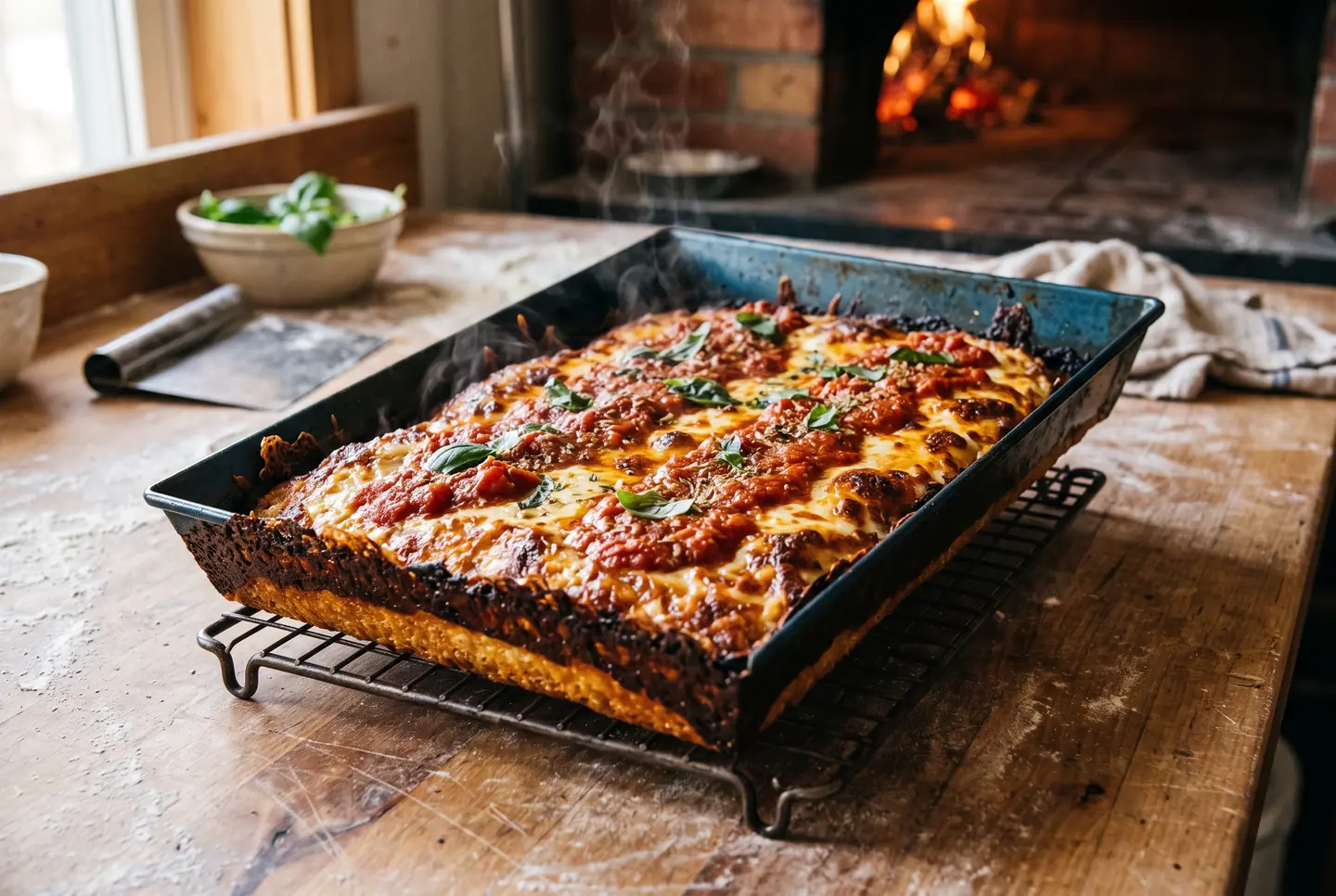
Heat is the third lever of a good Detroit, after the wet dough and the cheese to the edge, and it is the one most home ovens can actually deliver. The short answer: bake hot, in the range of 230 to 290 °C (450 to 550 °F), on a low rack, ideally with a preheated baking steel or stone right under the pan, and pull the pizza when the cheese edge is deeply browned rather than when a timer says so. That combination fries the base crisp while the inside stays airy.
This is the deep version of the baking step from the complete Detroit-style pizza guide. If you want the whole build from dough to table, the step-by-step recipe has it; this page is only about the oven.
The temperature
A Detroit wants real heat, but not the screaming temperature a thin Neapolitan needs. Home recipes land in a wide, forgiving band. A hotter oven browns the frico faster and fries the base harder; a slightly lower one gives the thick crumb more time to cook through before the top over-colors.
| Setup | Temperature | Time | Notes |
|---|---|---|---|
| Standard home oven | 230 to 260 °C (450 to 500 °F) | 12 to 18 min | The common, reliable home range |
| Hot oven with a preheated steel or stone | 260 to 290 °C (500 to 550 °F) | 10 to 14 min | The steel under the pan boosts the base |
| Lower and slower, very thick base | around 220 °C (425 °F) | 14 to 16 min | Thicker doughs cook through without a raw center |
King Arthur's home method runs a hot oven around 260 °C (500 °F), Kenji López-Alt's Serious Eats version pushes to 290 °C (550 °F) on the lowest rack, and a baking steel approach runs lower, around 220 °C (425 °F), leaning on the steel's stored heat instead (King Arthur, Serious Eats, Baking Steel). All of them work. The principle matters more than the exact number: hot enough to color the cheese edge deeply while the crumb is still moist.
The rack and the steel
Where the pan sits changes everything for the base. Put it on a low rack, in the bottom third, so the pizza is close to the oven's main heat source and the bottom cooks first. A base that goes soft under the cheese is nearly always a heat problem, and rack position is the cheapest fix.
The single biggest upgrade is a preheated baking steel or stone. Preheat it on that low rack for a good 45 minutes to an hour so its thermal mass is fully charged, then set the oiled pizza pan straight onto it. The steel drives a burst of stored heat up through the pan and fries the base the way a pizzeria's deck oven would (Baking Steel). Steel is a big part of why the classic Detroit browns so well in the first place, since the metal pan itself soaks and transfers heat into the dough (Wikipedia).
No steel? A stone works nearly as well, and even without either, a low rack in a fully preheated oven still bakes a good Detroit. The steel is an upgrade, not a requirement.
The timing, and why the clock is a rough guide
Most home Detroits are done somewhere between 10 and 18 minutes, but the window shifts with your oven, your pan and how hot you run it. Treat the timer as a reminder to start looking, not as the finish line.
The cue that actually matters is the frico. Pull the pizza when the caramelized cheese edge is deeply browned, not merely golden, because that dark rim is where the flavor concentrates. A pizza pulled the moment it looks "done" on top often has a pale, soft edge and a base that has not fully crisped. Give it the extra couple of minutes it takes to darken the border.
| What you see | What it means | Do this |
|---|---|---|
| Pale, soft cheese edge | Not there yet | Keep baking, check every 2 min |
| Deep brown, lacy edge | The frico is ready | Pull it |
| Cheese edge going black in spots | A touch far, still fine | Pull now; deep brown is flavor, black is bitter |
| Top set but base feels soft | Base under-fried | Next time: lower rack, hotter, use a steel |
Broiler finish, if you need it
If your oven runs cool or your frico is lagging while the top is already set, a short blast under the broiler at the end can push the edge to a deep brown. Watch it the entire time, since it goes from perfect to burnt in under a minute. This is a rescue move, not the main plan: a properly hot oven and a low rack should get you there without it.
Let it rest, briefly
When it comes out, give the pizza a couple of minutes in the pan, then lift it out onto a rack or board so steam does not collect under the base and soften it. Cutting straight away and leaving it sitting in the hot pan is a small way to undo the crisp bottom you just worked for.
Frequently asked questions
What temperature do you bake Detroit-style pizza at? Hot, generally 230 to 290 °C (450 to 550 °F). Around 260 °C (500 °F) is a common home setting. For a very thick base, some bakers drop to about 220 °C (425 °F) and bake a little longer so the center cooks through before the top over-browns.
What rack should Detroit pizza go on? A low rack, in the bottom third of the oven, so the base gets the most direct heat and fries crisp. If you use a baking steel or stone, preheat it on that low rack and set the pan directly on it.
Do I need a baking steel for Detroit pizza? No, but it helps a lot. A preheated steel or stone under the pan drives stored heat into the base for a crisper bottom. Without one, a low rack in a fully preheated oven still bakes a good Detroit.
How long does Detroit pizza take to bake? Usually 10 to 18 minutes, depending on your oven and temperature. Rather than trusting the clock, pull the pizza when the cheese edge is deeply browned, which is the reliable sign that the frico is set and the base has crisped.
Why is the bottom of my Detroit pizza soggy? Almost always not enough heat at the base: a rack set too high, an oven not hot enough, or no steel under the pan. Putting sauce under the cheese instead of on top also steams the crust. Bake hotter, move the pan low, and keep the sauce on top.
Can I use the broiler for the frico? Yes, as a finish. If the cheese edge is lagging while the top is already set, a short broiler blast can deepen the browning. Watch it constantly, because it burns in seconds. A hot enough oven usually makes this unnecessary.
Get the heat right and a Detroit almost bakes itself. Go hot, go low, put a steel under the pan if you have one, and wait for that edge to turn deep brown before you pull it.
Where I checked
Keep reading
 Guide
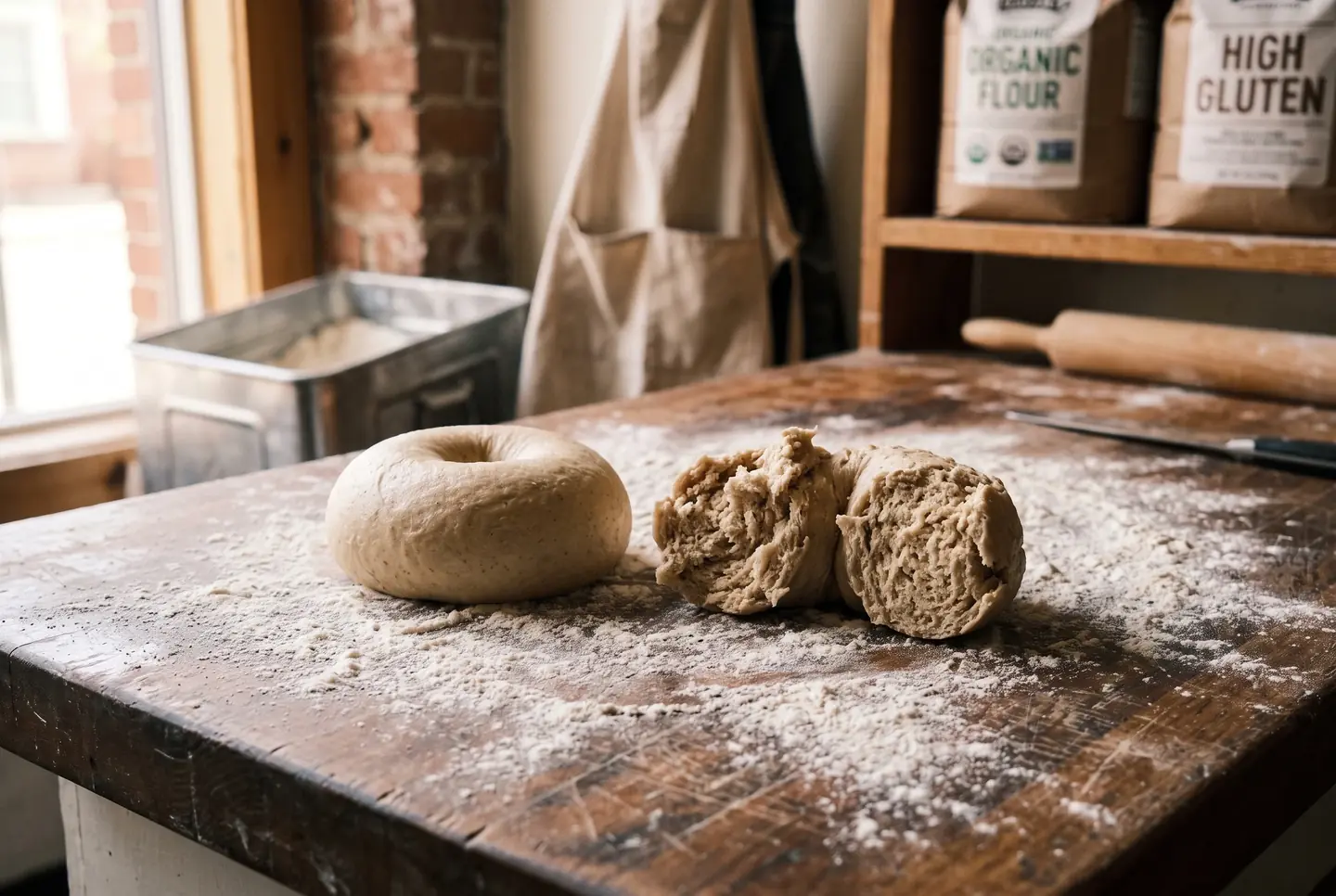
Bagel Dough: Why It Is So Firm, and How to Knead It
Bagel dough feels stiff and dry on purpose. Here is why it runs at 50 to 60% water and high protein flour, how to knead it, and the windowpane to aim for.
6 min read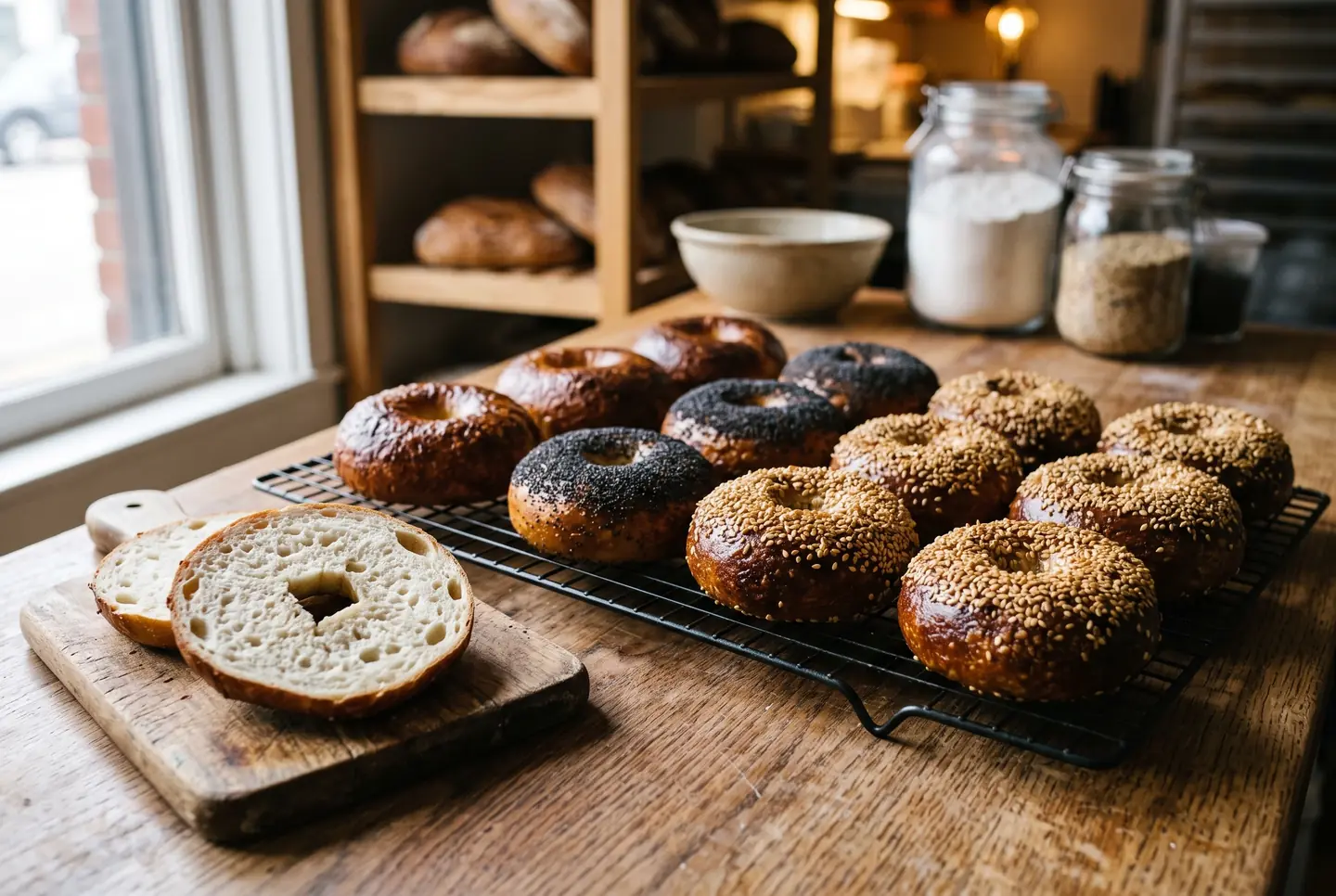 Guide
Bagel Recipe: New York Style, Step by Step
A weight-based New York bagel recipe, step by step: the firm 58% dough, an overnight cold retard, how long to boil, and the oven heat that sets a glossy crust.
6 min read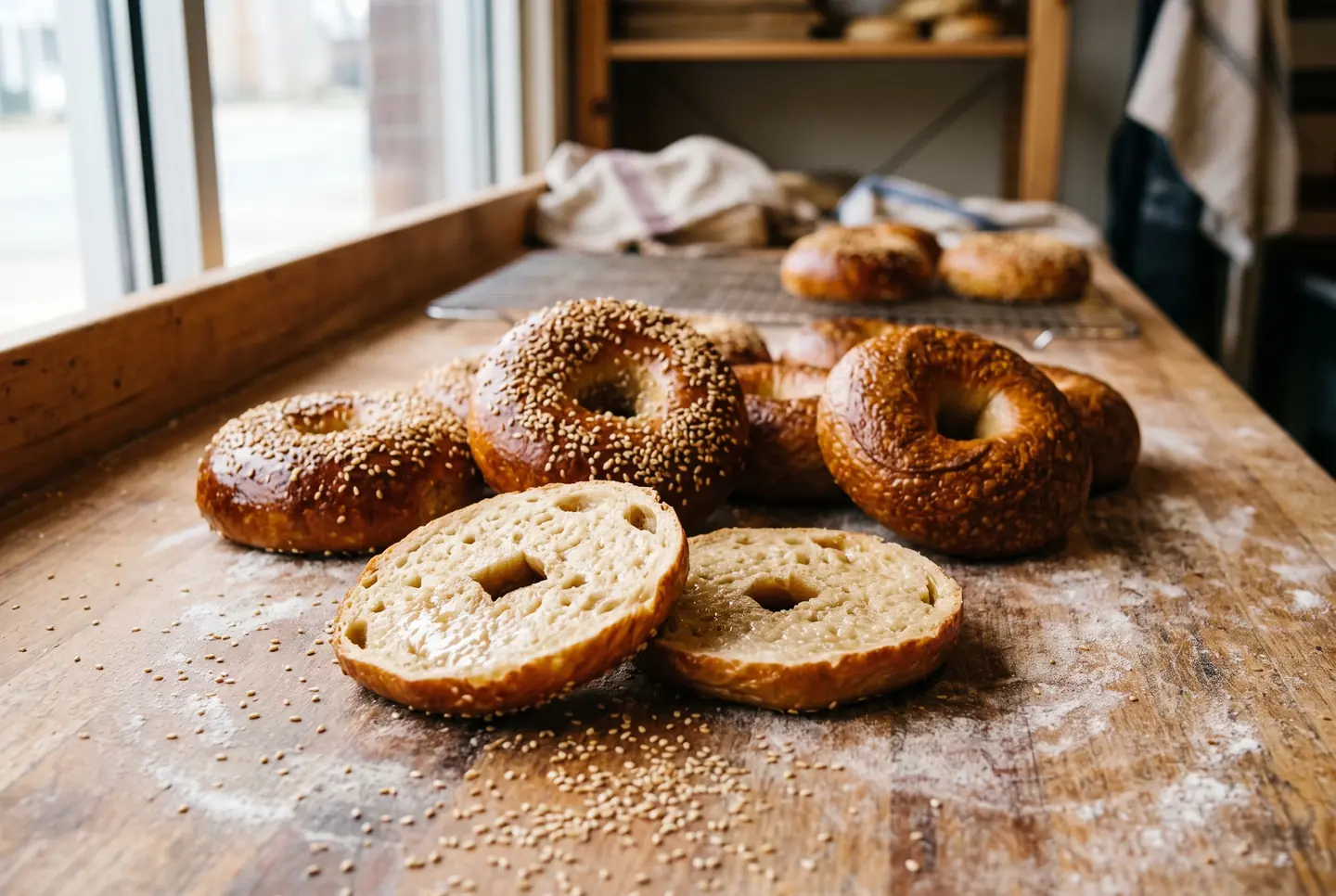 Complete guide
Bagels: The Complete Guide
Make a real bagel at home: the firm 58% dough, why bagels are boiled before baking, New York vs Montreal, sourdough and gluten free, and how to fix flat ones.
18 min read