Guide
Gluten Free Detroit Pizza: The Pan Does the Work
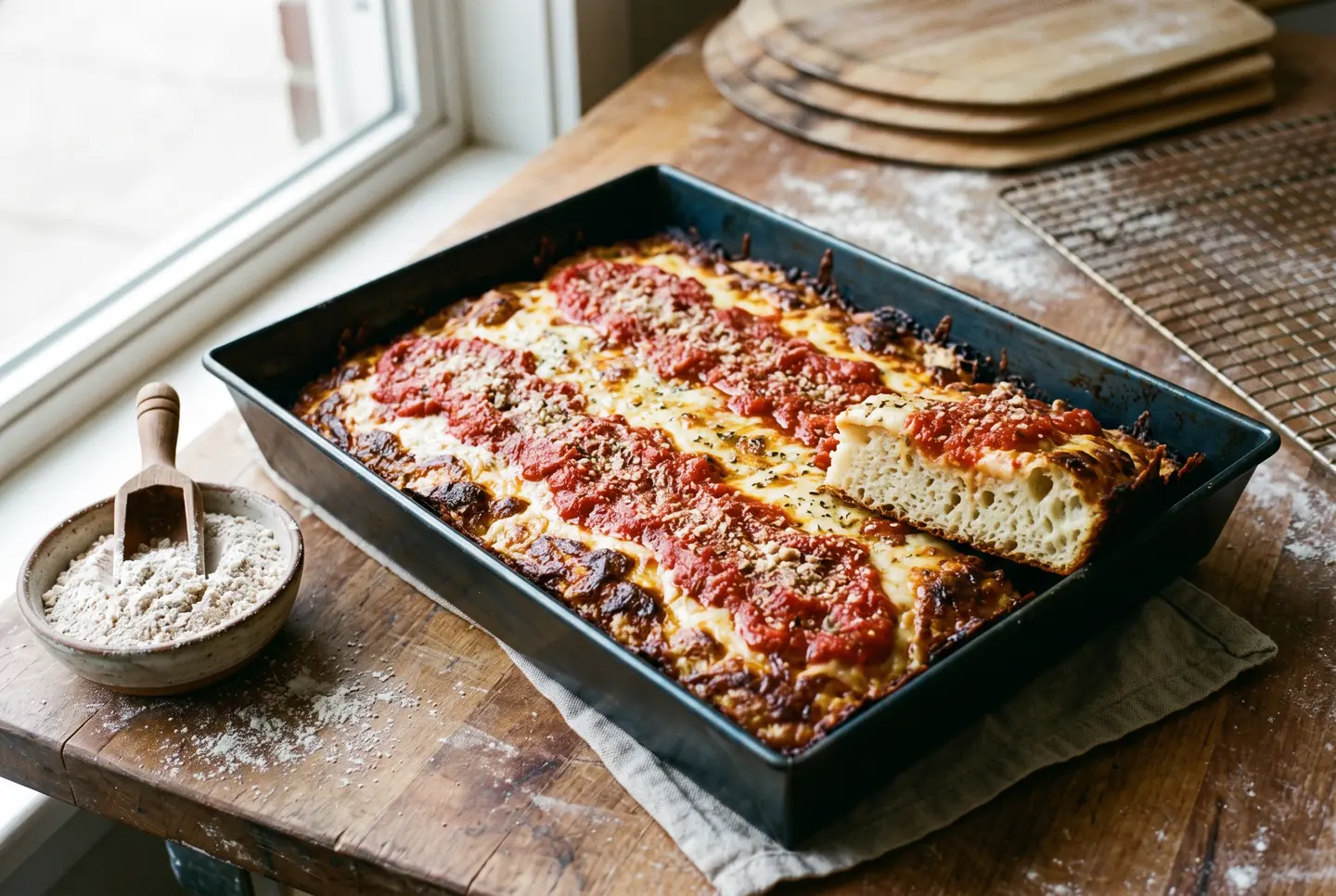
A Detroit-style pizza is one of the friendliest targets in all of gluten free baking, and here is why: you never have to stretch and toss a delicate dough in the air. You press it into a pan. The pan does the structural work that gluten normally would, which removes the exact step where gluten free doughs usually fall apart. If thin, tossed gluten free crusts have frustrated you, a Detroit is where the style finally works in your favor.
This is the deep version of the gluten free note in the complete Detroit-style pizza guide. The principle in one line: choose a good blend with a binder, keep the dough wet so it presses out easily, and let the pan and the heat do the rest.
Why pan style is easier gluten free
Gluten is what makes wheat dough stretchy and elastic. Gluten free doughs have none of it, so they tear when you try to shape them by hand and they slump without support. A Detroit sidesteps both problems: the dough is pressed flat into an oiled rectangular pan, and the walls of the pan hold its shape while it rises and bakes. You are asking the dough to sit still, not to perform.
The other gift is the frico, the caramelized cheese edge. Because that border is pure cheese melting against the hot metal, it comes out exactly as good on a gluten free base as on a wheat one (Wikipedia). The single most distinctive part of a Detroit is the part you never have to compromise.
The flour blend and the binder
The most important choice is a gluten free bread or pizza flour blend that already contains a binder. That binder, usually xanthan gum or psyllium, is the stand-in for gluten: it gives the dough enough stretch to press out and enough structure to hold the gas that makes the crumb.
Well-regarded blends for this style include Caputo Fioreglut, which carries its structure from psyllium and other starches, and King Arthur Gluten-Free Pizza Flour (Wheat by the Wayside, Meaningful Eats). If your blend does not list a binder, add xanthan gum, typically about a teaspoon per cup of flour (Bob's Red Mill), or the dough will crumble.
| Blend type | Binder | Notes |
|---|---|---|
| Dedicated GF pizza flour | Already included | Easiest, most reliable for this style |
| All-purpose GF blend | Check the label | Add xanthan gum if none is listed |
| Homemade starch mix | You must add it | Xanthan or psyllium, or the dough will not hold |
Keep it wet, give it time in the pan
Gluten free doughs behave more like a thick batter than a kneadable dough, and that is normal. Keep the mix on the wet side: a wetter dough spreads into the corners under oiled fingers or a spatula far more easily than a stiff one. Oil the pan well, press the dough out to the edges, and then be patient.
Because there is no gluten to trap gas quickly, give the dough a little longer to rise and firm up in the oiled pan before it bakes, until it looks puffy and set at the edges, often around 45 minutes to an hour in a warm spot (Wheat by the Wayside). Rushing this step is the main reason a gluten free Detroit bakes up flat and gummy.
Building and baking
From here it is a normal Detroit. Push a good melting cheese all the way to the metal edge for the frico, add toppings, and stripe the sauce on top. Bake hot, in the same 230 to 290 °C (450 to 550 °F) range as the wheat version, until the cheese edge is deeply browned and the base is crisp. The step-by-step recipe and the baking guide cover the build and the oven in detail; nothing there changes because the crust is gluten free.
One small watch point: gluten free bases can look done on top before the middle is set, so trust the deeply browned frico and a firm, crisp bottom rather than the clock.
A word on cross-contamination
If you are cooking for someone with celiac disease rather than a preference, the crust is only part of the job. Gluten hides in shared gear: a wooden board or a pan that has held wheat dough, a flour-dusted counter, a pizza cutter used on a regular pie. Use clean equipment, a freshly washed pan, and check that your toppings are gluten free too, since some sausages, seasonings and even a few pre-shredded cheeses carry wheat-based additives.
None of this changes the recipe, but it changes whether the finished pizza is actually safe for the person you made it for. When in doubt, read the label and start with clean surfaces.
Frequently asked questions
Can you make Detroit-style pizza gluten free? Yes, and it is one of the easier gluten free pizzas to pull off, because you press the dough into a pan instead of stretching and tossing it. Use a gluten free blend with a binder, keep the dough wet, and let it rise in the oiled pan before baking.
What flour is best for gluten free Detroit pizza? A dedicated gluten free bread or pizza flour blend that already includes a binder works best. Caputo Fioreglut and King Arthur Gluten-Free Pizza Flour are commonly recommended for this style. If your blend has no binder, add xanthan gum.
Do I need xanthan gum? Only if your flour blend does not already contain a binder. Many gluten free pizza flours include xanthan or psyllium. If yours does not, add xanthan gum, or the dough will crumble and the crumb will not hold together.
Why is my gluten free Detroit dense or gummy? Usually too little rise time in the pan, or a dough that was too dry. Keep the dough wet so it presses out easily, and give it a full rise in the oiled pan until puffy before baking. Also make sure the base is fully baked, since gluten free crusts can look done before the middle sets.
Is the frico still good on a gluten free Detroit? Yes, and this is the best part. The caramelized cheese edge is pure cheese against the hot pan, so it comes out just as crunchy and flavorful on a gluten free base. The most distinctive feature of the pizza is untouched.
Can I use a regular gluten free all-purpose flour? You can, but check whether it contains a binder and add xanthan gum if it does not. Dedicated pizza or bread blends tend to give a better rise and a more open crumb than a plain all-purpose gluten free mix.
Can I make the dough ahead of time? Yes. You can mix the dough, press it into the oiled pan, and let it rise, or refrigerate the dough and bring it back to room temperature to rise in the pan before baking. Gluten free doughs do not develop flavor from a long ferment the way wheat sourdough does, so make-ahead here is about convenience, not taste. Just be sure it has fully risen and warmed in the pan before it goes in the oven.
The thing that makes gluten free pizza hard, shaping a fragile dough, is the thing a Detroit never asks of you. Press it into the pan, keep it wet, and let that cheese edge remind you nothing was lost.
Where I checked
Keep reading
 Guide
Bagel Dough: Why It Is So Firm, and How to Knead It
Bagel dough feels stiff and dry on purpose. Here is why it runs at 50 to 60% water and high protein flour, how to knead it, and the windowpane to aim for.
6 min read Guide
Bagel Recipe: New York Style, Step by Step
A weight-based New York bagel recipe, step by step: the firm 58% dough, an overnight cold retard, how long to boil, and the oven heat that sets a glossy crust.
6 min read Complete guide
Bagels: The Complete Guide
Make a real bagel at home: the firm 58% dough, why bagels are boiled before baking, New York vs Montreal, sourdough and gluten free, and how to fix flat ones.
18 min read