Guide
Detroit Pizza Troubleshooting: Fix the Common Faults
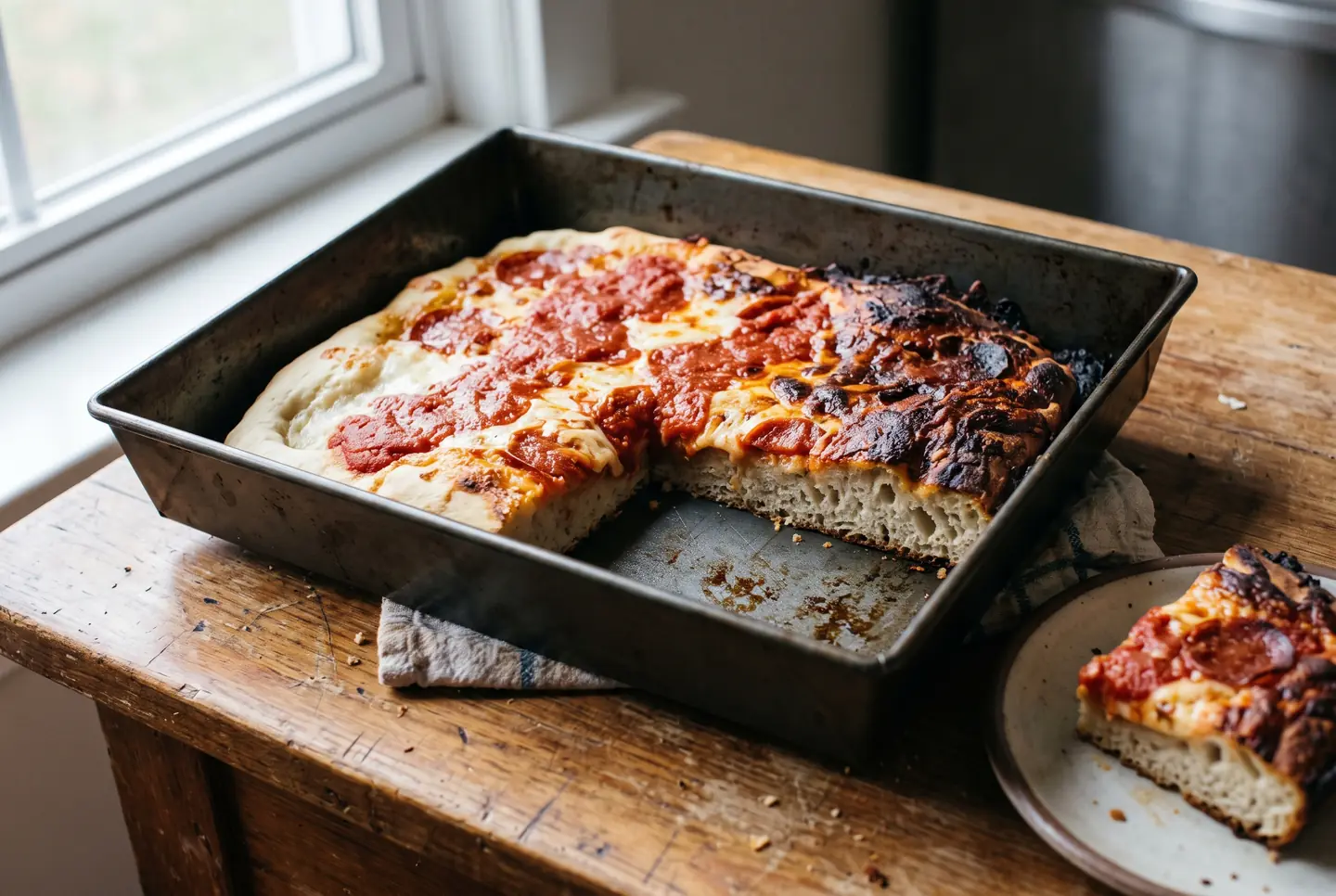
Almost every disappointing Detroit is one of a handful of problems, and each has a clear cause and an easy fix. The two most common by far are a base that looks done but is soft under the cheese, and a missing or burnt frico. If you only remember one thing: a soft base is a heat problem, and a missing frico is a placement problem. Everything below is the detail.
This is the deep version of the troubleshooting note in the complete Detroit-style pizza guide. Find your symptom, read the cause, apply the fix.
The quick diagnosis table
| Symptom | Main cause | The fix |
|---|---|---|
| Soggy, soft bottom | Not enough base heat, glass pan, or sauce under the cheese | Steel pan, bake hotter and lower, sauce on top |
| No frico, plain edges | Cheese did not reach the pan wall | Push cheese all the way to the edge and up the sides |
| Burnt, bitter edge | Too hot too long, or low-fat cheese | Pull at deep brown, use a higher-fat cheese |
| Dense, bready inside | Dough too dry or underproofed | Raise water toward 70%, full rise in the pan |
| Will not reach the corners | Gluten too tight, forced in one go | Stretch, rest ten minutes, stretch again |
| Greasy pizza | Too much oil, or very fatty cheese piled on | Coat the pan, do not pool it; blot if needed |
Soggy or soft bottom
This is the number one complaint, and it is nearly always heat. The base needs to fry, and frying needs a hot, conductive surface. A pan that does not conduct well, an oven that was not hot enough, or a rack set too high all leave the bottom steaming instead of crisping.
Fix it in this order: bake hotter, move the pan to a low rack, and if you can, set it on a preheated baking steel or stone so the base gets a burst of stored heat. The baking guide covers the oven setup in full.
Two other causes hide here. A glass or ceramic dish will never fry a base the way metal does, so use a metal pan. And sauce placed under the cheese soaks straight into the dough; on a Detroit the sauce goes on top of the cheese, which keeps the crust dry and rising (Mashed).
No frico, or a pale edge
The frico, that lacy caramelized cheese border, only forms where cheese touches the hot metal wall of the pan. No cheese at the edge means no frico. The fix is placement: push the cheese all the way out to the pan wall, even a little up the sides, so it can melt against the metal and caramelize (Wikipedia).
Keep the sauce away from the very edge too. Sauce sitting at the rim cools and wets the spot where you want the cheese to brown, and it can stop the frico from forming (Mashed). And do not pull the pizza too early: an edge that is only golden has not set into a proper frico yet, so give it the extra minutes to go deep brown.
Burnt or bitter cheese edge
Here is the nuance most people get wrong. A very dark, almost-burnt-looking frico is usually flavor, not a mistake; deep caramelization is the point of the edge. What you want to avoid is truly black and acrid.
If the edge is genuinely burning, two things are likely. The oven ran too hot for too long, so pull earlier next time and watch the edge rather than the clock. Or the cheese was too low in fat, which scorches instead of caramelizing; a higher-fat melting cheese browns to that deep, sweet edge instead of burning. Aim for a deep medium-to-dark brown, and stop there.
Dense, bready inside
If the crumb is tight and heavy instead of open and airy, the dough was the problem, not the bake. The two usual causes are too little water and too little proof. A Detroit crumb needs a wet dough, around 70% hydration, and a full rise in the oiled pan before baking (Alexandra's Kitchen).
Raise the water toward 70%, use a strong bread flour to hold it, and let the dough puff fully in the pan until it looks airy before it goes in the oven. The dough guide has the full method for handling a wet dough.
Dough that will not reach the corners
A wet Detroit dough fights back when you try to force it to the corners straight out of the fridge, and pushing harder just tears it. The gluten is tight and needs to relax. The move is stretch, rest, stretch: press it toward the corners as far as it goes willingly, cover it and wait ten minutes, then come back and it will reach with no fight. Patience does what muscle cannot.
Greasy pizza
Some richness is right for a Detroit, but a slick, oily slice usually means too much oil in the pan or a very fatty cheese piled on thick. Use enough oil to coat the pan so the base fries and releases, not so much that it pools. If the finished pizza is greasy, a quick blot with a paper towel on top pulls off the excess without hurting the flavor.
Frequently asked questions
Why is my Detroit pizza soggy on the bottom? Not enough heat at the base. Use a metal pan, not glass, bake hot on a low rack, and set the pan on a preheated steel or stone if you can. Also keep the sauce on top of the cheese, since sauce under the cheese soaks into the dough.
Why did my pizza not get a crispy cheese edge? The cheese did not reach the pan wall, so it could not caramelize against the hot metal. Push the cheese all the way to the edge and slightly up the sides, keep sauce away from the rim, and wait until the edge is deeply browned before pulling it.
My frico looks almost burnt. Did I ruin it? Probably not. A deep, dark caramelized edge is flavor, not a fault, and it is meant to look intense. Only a genuinely black, acrid edge is too far. If it is truly burning, lower the time or use a higher-fat cheese that browns instead of scorching.
Why is the inside dense instead of airy? The dough was too dry or underproofed. Raise the water toward 70%, use a strong bread flour, and let the dough rise fully in the oiled pan until puffy before baking. An open, airy crumb comes from a wet, well-proofed dough.
My dough will not stretch to the corners. What do I do? Stop forcing it. Stretch it as far as it goes, rest it covered for ten minutes so the gluten relaxes, then stretch again. It will reach the corners on the second try without tearing.
Why is my Detroit pizza greasy? Usually too much oil in the pan or a very fatty cheese used heavily. Coat the pan with enough oil to fry and release the base, not enough to pool, and blot any excess off the top of the finished pizza.
None of these faults are mysteries. Soft base, bake hotter and lower. No frico, cheese to the edge. Dense inside, more water and more proof. Fix one thing at a time and your next Detroit will show it.
Where I checked
Keep reading
 Guide
Bagel Dough: Why It Is So Firm, and How to Knead It
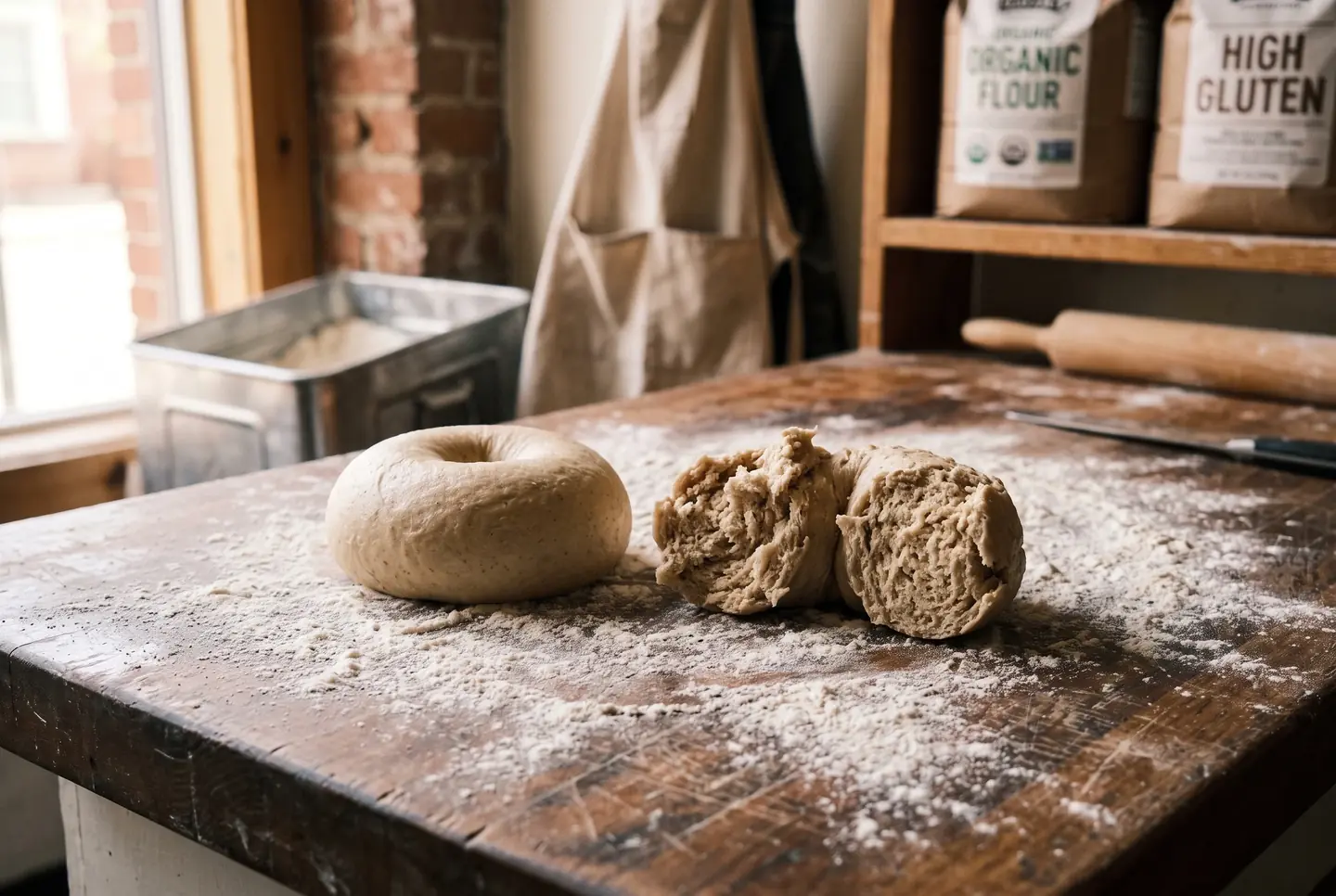
Bagel dough feels stiff and dry on purpose. Here is why it runs at 50 to 60% water and high protein flour, how to knead it, and the windowpane to aim for.
6 min read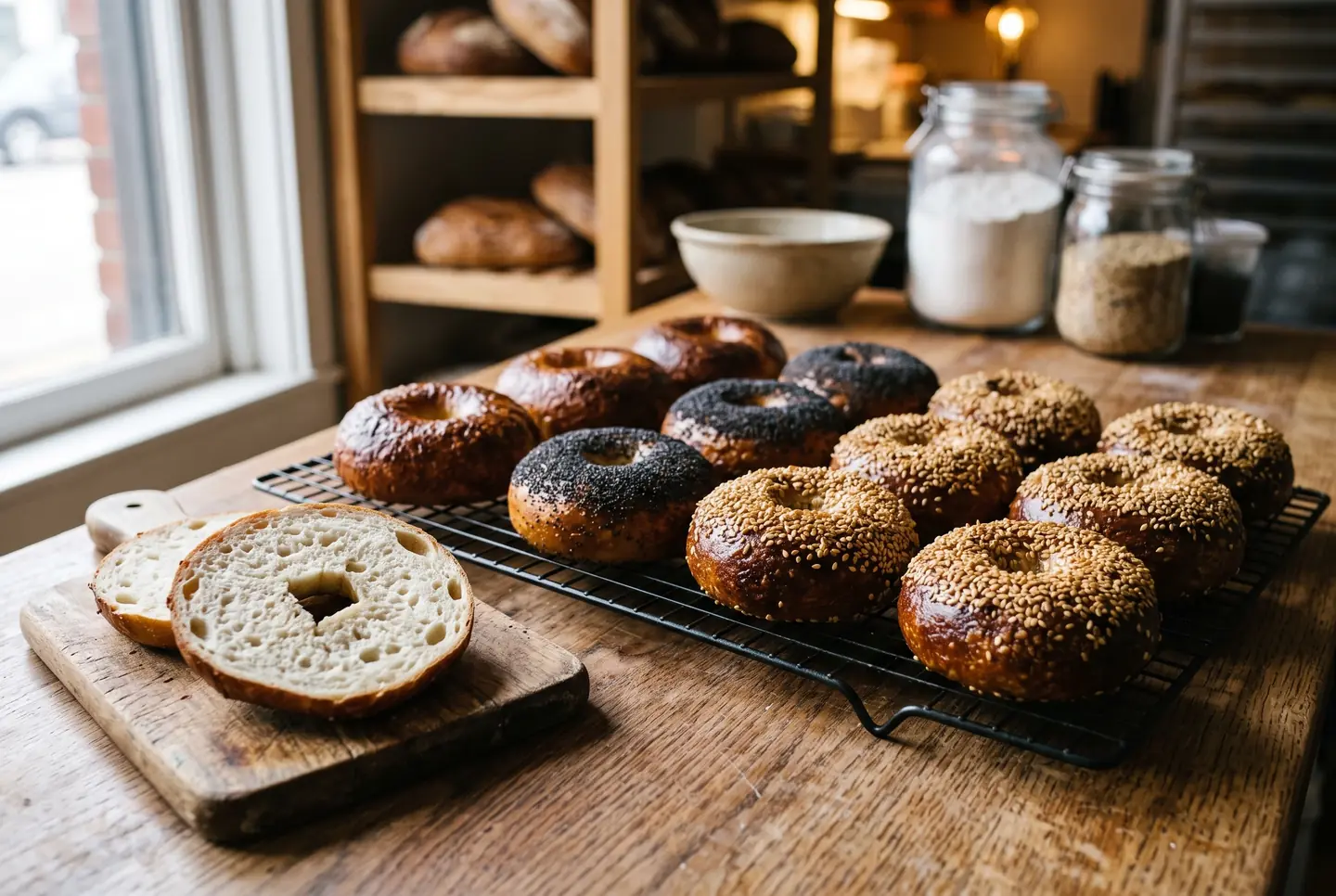 Guide
Bagel Recipe: New York Style, Step by Step
A weight-based New York bagel recipe, step by step: the firm 58% dough, an overnight cold retard, how long to boil, and the oven heat that sets a glossy crust.
6 min read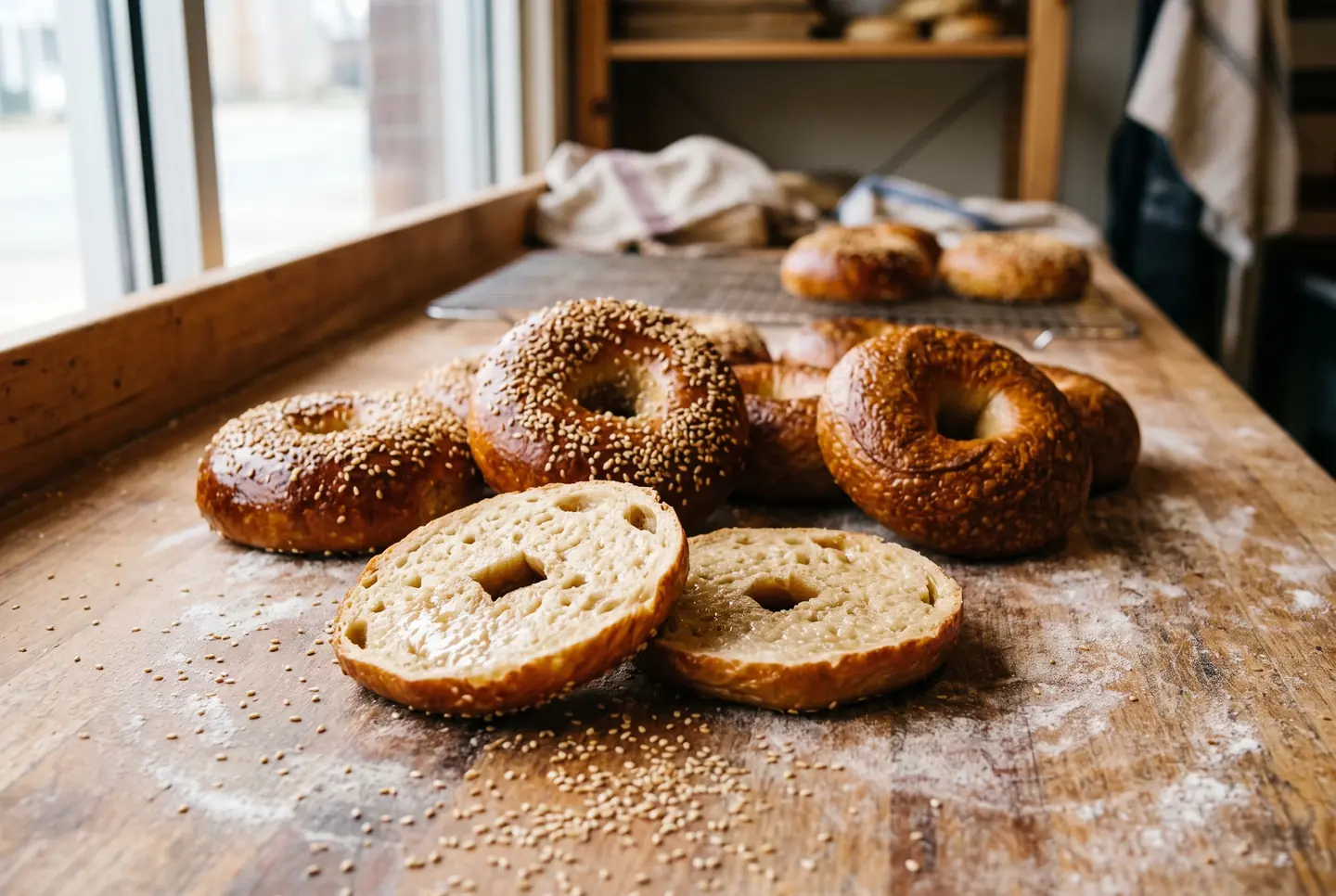 Complete guide
Bagels: The Complete Guide
Make a real bagel at home: the firm 58% dough, why bagels are boiled before baking, New York vs Montreal, sourdough and gluten free, and how to fix flat ones.
18 min read