Guide
Detroit Pizza Pan: What to Buy, What to Skip
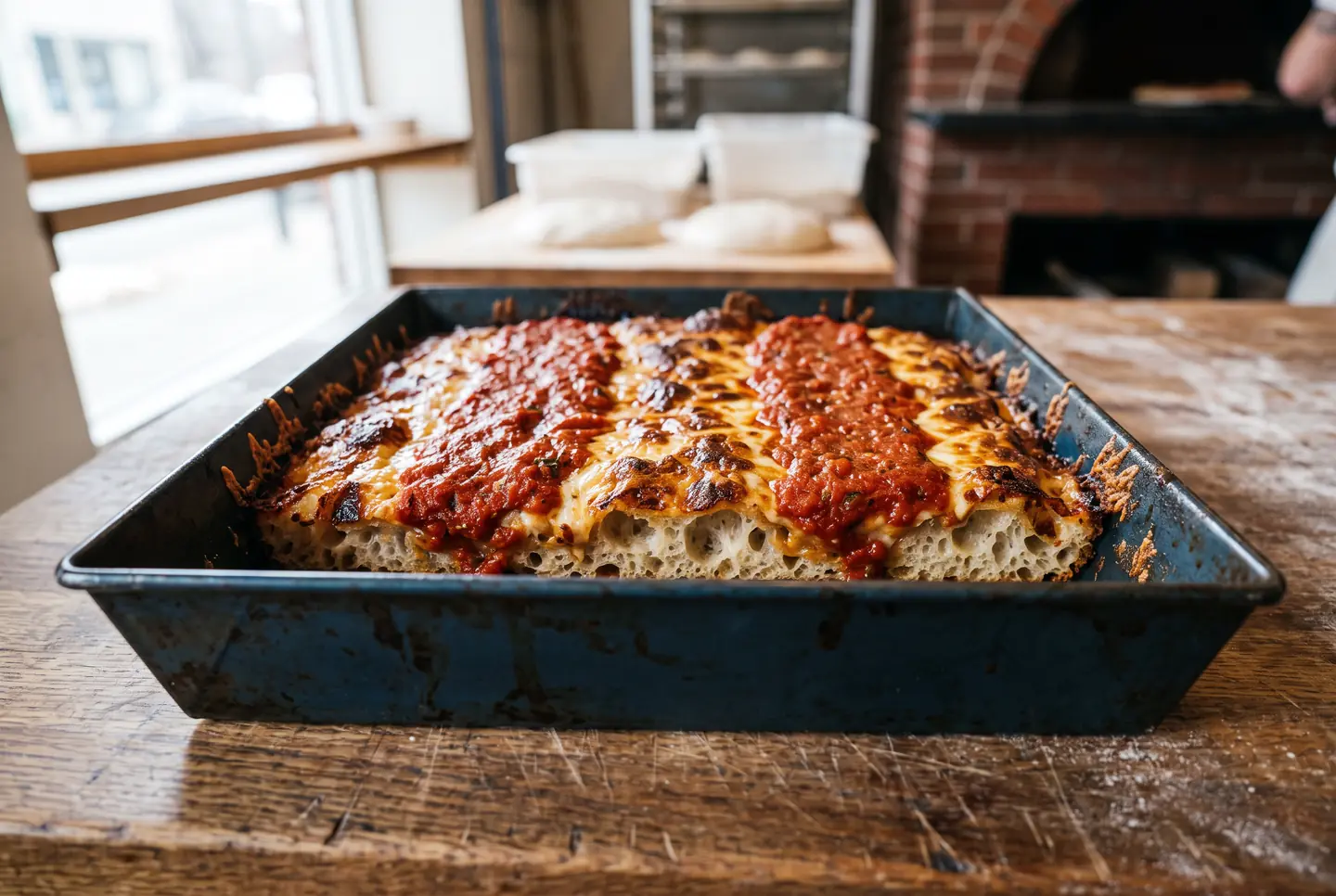
The pan is the most important tool in a Detroit-style pizza, more than the oven and more than the cheese. The right one is a heavy metal pan with straight, tall walls: dark anodized aluminum or blue steel, rectangular, with sides about 6 cm (2.5 inches) high. It has to do two jobs at once, conduct heat hard into the oiled base so the bottom fries, and give the cheese a vertical wall to climb and caramelize against into the frico. Glass and ceramic cannot do either, and that is why they are the one thing to avoid.
If you already own a heavy metal cake or brownie pan with straight sides, you can make an excellent Detroit tonight without buying anything. This page goes deeper on the pan than the complete Detroit-style pizza guide has room for: the materials, the sizes, the real substitutes, and why the wall shape decides whether you get a frico at all.
The two jobs a Detroit pan has to do
Everything about a Detroit pan comes back to two demands, and every material choice is really a question of how well it meets them.
The first is heat conduction into the base. The oiled bottom of the dough does not just bake, it fries against the hot metal, and that only happens if the pan drives heat down hard and fast. The second is a straight, tall wall. The frico, the dark lacy edge everyone loves, forms where cheese pushed against the pan wall melts, pools and caramelizes. A sloped or rounded wall gives the cheese nowhere to climb, so it slumps instead of crisping.
Hold those two jobs in mind and the whole pan debate sorts itself out: you want a conductive metal in a shape with vertical sides.
Material: aluminum, steel, cast iron, and what to avoid
The classic Detroit pan is blue steel, and there is real history in that. According to the story of the style, the first Detroits in 1946 were baked in blue steel utility trays from the local auto-parts suppliers, and steel conducts and throws heat in a way that browns the base beautifully.
But steel is not the only good answer, and it is not the easiest. Modern pan makers and bakers lean toward dark anodized aluminum: King Arthur's Detroit pan is dark anodized aluminum precisely because the near-black surface absorbs and distributes heat quickly for the crispiest base, and pan guides note that aluminum conducts heat far faster than steel and weighs a fraction as much for the same thickness. The dark coating also stops the cheese sticking, where a bare steel pan needs seasoning first.
| Pan material | Base result | Frico edge | Notes |
|---|---|---|---|
| Dark anodized aluminum | Excellent, fast even browning | Excellent with straight walls | Light, no seasoning needed, the modern favorite |
| Blue or seasoned steel | Excellent, the original | Excellent | Heavy, needs seasoning, the heritage choice |
| Heavy metal cake or brownie pan | Good | Good if sides are straight | The best substitute most kitchens own |
| Cast iron skillet | Very good base | Rounded edge, less frico | Great crunch, but the round wall limits the rim |
| Glass or ceramic dish | Pale, slow | Weak | Insulates instead of conducting, avoid it |
The takeaway: anodized aluminum or blue steel if you are buying, a straight-sided metal pan if you are not, and never glass or ceramic, which insulate and leave the base pale and soft no matter how long you bake.
Size and shape: why the walls decide the frico
A true Detroit pan is rectangular with straight, tall sides, and the classic sizes are 8 by 10 inches and 10 by 14 inches (about 20 by 25 cm and 25 by 35 cm). The taller sides, around 6 cm, are not for a thicker pizza, they are for the frico: the dough only fills part of that height, and the rest is the vertical wall the cheese caramelizes against.
That is the detail most substitutes get wrong. A shallow sheet pan or a bowl-shaped dish gives the cheese no wall to climb, so you get a thick pizza with soft edges and no frico, which is just bread with cheese on top. Straight walls at least 4 to 5 cm tall are the feature to look for, more than the exact footprint.
| Size | Best for | Notes |
|---|---|---|
| 8 by 10 inches | One or two people, a first pan | The easiest to fit in a home oven |
| 10 by 14 inches | A family-sized pizza | The other classic, needs a full-width oven |
| A 9 by 13 inch cake pan | The substitute route | Straight sides make it a fine Detroit stand-in |
The substitute you probably already own
You do not need a dedicated Detroit pan to make a great one. A heavy metal cake or brownie pan with straight sides, seasoned with a good coat of olive oil, gets you most of the way there, and a 9 by 13 inch metal pan is a common and reliable choice. The rules are the same as for the real thing: metal, not glass; straight walls, not sloped; and enough oil to fry the base.
A cast iron skillet is the interesting edge case. It conducts heat superbly and gives a wonderful crunch, so the base can be excellent, but its rounded wall means the frico is softer and less defined than a square-cornered pan gives. Use it happily if it is what you have; just know the lacy rim will be gentler.
The only real failure is glass or ceramic. They insulate rather than conduct, so the base stays pale and soft, and the wall never gets hot enough to build a frico. If that is all you own, the pizza is worth waiting until you can borrow a metal pan.
Seasoning and care
A bare steel pan needs seasoning before it will release a pizza cleanly: a few thin coats of oil baked on, the same idea as a cast iron skillet, which builds a slick surface and keeps the cheese from welding to the metal. Anodized aluminum and nonstick pans skip this step, which is part of why they are the easier buy.
Whatever the pan, oil it generously for each pizza. That oil is not just for release, it is the frying medium for the base, and it is doing half the work of the crisp bottom every time.
Frequently asked questions
What pan is best for Detroit-style pizza? A heavy rectangular pan with straight, tall walls, in dark anodized aluminum or blue steel. Aluminum conducts heat fast and needs no seasoning; steel is the heritage choice and browns beautifully once seasoned. Both build a crisp base and a strong frico.
What size is a Detroit pizza pan? The two classic sizes are 8 by 10 inches and 10 by 14 inches, with straight walls about 6 cm (2.5 inches) tall. The tall walls give the cheese room to climb and caramelize into the frico; the dough only fills part of that height.
Can I use a regular pan for Detroit pizza? Yes. A heavy metal cake or brownie pan with straight sides, oiled well, makes an excellent Detroit, and a 9 by 13 inch metal pan is a common stand-in. Avoid glass and ceramic, which insulate and leave the base soft.
Is aluminum or steel better for a Detroit pizza pan? Both work. Anodized aluminum heats faster, is lighter and needs no seasoning, which is why many modern pans use it. Blue steel is the original and browns superbly but is heavier and must be seasoned first. The wall shape matters more than which of the two you pick.
Can I make Detroit pizza in a cast iron skillet? Yes, and the base comes out crisp because cast iron conducts heat well. The trade is the frico: the skillet's rounded wall gives a softer, less defined caramelized edge than a square-cornered pan. It is a good option if it is what you have.
Do I need to season a Detroit pizza pan? A bare steel pan, yes: bake on a few thin coats of oil before the first use so pizzas release cleanly. Anodized aluminum and nonstick pans do not need seasoning. Either way, oil the pan well for every pizza, because that oil fries the base.
Buy anodized aluminum or blue steel if you make these often, reach for a straight-sided metal cake pan if you do not, and keep glass out of it. Straight tall walls and a good slick of oil are what turn a pan into a frico machine.
Where I checked
Keep reading
 Guide
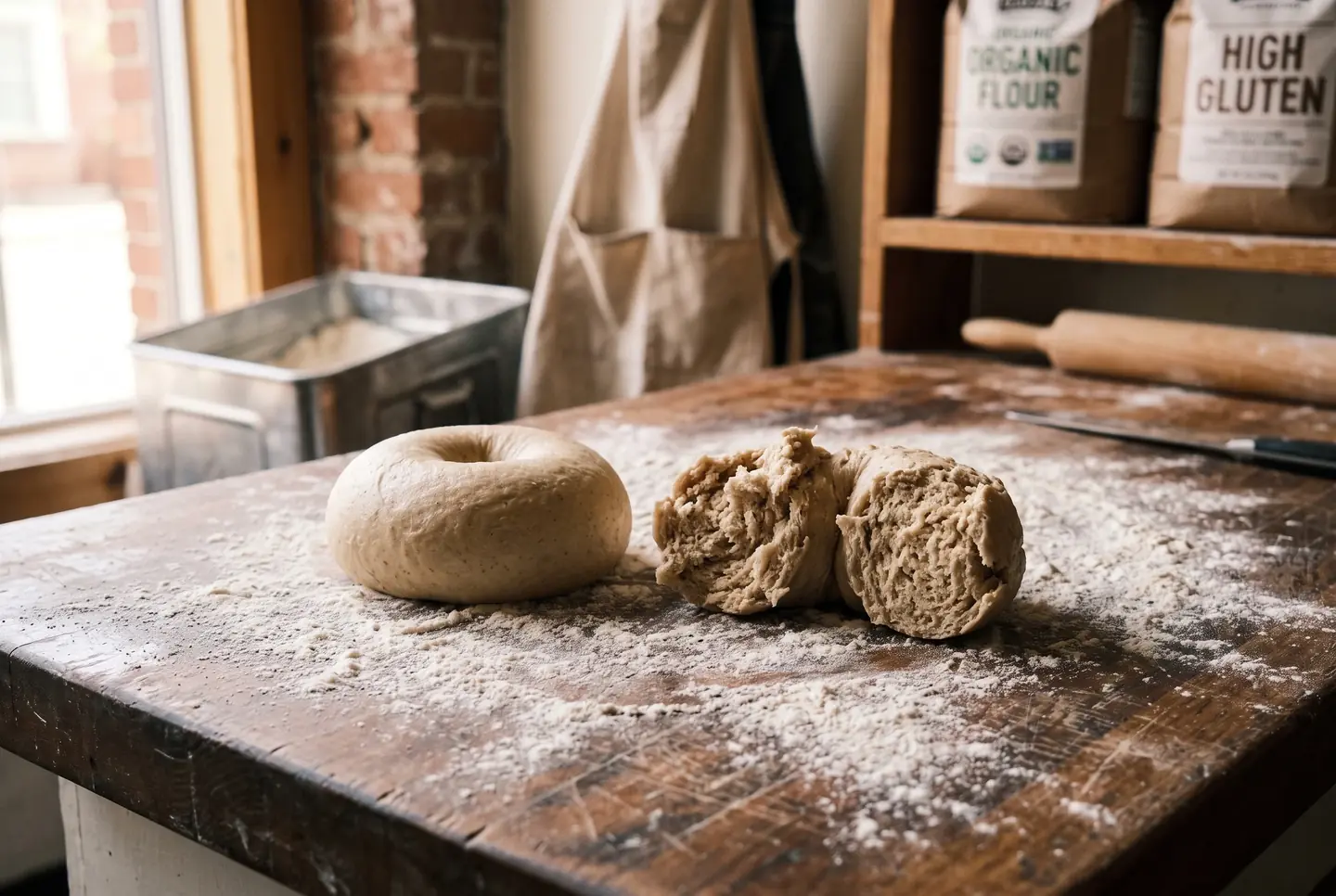
Bagel Dough: Why It Is So Firm, and How to Knead It
Bagel dough feels stiff and dry on purpose. Here is why it runs at 50 to 60% water and high protein flour, how to knead it, and the windowpane to aim for.
6 min read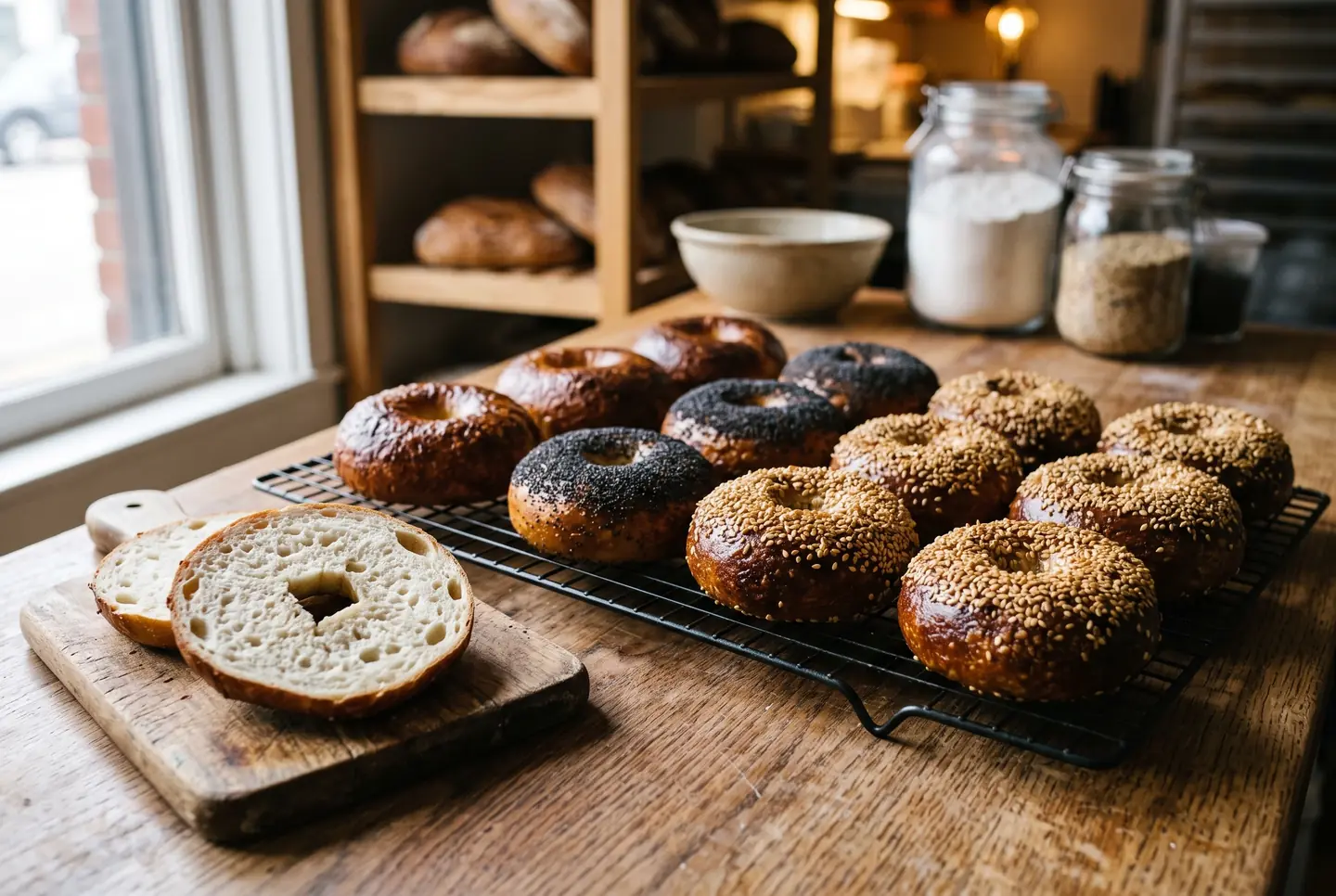 Guide
Bagel Recipe: New York Style, Step by Step
A weight-based New York bagel recipe, step by step: the firm 58% dough, an overnight cold retard, how long to boil, and the oven heat that sets a glossy crust.
6 min read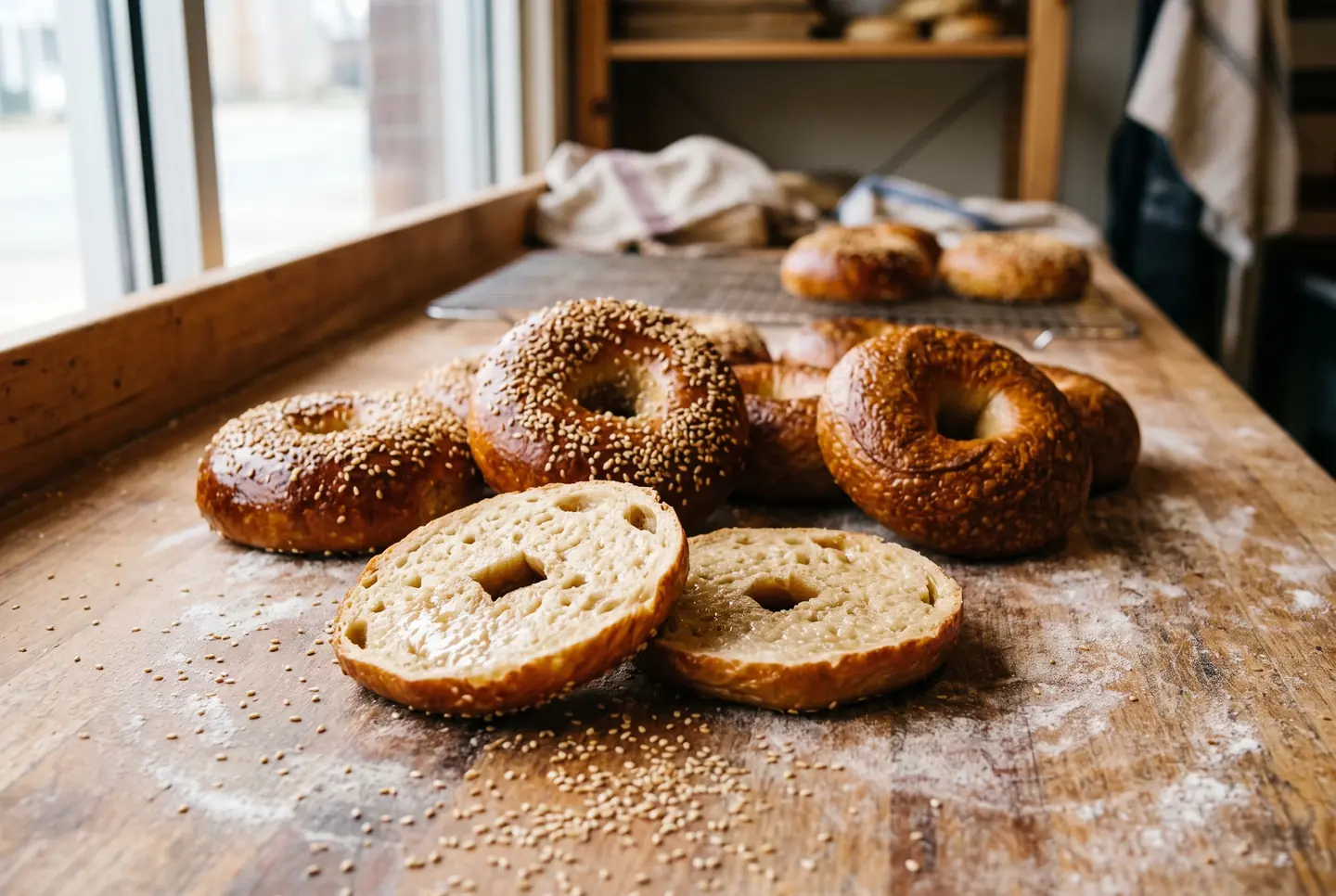 Complete guide
Bagels: The Complete Guide
Make a real bagel at home: the firm 58% dough, why bagels are boiled before baking, New York vs Montreal, sourdough and gluten free, and how to fix flat ones.
18 min read