Guide
Detroit Pizza Cheese: Brick, Mozzarella and the Frico
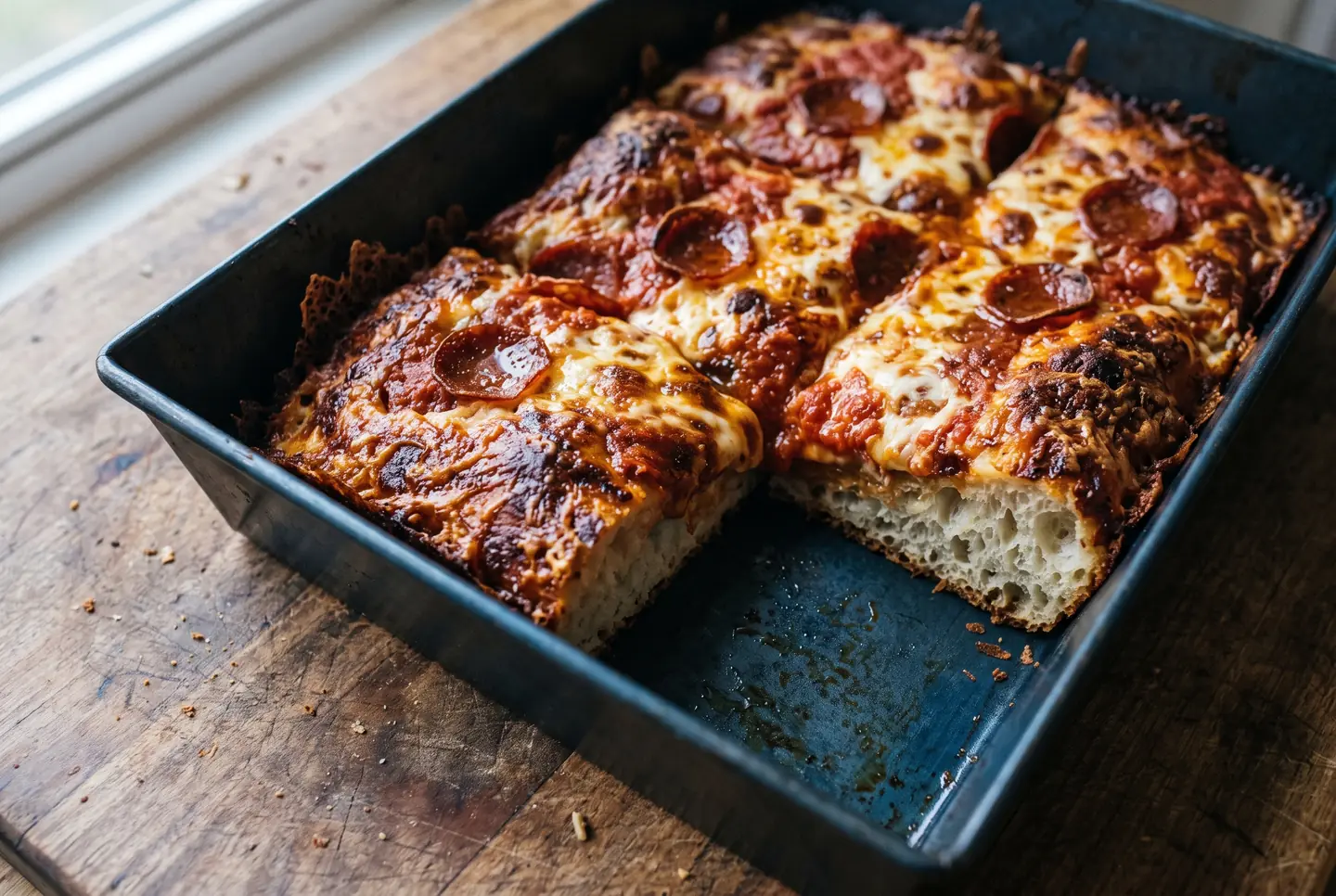
The cheese is the whole reason a Detroit pizza has that lacy, crunchy border. Traditionally it is topped to the edges with mozzarella or Wisconsin brick cheese, which caramelizes against the high-sided pan and gives the crust its lacy, crispy edge. That edge has a name, the frico, and getting it is less about a rare cheese than about which cheese you use and how far you push it.
The short answer: use a low-moisture cheese with real fat, and take it all the way to the metal. Brick cheese is the classic because it can withstand the heat thanks to its heavy butterfat content, but low-moisture mozzarella does the same job and is far easier to find. This page is the deep version of the cheese step from the complete Detroit-style pizza guide; the step-by-step recipe has the full build.
What cheese Detroit pizza uses
The two names you will hear are Wisconsin brick cheese and low-moisture mozzarella, and both are correct. Brick is the original: a mild, pale, buttery cheese from Wisconsin with a high fat content, and that fat is exactly what lets it brown at the edge instead of scorching or weeping. Its flavor is gentle, closer to a young Muenster than to a sharp cheddar, so it lets the crust and sauce lead.
Mozzarella is not a compromise, it is a genuine alternative. Many well-known Detroit pizzerias build on mozzarella rather than brick, and it still gets the caramelized rim. The one rule that matters is low moisture. A wet, fresh mozzarella ball floods the pan with water and steams instead of frying, so the edge goes pale and soft. Reach for the firm, shreddable block, not the fresh ball swimming in liquid.
| Cheese | Character | Frico behavior |
|---|---|---|
| Wisconsin brick | Mild, buttery, high fat | The original; browns beautifully |
| Low-moisture mozzarella | Mild, stretchy, widely sold | Browns well; the easy default |
| Muenster (US style) | Mild, creamy, good melt | The closest common stand-in for brick |
| Fresh mozzarella | Wet, milky, high moisture | Weeps and steams; poor frico |
Why the edge caramelizes
The frico is the crispy caramelized cheese that runs along the edges of a Detroit pizza, and it forms for one physical reason: the cheese touches hot, oiled metal directly. Spread it to the pan walls and the fat and milk sugars in contact with that heat brown and crisp, the same reaction that gives a seared steak its crust. The steel pan does the work; you just have to give it cheese to work on.
This is why fat and low moisture both matter. Fat carries heat and browns; brick cheese can withstand the heat due to its heavy butterfat content, which is the whole trick. Moisture does the opposite: water has to boil off before anything can brown, so a wet cheese spends the bake steaming and never reaches the crisp stage. Fat browns, water stalls, and the frico lives or dies on that balance.
Take it all the way to the metal
A frico only happens where cheese meets pan, so the single most common miss is cheese that stops short of the walls. Push it right up against the sides, even a little up them, so there is cheese to caramelize against the hot steel. A bare rim of dough gives you a bready border, not a lacy one.
- Cube or coarsely shred the cheese so it packs against the walls rather than sliding off.
- Load the corners and edges first, then fill the middle. The edge is where the magic is.
- Do not oil over the cheese at the rim; the pan is already oiled underneath, which is what fries it.
- Slightly overfill toward the walls. It shrinks as it melts and pulls back if you are stingy.
If you have ever wondered why a restaurant frico looks so generous, that is why: they bury the edge in cheese on purpose, because that border is the signature.
When you cannot find brick
Most home cooks will never see brick cheese at the supermarket, and that is fine. The goal is a mild, low-moisture, fatty melter, and several easy finds hit it. A blend often beats a single cheese, because a little sharper cheese helps the browning while mozzarella keeps the stretch.
| If you cannot find brick | Use this | Why |
|---|---|---|
| Best single swap | Low-moisture whole-milk mozzarella | Melts, browns, sold everywhere |
| Closest in character | US Muenster | Mild, creamy, buttery like brick |
| For more browning and tang | 3 parts mozzarella to 1 part mild cheddar | Cheddar sharpens and colors the edge |
| Avoid | Fresh mozzarella, pre-shredded low-fat | Too wet, or too little fat to frico |
Skip the bagged pre-shredded blends labeled low fat or part skim: the anti-caking starch and the missing fat both work against a clean frico. A block you cube yourself browns better every time.
Fresh versus low-moisture, in one test
If you only take one thing from this page, make it this. Buy a block of low-moisture mozzarella and a ball of fresh, and try each on a small pizza. The low-moisture edge will be crisp and golden; the fresh one will sit in a shallow puddle and stay pale. It is the clearest lesson in why Detroit cheese is a texture choice before it is a flavor one.
Fresh mozzarella is a wonderful cheese in the right place, on a Neapolitan round that bakes in ninety seconds. In a Detroit pan that bakes for a quarter of an hour, its water has nowhere to go and the frico never sets. Save the fresh ball for another night.
Where the cheese goes wrong
Almost every frico failure traces to one of a few causes, and each has a plain fix.
| Symptom | Likely cause | Fix |
|---|---|---|
| Pale, soft edge | Cheese did not reach the walls | Pack it against the sides, even up them |
| Watery, greasy pool | Fresh or high-moisture cheese | Switch to a low-moisture block |
| Edge burns before center melts | Oven too hot, or too little cheese at the rim | Lower the heat a little, load the edge heavier |
| No browning at all | Low-fat cheese, or oven not hot enough | Use whole-milk cheese; bake hot |
| Cheese slides off the walls | Fine shred, oiled over the top | Cube it; keep oil under the dough only |
The pattern is the same each time: low moisture, real fat, and cheese pressed to the metal. Get those three and the frico is almost automatic.
Frequently asked questions
What cheese is used on Detroit-style pizza? Traditionally Wisconsin brick cheese, a mild, high-fat cheese, or low-moisture mozzarella. Both are spread to the edges of the pan, where they caramelize into the crispy frico border. Brick is the original; mozzarella is the easy, widely available alternative.
Can I use regular mozzarella for Detroit pizza? Yes, as long as it is low-moisture (the firm block, not the wet fresh ball). Low-moisture whole-milk mozzarella melts and browns well and is what many well-known Detroit pizzerias use. Fresh mozzarella is too wet and will steam instead of forming a crisp edge.
What is the frico on Detroit pizza? The frico is the lacy, crispy, caramelized cheese edge that runs around a Detroit pizza. It forms where the cheese, spread all the way to the pan walls, browns against the hot oiled steel during the bake.
What can I substitute for brick cheese? Low-moisture mozzarella is the best easy swap, and US Muenster is the closest in character. For more color and a little tang, blend about three parts mozzarella with one part mild cheddar. Avoid fresh mozzarella and low-fat pre-shredded blends.
Why does my Detroit cheese edge not get crispy? Usually the cheese did not reach the pan walls, or it was too wet. Push the cheese right up against the sides so it touches the hot metal, and use a low-moisture, full-fat cheese so it browns instead of steaming.
Do you put the cheese under or over the toppings? On a Detroit pizza the cheese goes on first, straight onto the dough and out to the edges, with toppings and sauce added over it. That direct cheese-to-pan contact is what builds the frico. The full layering order is covered in the complete guide.
Cheese to the walls, low moisture, real fat: that is the entire secret of the frico. Do not be shy with it at the edges, because that lacy brown border is the reason anyone falls for a Detroit in the first place.
Where I checked
Keep reading
 Guide
Bagel Dough: Why It Is So Firm, and How to Knead It
Bagel dough feels stiff and dry on purpose. Here is why it runs at 50 to 60% water and high protein flour, how to knead it, and the windowpane to aim for.
6 min read Guide
Bagel Recipe: New York Style, Step by Step
A weight-based New York bagel recipe, step by step: the firm 58% dough, an overnight cold retard, how long to boil, and the oven heat that sets a glossy crust.
6 min read Complete guide
Bagels: The Complete Guide
Make a real bagel at home: the firm 58% dough, why bagels are boiled before baking, New York vs Montreal, sourdough and gluten free, and how to fix flat ones.
18 min read