Guide
How to Bake Bagels: Heat, Steam and Shine
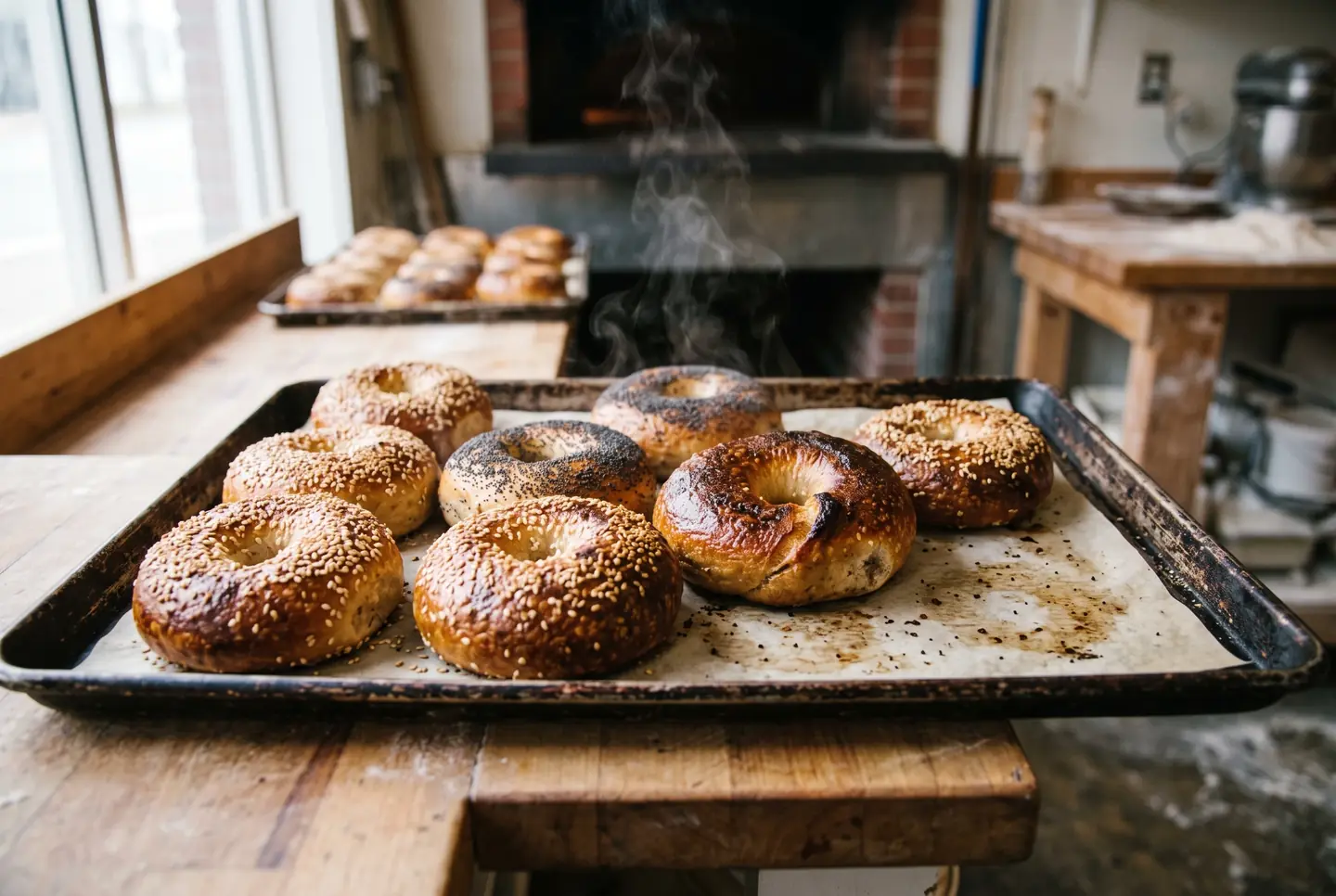
The bake is the last ten minutes of a two day job, and it is short and hot. Bagels want a hot oven, a quick burst of steam at the start, and direct contact with a hot surface, and those three things decide whether the crust comes out glossy and crisp or pale and dull. Get the heat and the contact right and a bagel bakes in roughly fifteen to twenty minutes.
The most useful thing to know before you start: most of the crust is already made before the bagel reaches the oven. The boil that comes before the bake gelatinizes the starch on the surface, and that gelatinized layer is what turns glossy and sets crisp in the heat. The oven finishes the job the water started. Everything below assumes you have already boiled, which is the step that makes a bagel a bagel and the reason it needs less steam than a lean loaf. For the whole method from dough to plate, the complete bagel guide is the place to start.
Heat: hot, then a notch down
Bagels want a hot oven and a fast start. A common and reliable approach preheats high, then drops the temperature as the bagels go in, so the crust sets fast on a blast of heat before settling into a steadier bake. The Curious Chickpea preheats to 500 °F (260 °C), then drops to 450 °F (230 °C) when the bagels enter, baking about eighteen to twenty minutes with a rotation partway through. King Arthur bakes its bagels around 450 °F (230 °C) for fifteen to twenty minutes.
| Variable | Target | Why |
|---|---|---|
| Preheat | high, around 500 °F (260 °C) | sets the crust the moment the bagels go in |
| Baking temp | around 450 °F (230 °C) | browns without scorching before the inside is done |
| Time | 15 to 20 minutes, rotate partway | even colour front to back |
The preheat matters as much as the baking number. A fully heated oven, and a fully heated stone or steel if you use one, is what gives the bagel its oven spring and its fast crust. Open the door as briefly as you can when loading, because every second of lost heat softens the start.
Steam: a short burst, not a sauna
A little steam in the first minutes keeps the surface moist just long enough for the crust to stay thin and shine, rather than drying and thickening into armour. At home a shallow tray of hot water on the oven floor, or a few ice cubes tossed in as you shut the door, is plenty.
The key word is short. A lean hearth loaf wants a long, wet steam phase to expand before the crust sets. A bagel does not, because the boil has already done most of the surface work, so you need much less. Too much steam for too long and the crust never crisps. A brief burst at the start, then a dry finish to brown and set, is the whole idea.
Contact: bake on something hot
The bottom of a bagel browns by conduction, so give it something hot to sit on. A preheated baking stone or steel is best, but a heavy sheet pan left in the oven during the preheat works too. The point is direct heat from below, so the base browns and crisps instead of steaming pale and soft.
Many bakers boil, top with seeds, then slide the bagels straight onto the hot surface for the deepest bottom crust. If you are baking on parchment, know that it insulates a little, so you trade some bottom colour for easier handling. Either works; just do not bake a boiled bagel on a cold pan and expect a crisp base.
Where the shine comes from
The gloss you are chasing is not an egg wash. It is the gelatinized starch from the boil, plus the browning of any malt in the dough or the boiling water, baked until it sets. That is why a properly boiled bagel comes out shiny with nothing brushed on it at all. An egg wash will add extra gloss and a softer, deeper colour if you want it, but it is a choice on top of the shine, not the source of it.
Malt is the quiet partner here. A little malt, in the dough or the boil, browns darker and richer than sugar alone and deepens both the colour and the shine. It is the classic bagel note, and it is doing visible work in the oven.
Seeds: on before the bake, on a wet surface
Seeds and toppings go on before baking, pressed onto a surface that is still wet from the boil. The tacky, just boiled surface is the glue: give it a minute and it dries, and the seeds slide off in the oven. Top straight out of the boil, press gently so they stick, and bake.
If you are using a mix, the same rule that governs any everything bagel topping applies here, dried garlic and onion rather than fresh, because fresh aromatics scorch to bitter black at bagel temperatures. Apply on the wet surface, bake hot, and the seeds toast into the crust instead of falling away.
Frequently asked questions
What temperature do you bake bagels at? Hot. A common method preheats to about 500 °F (260 °C), then drops to 450 °F (230 °C) when the bagels go in, baking fifteen to twenty minutes. The high preheat sets the crust fast; the slightly lower baking temperature browns it without scorching.
How long do bagels take to bake? Roughly fifteen to twenty minutes at around 450 °F (230 °C), rotating the tray partway through for even colour. They are done when the crust is deep golden and set, not pale.
Do you need steam to bake bagels? A short burst helps the crust stay thin and shiny, but you need far less than for a lean loaf, because the boil already did most of the surface work. A tray of hot water or a few ice cubes at the start is enough, followed by a dry finish.
Why are my bagels not shiny? The shine comes from the boil, not the bake. If they look dull, the boil was likely too short or skipped, so the surface starch never gelatinized. Boil properly and the shine appears on its own; a little malt in the water mainly deepens colour. An egg wash can add extra gloss if you want it.
Should I bake bagels on a stone or a pan? Either, as long as it is hot. A preheated stone or steel gives the crispest bottom crust through direct heat. A heavy sheet pan preheated in the oven is a good substitute. Parchment makes handling easier but softens the bottom colour a little.
Boil well and the bake is almost easy: a hot oven, a short breath of steam, a hot surface underneath, and about twenty minutes. The shine was made in the pot; the oven just sets it.
Where I checked
Keep reading
 Guide
Guide
Bagel Dough: Why It Is So Firm, and How to Knead It
Bagel dough feels stiff and dry on purpose. Here is why it runs at 50 to 60% water and high protein flour, how to knead it, and the windowpane to aim for.
6 min read Guide
Guide
Bagel Recipe: New York Style, Step by Step
A weight-based New York bagel recipe, step by step: the firm 58% dough, an overnight cold retard, how long to boil, and the oven heat that sets a glossy crust.
6 min read Complete guide
Bagels: The Complete Guide
Make a real bagel at home: the firm 58% dough, why bagels are boiled before baking, New York vs Montreal, sourdough and gluten free, and how to fix flat ones.
18 min read