Guide
How to Store Sourdough Bread: Counter, Freezer, Oven
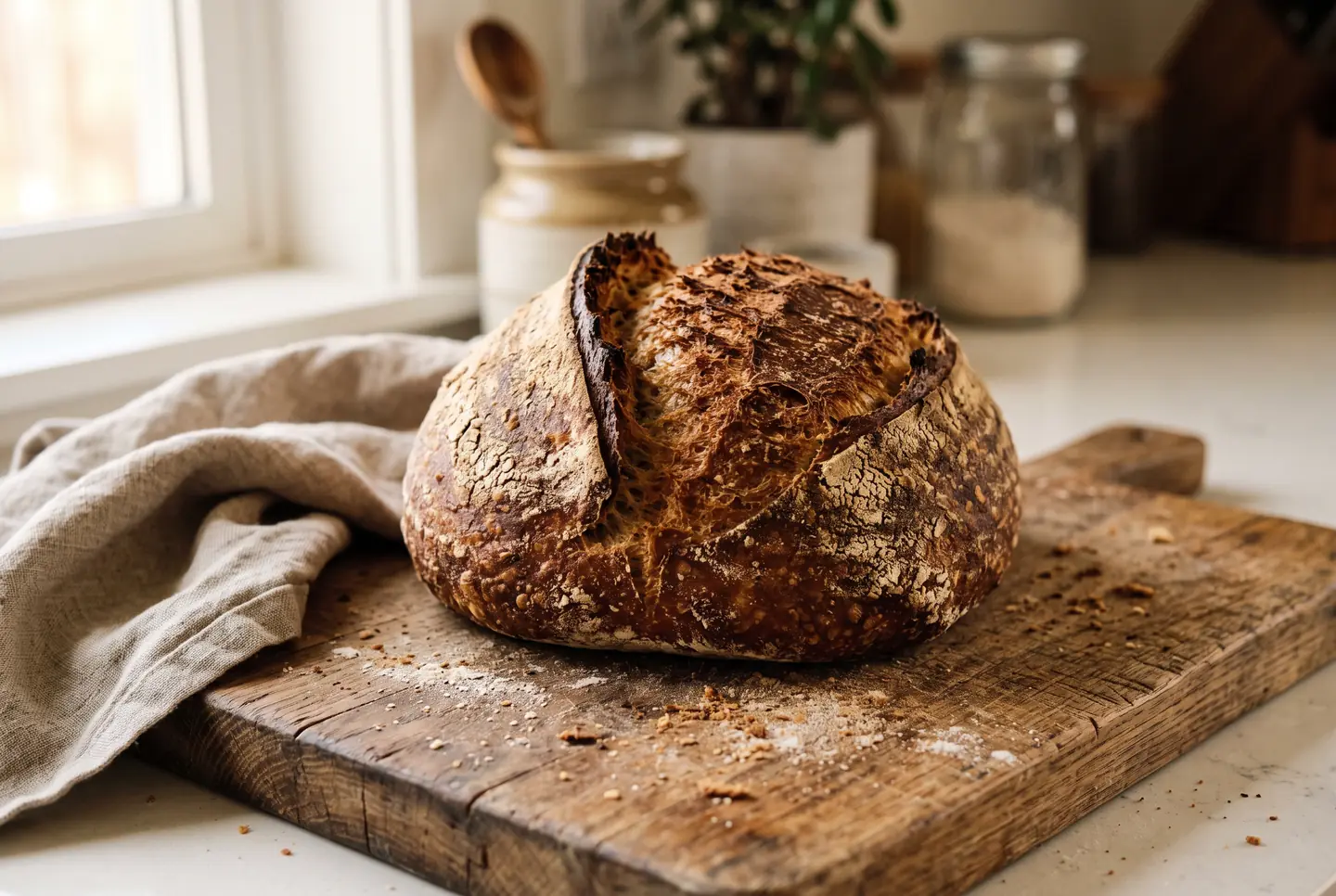
The short answer is the one that surprises most people: keep it on the counter for the first few days, freeze it for anything longer, and never put it in the fridge. Sourdough keeps better than most bread because its acidity slows staling, so a whole uncut loaf stays perfectly edible for a week or more at room temperature (The Perfect Loaf). What you are protecting is two things at once: a crisp crust and a moist crumb. The mistake almost everyone makes is reaching for the refrigerator, which is the one place that ruins both faster than the counter would.
If you want the whole method behind the loaf you are storing, it sits inside the complete sourdough bread guide. What follows is only the storage question, answered by how soon you plan to eat the bread, because that is the decision that picks the method.
Match the method to when you will eat it
Storage is really one question: how long until this bread is gone? Answer that and the method follows.
| Eating it within | Store it | Why |
|---|---|---|
| Today or tomorrow | Cut side down on the counter, or in a bread box | Keeps the crust crisp and the crumb moist without cold |
| Two to four days | Bread box, linen bag, or reusable wrap | Slows moisture loss without softening the crust |
| Longer than that | Freezer, sliced or whole | Freezing pauses staling; the fridge accelerates it |
Notice the fridge is on none of those rows. That is deliberate, and it is the single most useful thing to know about storing bread.
The first few days: the counter, not the fridge
For a cut loaf, the simplest good method is to stand it cut side down on a wooden board or counter. The thick crust then surrounds the exposed crumb and slows it drying out, which buys you a day or two in a normal kitchen, longer in a dry climate (The Perfect Loaf). A bread box does the same job with more control, moderating moisture so the crust stays crisp while the crumb stays soft. A linen or paper bag, a kitchen towel, or a reusable beeswax wrap all work well for the same reason: they slow moisture loss without sealing the loaf airtight.
Two things to avoid at room temperature. A sealed plastic bag traps moisture against the crust, softens it to leather, and speeds up mold. And the refrigerator, which feels like it should help and does the opposite: cold air accelerates starch retrogradation, the recrystallizing that stales bread, so a loaf in the fridge goes stale faster than the same loaf on the counter (The Perfect Loaf). The fridge only earns its place for bread you will toast anyway, where a slightly staler crumb does not matter.
For longer: the freezer beats everything
If the loaf will outlast a few days, freeze it, and freeze it early rather than watching it slowly go stale on the counter first. Freezing genuinely pauses staling, where refrigerating only speeds it. The one rule that makes or breaks it is temperature at wrapping: let the loaf cool completely before you wrap it, or trapped warmth turns to condensation inside the wrapping and then to sogginess and freezer burn.
You have two ways to do it, and slicing first is usually the smarter one:
- Sliced: wrap tightly in foil or a freezer bag with the air pressed out, and take out only the slices you need. Individual slices keep well for about a month (The Perfect Loaf). This is the better choice if you eat a couple of slices at a time.
- Whole: wrap in plastic and then a freezer bag, and thaw overnight on the counter or a day or two in the fridge before refreshing. Best if you want to serve the whole loaf at once.
Bringing it back: the oven, never the microwave
Frozen or day-old bread is not finished, it just needs reviving, and how you revive it decides whether you get crust or rubber. The crust comes back in a hot oven, not the microwave. For a whole loaf, put it straight from frozen onto the oven rack at around 350°F (175°C) for 30 to 40 minutes, and it comes out with a crisp crust and a warm crumb (The Perfect Loaf). For frozen slices, the toaster's frozen setting does the job in one step.
The microwave is the trap. It heats the water in the crumb fast, which softens the crust to something leathery and, within minutes of cooling, leaves the slice tougher than before. If the goal is a crust worth the loaf you baked, the oven is the only tool that gives it back.
A note on mold, because it is not negotiable
Sourdough resists mold better than commercial bread, but it is not immune, and this is the one line where the friendly tone stops. If you see fuzzy spots, or the smell has turned, the loaf goes in the bin, the whole loaf, not just the visible patch. Mold sends threads through bread you cannot see, so cutting around a spot does not make the rest safe. Storing bread right is partly about flavour and crust, but this part is about not getting sick, and there the rule is simple: when in doubt, throw it out.
Frequently asked questions
How do you store sourdough bread to keep it fresh? For the first few days, keep it at room temperature: a cut loaf cut side down on the counter, or a whole loaf in a bread box, linen bag or reusable wrap. For anything longer than a few days, freeze it. Avoid the fridge, which stales bread faster than the counter.
Should you store sourdough bread in the fridge? No. The refrigerator is the worst place for it. Cold air speeds up starch retrogradation, the process that stales bread, so a refrigerated loaf goes stale faster than one left on the counter. The only exception is bread you will toast anyway.
How long does sourdough bread last at room temperature? A whole uncut loaf stays good for a week or more, because sourdough's acidity slows staling. Once cut, it is best within a day or two, longer in a dry climate, stored cut side down or in a bread box.
Can you freeze sourdough bread? Yes, and it is the best method for longer storage. Cool the loaf completely first, then wrap it tightly and freeze. Sliced bread keeps well for about a month; freeze whole loaves too if you will serve them all at once. Freezing pauses staling, unlike the fridge.
How do you reheat frozen sourdough so the crust is crisp? Use the oven, not the microwave. Put a whole loaf straight from frozen onto the rack at about 350°F (175°C) for 30 to 40 minutes. Toast frozen slices on the toaster's frozen setting. The microwave softens the crust to leather.
Is sourdough bread safe to eat once it has a little mold? No. Discard the whole loaf, not just the moldy spot, because mold spreads invisible threads through the crumb. Sourdough resists mold longer than commercial bread but is not immune. When in doubt, throw it out.
Where I checked
Keep reading
 Guide
Guide
Bagel Dough: Why It Is So Firm, and How to Knead It
Bagel dough feels stiff and dry on purpose. Here is why it runs at 50 to 60% water and high protein flour, how to knead it, and the windowpane to aim for.
6 min read Guide
Guide
Bagel Recipe: New York Style, Step by Step
A weight-based New York bagel recipe, step by step: the firm 58% dough, an overnight cold retard, how long to boil, and the oven heat that sets a glossy crust.
6 min read Complete guide
Bagels: The Complete Guide
Make a real bagel at home: the firm 58% dough, why bagels are boiled before baking, New York vs Montreal, sourdough and gluten free, and how to fix flat ones.
18 min read