Guide
Why Are My Bagels Flat? Flat, Wrinkled and Hard, Fixed
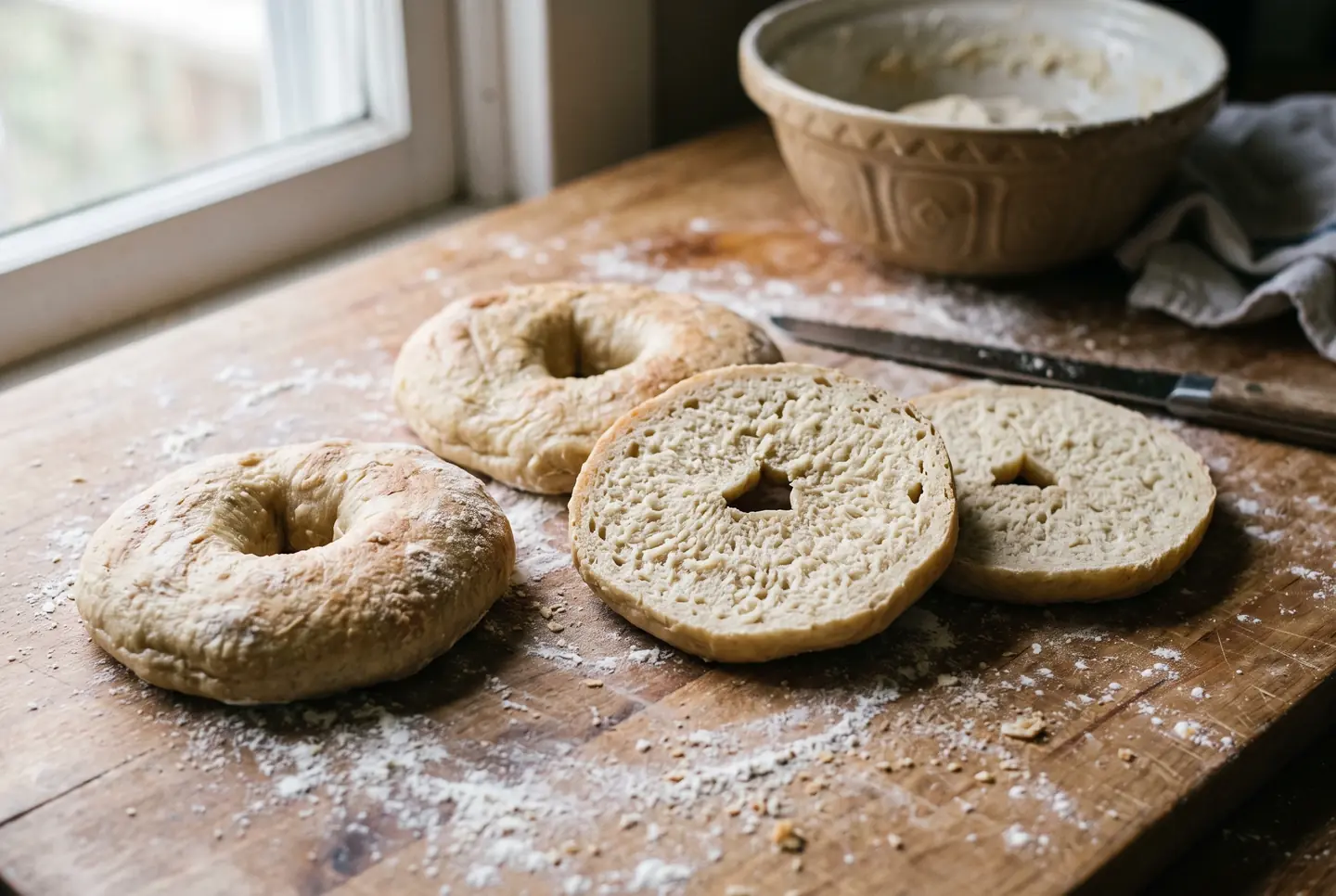
If your bagels came out flat, the answer is almost always the same: they proofed too long before they hit the water. A bagel that has fermented past its window has already spent its structure, so instead of holding its dome in the boil it slumps into a pale, spread out disc. The other two suspects are a dough that was too wet or too weak to begin with. Fix the proof first, then the dough, and flat bagels stop happening.
That is the short answer. The longer one is that almost every failed bagel is one of a handful of faults, and each has a single main cause you can act on. This guide is the diagnostic table from the complete bagel method, pulled out and expanded so you can find your batch, read across, and fix it. Work the symptom, not the panic.
Read your bagel first
| Symptom | Most likely cause | The fix |
|---|---|---|
| Flat, spread out, no height | over proofed, or dough too wet or too weak | proof less, lower the hydration, use stronger flour |
| Wrinkled, shrivelled skin | over proofed then shocked by the boil | boil sooner after shaping, or retard cold and boil from the fridge |
| Dense, hard, tough | boiled too long, or dough underdeveloped | boil less, knead more |
| Pale, dull crust | oven too cool, or no malt and no baking soda in the boil | bake hotter, add malt and a little soda to the water |
| Hole closed up | shaped too small, or under rested | make the hole much bigger, rest before boiling |
Two faults show up far more than the rest, flat and dense, and they pull in opposite directions. Flat is usually too much fermentation and too little structure. Dense is usually too much boiling and too little kneading. Knowing which way your bagel failed tells you which lever to move, and moving the wrong one makes it worse.
Flat bagels: the proof went too far
A bagel wants a restrained proof, less than you would give a sandwich loaf. That is the part most home bakers get wrong, because everything else in bread baking rewards a full, billowy rise. Here it does the opposite. As Tasting Table explains, when shaped dough sits too long the yeast keeps releasing gas that "will eventually overpower and weaken the gluten structure," and a weakened structure cannot hold height once it hits the boiling water. It collapses.
So the skill is knowing when to stop, and the tool for that is the poke test, not the clock. Press a shaped bagel gently with a fingertip and read what it does:
- Springs back slowly, staying slightly puffed: ready, cook it now.
- Snaps back at once: not there yet, give it more time.
- Holds the dent without filling back in: over proofed, cook it immediately before it gets worse.
Watch the dough, not a timer, because a warm kitchen runs the clock fast: dough that a recipe says needs an hour can be ready well before that in a warm room. The number on the page is a starting guess, and the poke is the real answer.
The cleanest way to take the guesswork out is a cold overnight proof. Chilling the shaped bagels slows the yeast almost to a stop, so they hold in their ready window for hours instead of minutes, and you boil them straight from the fridge. Tasting Table makes the same point: refrigerator proofing works because "yeast activity will slow and pause in very cold temperatures." Cold dough also holds its shape better going into the water. If your bagels spread into flying saucers on the counter, this single change usually fixes them.
When it is the dough, not the proof
If you proofed carefully and the bagels still spread, look at the dough itself. A bagel is defined by a firm, low hydration dough with a strong gluten network, and both words matter.
Too wet. A classic bagel runs around 55 to 58 percent hydration, far drier than most bread, and there is a reason. The Curious Chickpea's New York style bagel is built stiff on purpose: a slack, wet dough has nothing to push against and flattens under its own weight before it ever sets. If your dough was sticky and hard to shape into a ring that held, it was probably too wet. Pull the water back a few points next time.
Too weak. Height in a bagel comes from gluten, so bread flour, not all purpose, is the right choice. The extra protein builds the network that traps gas and holds the dome. Under kneading has the same effect as weak flour: the dough never develops the strength to stand up. If the dough tore instead of stretching into a smooth window, it needed more kneading or stronger flour, or both.
The two problems compound. A wet dough made with weak flour and then over proofed is a flat bagel three times over. Fix them in order: strong flour, firm dough, restrained proof.
Wrinkled, dense, pale: the other three
Wrinkled skin is over proofing's cousin. The bagel fermented too far, then the shock of the boiling water deflates the tired surface into shrivelled ripples. The fix is the same direction as flat: proof less, and boil sooner after shaping, or retard cold and boil from the fridge so the skin is taut when it hits the water.
Dense and hard is the opposite failure. The two causes are a boil that ran too long, which sets a thick tough skin and a tight crumb, and a dough that was never fully developed. Bagels need only a short boil, around 30 to 60 seconds a side, and the food science of boiling shows that going much longer trades chew for hardness. If yours are hockey pucks, boil a shorter time and knead the dough more thoroughly.
Pale, dull crust is not a proofing fault at all. It is heat and chemistry. Bagels bake hot, and the shine and colour come from what is in the boiling water: King Arthur and most recipes add malt or a spoon of baking soda, which raises the water's pH and browns the crust darker and glossier. A pale bagel usually means the oven was too cool, or the boiling water was plain. Bake hotter and put malt or a little soda in the pot.
The one habit that prevents most of this
If you take one thing from this page: shape, chill overnight, and boil straight from the fridge. A cold retard fixes flat, fixes wrinkled, and makes the whole batch behave, because it takes the single hardest variable, knowing when the proof is done, and slows it down to something you can control. Combine that with a firm dough built on bread flour and you have removed the two most common ways a bagel goes wrong before you have even lit the oven.
Frequently asked questions
Why are my bagels flat? Almost always over proofing. The dough fermented too long, weakened its gluten, and collapsed in the boil instead of holding its height. Sometimes the dough was also too wet or too weak. Proof less, use a firm bread flour dough, and ideally retard cold overnight and boil straight from the fridge.
How do I know when my bagels are proofed enough? Use the poke test, not the clock. Press one gently: if it springs back slowly and stays slightly puffed, it is ready. If it snaps back at once it needs more time, and if it holds the dent it is over proofed and should be cooked immediately.
Why did my bagels wrinkle? Wrinkled, shrivelled skin is over proofing followed by the shock of the boil deflating the tired surface. Boil sooner after shaping, or proof cold and boil from the fridge so the skin is taut when it goes in.
Why are my bagels dense and hard instead of flat? That is the opposite problem: too long in the boil, or a dough that was underdeveloped. Boil a shorter time, around 30 to 60 seconds a side, and knead the dough more thoroughly so it is strong but not tough.
Does proofing bagels in the fridge overnight help? Yes, a lot. Cold slows the yeast so the bagels hold their ready window for hours instead of minutes, and cold dough keeps its shape better in the boil. Boiling straight from the fridge is the simplest fix for flat and wrinkled bagels.
A flat bagel is not a mystery, it is a message: it proofed too far or stood on a dough too soft to hold. Read the batch, move one lever, and the next dozen stand up.
Where I checked
Keep reading
 Guide
Guide
Bagel Dough: Why It Is So Firm, and How to Knead It
Bagel dough feels stiff and dry on purpose. Here is why it runs at 50 to 60% water and high protein flour, how to knead it, and the windowpane to aim for.
6 min read Guide
Guide
Bagel Recipe: New York Style, Step by Step
A weight-based New York bagel recipe, step by step: the firm 58% dough, an overnight cold retard, how long to boil, and the oven heat that sets a glossy crust.
6 min read Complete guide
Bagels: The Complete Guide
Make a real bagel at home: the firm 58% dough, why bagels are boiled before baking, New York vs Montreal, sourdough and gluten free, and how to fix flat ones.
18 min read