Flour
Pastry flour: what it is, what it is for, and where it beats the others
It is the middle child of the white flours. It comes from the same soft wheat as cake flour, but it skips the chlorine and carries a touch more protein, which lands it exactly between all-purpose and cake flour. That middle is where it wins: short, tender pastry that melts in the mouth without turning into cake or toughening the way all-purpose toughens a pie crust.
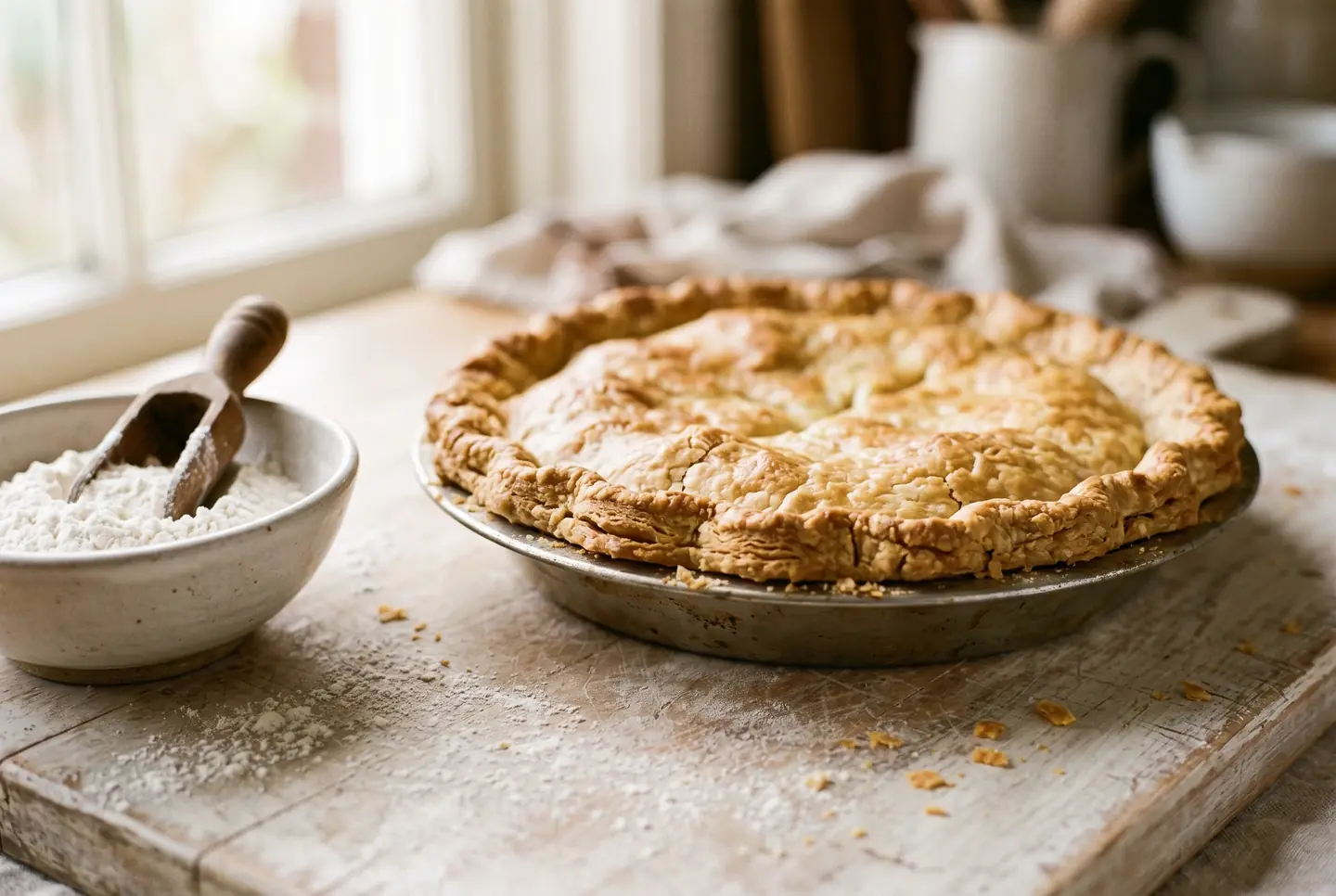
At a glance
- Strength (W)
- not measured
- Protein
- 8% to 9%
- Water absorption
- not measured
- Stability
- not measured
- Ash
- not measured
- Origin
- trigo mole, categoria sobretudo americana e britânica
- Grain
- trigo mole (Triticum aestivum) de baixa proteína, não clorado
What it is called in each country
| Country | Called |
|---|---|
| English | pastry flour (US SKU: King Arthur ~8%, Bob's Red Mill soft white wheat); UK: soft or sponge flour |
| Português | farinha para confeitaria (rara no varejo): trigo comum fraco, ou trigo comum 2/3 mais farinha para bolo 1/3 |
| Italiano | non esiste un grado dedicato: farina 00 debole per frolla, forza W bassa (grano tenero) |
| Français | pas de grade dédié : T45 ou T55 faible, la plus tendre du rayon (blé tendre) |
| Español | sin grado propio: harina floja o de repostería, la de menos fuerza (trigo blando) |
What it is for
Its home ground is short pastry: the kind that has to stay tender and crumbly yet still hold a shape. Pie crust and tart shells, pâte brisée and pâte sucrée, butter cookies, shortbread, scones, muffins, a fine pound cake. In all of them you want the bite to break clean and the crumb to fall apart, and low protein is what delivers that.
The point is that it gives tenderness without the extreme of cake flour. A pie crust made with cake flour is too fragile to hold its flaky sheets; made with all-purpose it shrinks and turns tough. Pastry flour sits in between, tender and still whole.
Among the loaves here it shines in the ones that are more cake than bread: banana bread and cornbread come out with a softer crumb when you swap all-purpose for it.
How to substitute it
No pastry flour on hand? Make your own. The truest route is to blend two parts all-purpose with one part cake flour, that is two thirds of a cup of all-purpose and one third of a cup of cake flour for each cup of pastry flour. With no cake flour around, take one cup of all-purpose and swap two teaspoons of it for cornstarch, far less starch than cake flour asks for, and sift them together.
In its place, all-purpose works but charges for it: pie crust and cookies come out harder and shrink more, so handle the dough less and do not knead. See what the extra strength does on the page at /farinhas/all-purpose-flour/.
Cake flour, on the other hand, is too weak for a flaky pie dough: the shell cracks and crumbles as you roll it. It substitutes well only in the more tender things, like cake and soft cookies. Its page is at /farinhas/cake-flour/.
When not to use it
Bread that depends on structure is not for it. Long-fermented loaves, a sandwich loaf that must hold gas, pizza, ciabatta, baguette, bagels: all of them want the gluten pastry flour deliberately lacks. The dough slackens, will not hold its shape and bakes low.
The other extreme escapes it too: the tallest, most aerated cakes, fine sponge, chiffon, a very sweet high-ratio cake. There the weaker, treated cake flour holds better. Pastry flour replaces cake flour in many everyday recipes, but it is not the queen of the tall party cake.
How to use it
Work it cold and work it little. Short pastry hates warmth and kneading: the butter has to stay in pieces to make the flakes, and the gluten, however little there is, still toughens if you overwork it. Add the water, bring the dough together and stop.
With less protein than all-purpose, it comes together fast and drinks a little less water, so a recipe written for all-purpose may want a few extra drops of liquid. And it shrinks little in the oven, which is gold for a blind-baked tart shell: the base stays put instead of sliding down the sides of the tin.
Weigh it rather than measuring by the cup. It is light and fluffy, and one badly filled cup changes the whole dough.
How to choose one when buying
On the label, look for protein per 100 g: real pastry flour sits around 8 to 9 g. In the United States it is sold as pastry flour, almost always unbleached; King Arthur and Bob's Red Mill are the easy ones to find, and there is also whole wheat pastry flour for tender whole-grain baking. In the United Kingdom, look for soft or sponge flour, or a low-protein plain flour.
In Europe and Brazil there is no grade of its own. The move is to buy the weakest flour you can find, reading the number on the panel, or to build the blend from the section above. In Italy, a 00 debole; in France, a weak T45 or T55; in Spain, harina floja. The name changes; what matters is low protein and soft wheat.
The story
Pastry flour is the mill's answer to the pastry kitchen, not a regional tradition. It starts from soft wheat, the same low-protein Triticum aestivum as cake flour, but one step up: around 8% to 9% protein, against the 7-and-change of classic chlorinated cake flour and the near 12% of American all-purpose.
What sets it apart from cake flour is not only the number. Pastry flour is usually unbleached and unchlorinated, milled fine from soft wheat and sold raw. Cake flour leans on chlorine to hold very sweet, high-ratio batters; pastry flour does not need that, because its job is different.
As a shelf category it is mostly American and British. In the United States it is a real product: King Arthur declares 8% protein, Bob's Red Mill mills its own from soft white wheat. Outside that, almost no country has a dedicated grade, and Europe and Brazil get close with any weak flour they can find.
Frequently asked
- Are pastry flour and cake flour the same thing?
- No. Both are low-protein soft wheat, but cake flour has even less protein and, in the American version, goes through chlorine. Pastry flour sits a step above, is not chlorinated, and holds a flaky pie dough better, where cake flour would crack.
- Can I use all-purpose flour instead?
- Yes, with caveats. Pie crust, cookies and scones come out harder and shrink more, because all-purpose has more gluten. Handle the dough as little as possible, or swap two teaspoons per cup for cornstarch to move the texture closer.
- How do I make pastry flour at home?
- Blend two thirds of a cup of all-purpose with one third of a cup of cake flour, or take one cup of all-purpose and swap two teaspoons for cornstarch. Sift together. The target is to land near 8% to 9% protein.
- Is it good for bread?
- Not for bread that needs structure. It lacks the gluten to hold gas through a long rise, and the dough bakes low. It shines in more tender quick breads, like banana bread and cornbread, which are more cake than bread.