Flour
Einkorn flour: a lot of protein, almost no strength, and a yellow crumb
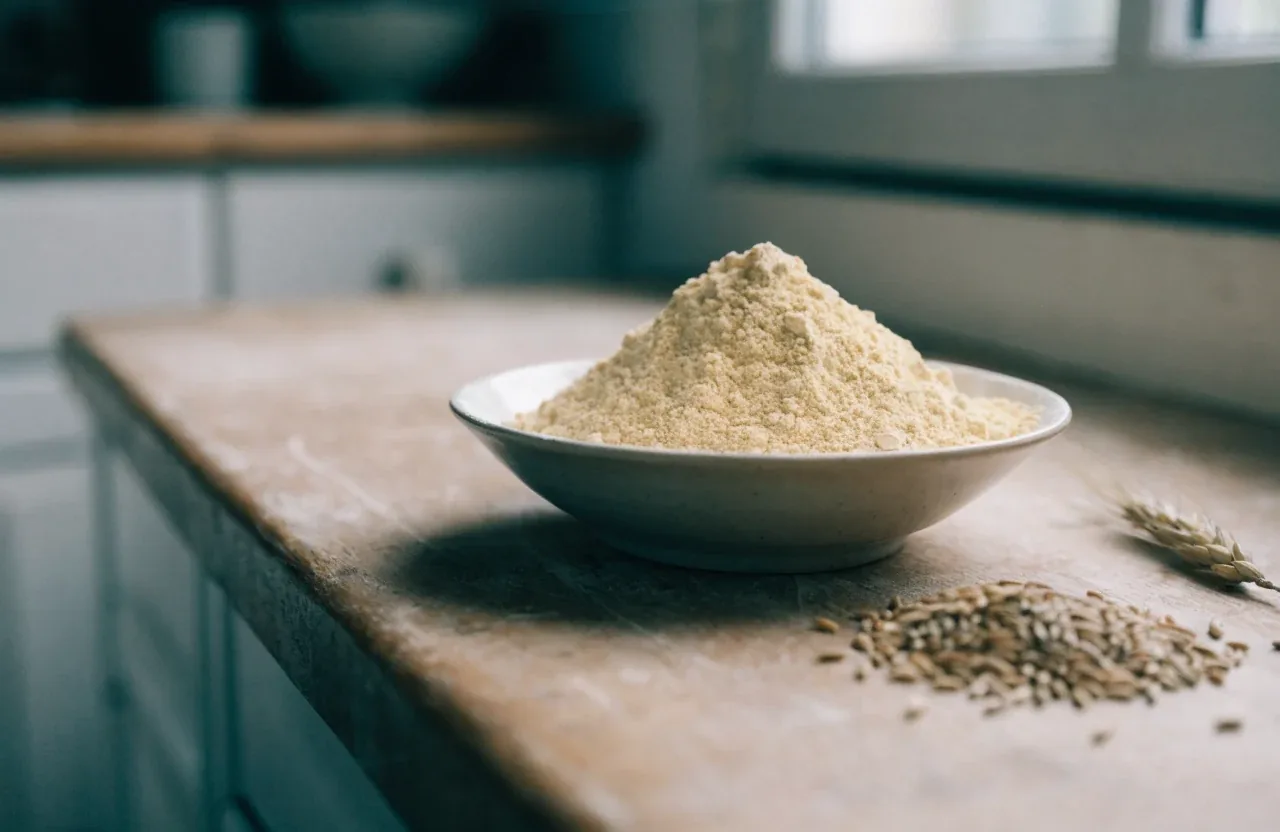
Einkorn carries more protein than most bread flours and almost none of the strength: the mill that measures W 280 on its everyday wheat flour measures W 40 here. What you get instead is a yellow crumb and a flavour no modern wheat has.
At a glance
- Strength (W)
- 40 to 47
- Protein
- 13% to 16.7% *
- Water absorption
- 52% to 59%
- Stability
- 1 min to 1.8 min
- Ash
- 0.6% to 0.9%
- Origin
- montanhas de Karacadağ, sudeste da Turquia, domesticado há cerca de 10.000 anos; hoje em lavoura pequena na Itália, na Haute Provence e na Turquia
- Grain
- Triticum monococcum, trigo vestido e a única espécie diploide de trigo: 2n = 2x = 14, contra os 42 cromossomos do trigo comum
Sources disagree. Einkorn protein depends on where you measure. A sifted Italian mill flour declares 13% on dry matter, the USDA whole grain figure is 15.1 g per 100 g, near 17% once taken to dry matter, and selected lines run 16.2% to 16.7% against 10.5% for a bread wheat control. But the number that describes the flour is another: on the same sheet where a Piedmont mill prints 14% protein, measured dry gluten is 6%. That gap is the whole page.
What it is called in each country
| Country | Called |
|---|---|
| English | einkorn (EUA e Reino Unido), no rótulo como einkorn wheat flour ou whole einkorn flour |
| Português | trigo einkorn, quase sempre com o nome em inglês ou como monococco; no Brasil é farinha importada, de loja especializada |
| Italiano | farro monococco (ou farro piccolo). Enkir é marca registrada do Mulino Marino, não sinônimo; farro sozinho no rótulo não garante monococco |
| Français | petit épeautre (ou engrain), com IGP Petit épeautre de Haute Provence desde 2009 e IGP para a farinha desde 2010. Grand épeautre é outra espécie: a espelta |
| Español | escaña, com ñ (às vezes escanda menor ou espelta pequeña). Cuidado: escanda, com d, é usada nas Astúrias para vender espelta. Muita marca só escreve einkorn |
What it is for
Focaccia and flatbreads in a tray, pancakes, crackers, shortcrust, cookies, fresh pasta. Einkorn is at its best where a pan does the structural work and the flour is left to do colour and flavour.
And the colour is the reason to buy it. Against a bread wheat measured alongside it, einkorn carries 8.7 to 11.3 mg/kg of yellow pigment against 1.0: ten times the carotenoid, mostly lutein. The crumb comes out the colour of egg pasta with no egg in it.
In a blend it is easy money: 20% to 30% einkorn in a bread flour dough buys the colour and the flavour and leaves the structure to the other 70%.
When not to use it
Tall free-standing loaves, open crumb at high hydration, anything that asks a dough to hold gas for hours. The numbers are blunt: Molino Grassi declares W 40 and 1.0 minute of farinograph stability for its einkorn, and W 280 with 9.0 minutes for its own ordinary type 2 wheat flour, same lab, same year.
It is also not a way around gluten, and this is where the ancient grain aisle gets loudest. What is real: einkorn lacks the D genome and, with it, the 33-mer, the most aggressive fragment in coeliac disease, and its gliadins break down further in laboratory digestion than durum gliadins. What is marketing: the wheat coeliacs can eat. A screen of 208 einkorn genotypes against coeliac serum found no safe line, the allergen box on the bag says to avoid it with coeliac disease, and that is the right instruction.
How to use it
Hold the water back. Einkorn absorbs 52% to 59%, and slowly: for the first two minutes the dough looks dry, then it lets go and turns slack. Reaching for more flour in that window is how most einkorn doughs are lost.
Mix three minutes and stop. Stability is 1.0 to 1.8 minutes against 9.0 for an ordinary type 2 flour: there is no long mix to work towards, only a cliff. Skip the folds, keep the bulk short, and bake in a tray or a tin where the walls carry what the gluten will not.
Buying it: the bag should say einkorn or einkorn wheat flour. Farro alone is not a synonym, and outside Italy it usually means emmer. Whole einkorn sits at the top of that absorption range and wants a few points more water than the sifted kind.
The story
Einkorn is the first wheat anybody farmed: genome work published in 2023 places its domestication in the Karacadağ mountains of southeastern Turkey around 10,000 years ago, at the start of agriculture in the Fertile Crescent.
Everything else on the shelf came later, and came bigger. Einkorn is the only diploid wheat: 14 chromosomes, one A genome. Bread wheat is hexaploid, 42 chromosomes, three genomes stacked. Those extra genomes arrived through natural crosses long after einkorn was a crop, and they brought the glutenin subunits that let a dough hold gas. Einkorn never got them.
It faded because it is hulled, which costs an extra step at the mill, and because it yields less than a modern wheat. It survives in small plantings in Italy, in the French Haute Provence, where petit épeautre has carried a protected geographical indication since 2009, and in Turkey. It reached English-language shelves through the ancient grain aisle, which brought the flour and a great many claims with it.
Frequently asked
- Are einkorn and spelt the same thing?
- No, and the difference is chromosomes. Einkorn is diploid: 14 chromosomes, one A genome. Spelt is hexaploid, 42, and it carries the D genome einkorn lacks. That is why spelt still bakes a recognisable loaf while einkorn measures W 40, and why only one of the two has a yellow crumb.
- Does einkorn contain gluten? Is it safe for coeliacs?
- It contains gluten and it is not safe for coeliacs. The missing D genome is a real research question, not a clinical one: the largest screen of einkorn lines against coeliac serum found none that was safe. The bag itself tells you to avoid it.
- Can I use einkorn in my usual bread recipe?
- Not one for one. Start at 25% einkorn and 75% bread flour, drop about 5 points of water and cut the mixing time. At 100%, change the format rather than the recipe: flat in a tray, or in a tin, never a round free-standing loaf.
- Why is einkorn flour yellow?
- Carotenoid, mostly lutein: ten times what a bread wheat carries. Einkorn also holds that pigment better, because its flour is low in the enzyme that bleaches carotenoid during mixing. The short mix it needs anyway protects the colour.