Flour
Cake flour: what it is, why it is chlorinated, and what it is for
It is not just plain flour milled finer. It is low-protein soft wheat, almost always treated with chlorine, and it is that treatment, not the protein alone, that holds up a tall, moist cake. Swapping in all-purpose changes the result, and the table below shows by how much.
At a glance
- Strength (W)
- not measured
- Protein
- 6.9% to 9.4% *
- Water absorption
- not measured
- Stability
- not measured
- Ash
- not measured
- Origin
- trigo mole, moído principalmente nos Estados Unidos e na Europa
- Grain
- trigo mole (Triticum aestivum), variedades de baixa proteína
Sources disagree. Cake flour is not a single number. The classic chlorinated kind, like Softasilk, measures about 6.9% protein; the unbleached versions, such as King Arthur's cake flour blend, reach 9.4%. This is not a labelling error: they are different flours under the same name. The chlorinated one leans on treated starch, the unbleached one leans on slightly more protein and on the recipe's own pH. That is why the 7% to 9% band in the table is deliberately wide.
What it is called in each country
| Country | Called |
|---|---|
| English | cake flour (EUA, quase sempre bleached) / soft flour, sponge flour (Reino Unido) |
| Português | farinha para bolo, ou trigo comum + amido de milho (a clorada quase não existe no Brasil) |
| Italiano | farina 00 debole / farina per dolci (forza W bassa, ~90 a 150) |
| Français | farine T45 pâtissière / farine fluide (fleur de farine) |
| Español | harina floja / harina de repostería |
What it is for
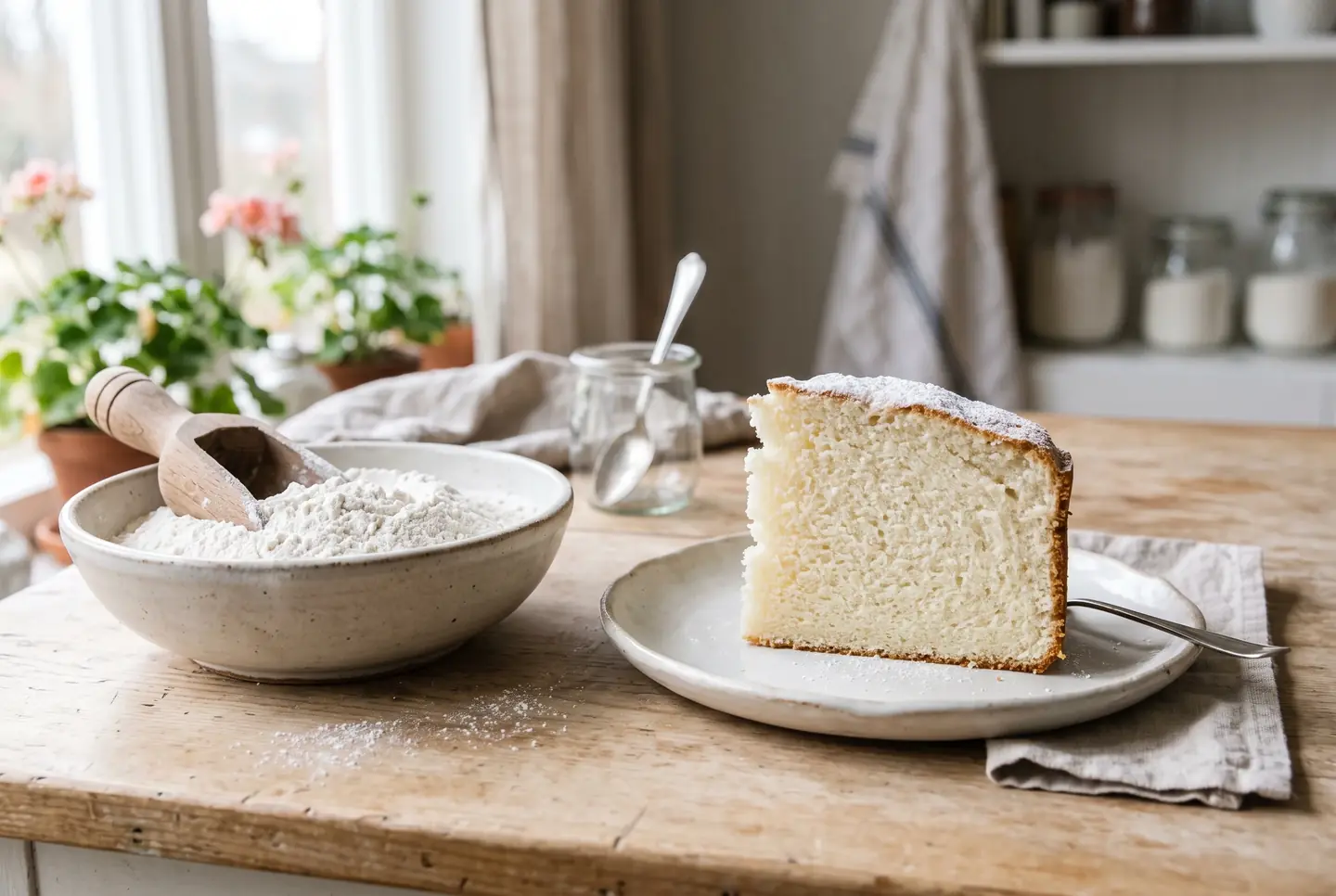
Its home is cake, not bread. Tall butter cakes, chiffon, sponge, genoise, cupcakes, pound cake: any sweet batter where you want a fine, tender, even crumb. Low protein forms little gluten, and little gluten is what lets the crumb melt in the mouth instead of pulling.
Among the loaves here, its only close relative is cornbread, which is more cake than bread: made with cake flour for the wheat portion, it comes out more tender and less rubbery. Delicate muffins, thin pancakes, and soft butter cookies like it too.
For contrast, see all-purpose flour: it does everything passably, cake flour does one thing very well.
How to substitute it
No cake flour in the cupboard? You can get close with what you have. For every cup of all-purpose flour, take out two tablespoons and put in two tablespoons of cornstarch, then sift the lot together three or four times. By weight, that is roughly 85 g of plain flour with 15 g of cornstarch per 100 g. The starch dilutes the protein and pulls the strength down toward 8% to 10%, and the crumb turns out far softer than with plain flour alone.
What the swap does not copy is the chlorine. The homemade blend tenderises, but it gains neither the modified starch nor the low pH, so in a very sweet cake, where sugar nearly matches flour, it holds less and can sink a little. For everyday cakes it works fine; for a bakery high-ratio cake, the real chlorinated flour still wins.
When not to use it
Any bread that depends on structure. Long-fermented loaves, a sandwich loaf that has to hold gas, pizza, ciabatta, baguette: all of them want the gluten cake flour does not have. The dough goes slack, will not hold its shape, and bakes low and crumbly.
Anything that needs chew is out too: bagels, pretzels, thick-crusted Italian loaves. And where butter goes in layers, puff pastry and croissants, the lack of strength lets the dough tear. For those, step up to all-purpose or bread flour.
How to use it
Three habits get the best from it. Always sift: being so fine it clumps easily, and a cake with a lump of raw flour is a silly loss. Do not overmix once the flour goes in: low protein forms little gluten, but too much gluten still toughens any cake, so stir until the flour disappears and stop.
It drinks liquid quickly, because it is more starch than the others, which is exactly why a cake-flour batter takes more sugar and more liquid without curdling. If you are adapting a recipe written for all-purpose, start by swapping the same volume and adjust the liquid only if the batter looks dry. And remember that weight beats cups: cake flour is light and aerated, and one badly measured cup changes the whole cake.
How to choose one when buying
On the label, look for protein per 100 g: real cake flour sits around 7 to 9 g. Check too whether it is bleached or unbleached: bleached is the classic chlorinated kind, better for very sweet cakes; unbleached is softer than all-purpose but behaves a little differently. Every market has its own name. In the United States it is cake flour, almost always chlorinated. In Italy, farina 00 debole or per dolci, of low W strength. In France, T45 pâtissière or fluide. In Spain, harina floja or de repostería. In the United Kingdom, sponge or soft flour.
The warning is for Brazil: American-style chlorinated cake flour barely exists there. What is sold as farinha para bolo is usually plain wheat flour with baking powder, or a low-protein type 1 flour. In practice Brazilians make their own: plain flour plus cornstarch, as in the section above.
The story
Cake flour is an industrial product, not a regional tradition. It starts from soft wheat, low-protein Triticum aestivum, the same grain as all-purpose flour but picked from the weak end: where bread flour wants protein, cake flour wants the opposite. Milled very fine and sifted until it feels silky, cup for cup it carries more starch and less protein than any other white flour on the shelf.
What really defines it came later, and in a lab. From the 1920s on, American mills began treating this flour with chlorine gas. Chlorine is not just a whitener: it oxidises and partly breaks down the starch and drops the flour's pH into the 4.4 to 4.8 range. An acidic flour with modified starch gains something raw flour does not have: the ability to hold a lot of sugar and a lot of liquid without collapsing in the oven.
That is what created the modern American cake, the high-ratio cake, where the weight of the sugar comes close to the weight of the flour. Without chlorine, that over-sweet batter runs and sinks in the middle. With it, the starch gelatinises earlier and firmer, and the cake sets tall exactly when it needs to.
Frequently asked
- Is cake flour just all-purpose milled finer?
- No. Both are soft wheat, but cake flour has less protein and, in the American version, goes through chlorine that alters the starch. It is that treatment, not just the fineness, that holds up a tall, tender cake.
- Can I use cake flour instead of all-purpose in any recipe?
- In cakes, cookies and muffins, yes, and the result is usually softer. In bread and pizza, no: there is not enough gluten, and the dough bakes low and crumbly. For those, stay with all-purpose or bread flour.
- How do I make cake flour at home?
- For each cup of all-purpose flour, swap two tablespoons for cornstarch and sift three or four times. It tenderises a lot, but it does not copy the chlorine, so in a very sweet cake it holds a little less.
- Bleached or unbleached, which should I buy?
- For a very sweet party cake, bleached (chlorinated) holds the structure better. For everyday baking, unbleached does the job and skips the chlorine. If the recipe is old and American, it was probably written for the bleached kind.